Ecuador's 'Bukele Model' Faces Rising Violence Despite Militarization Efforts
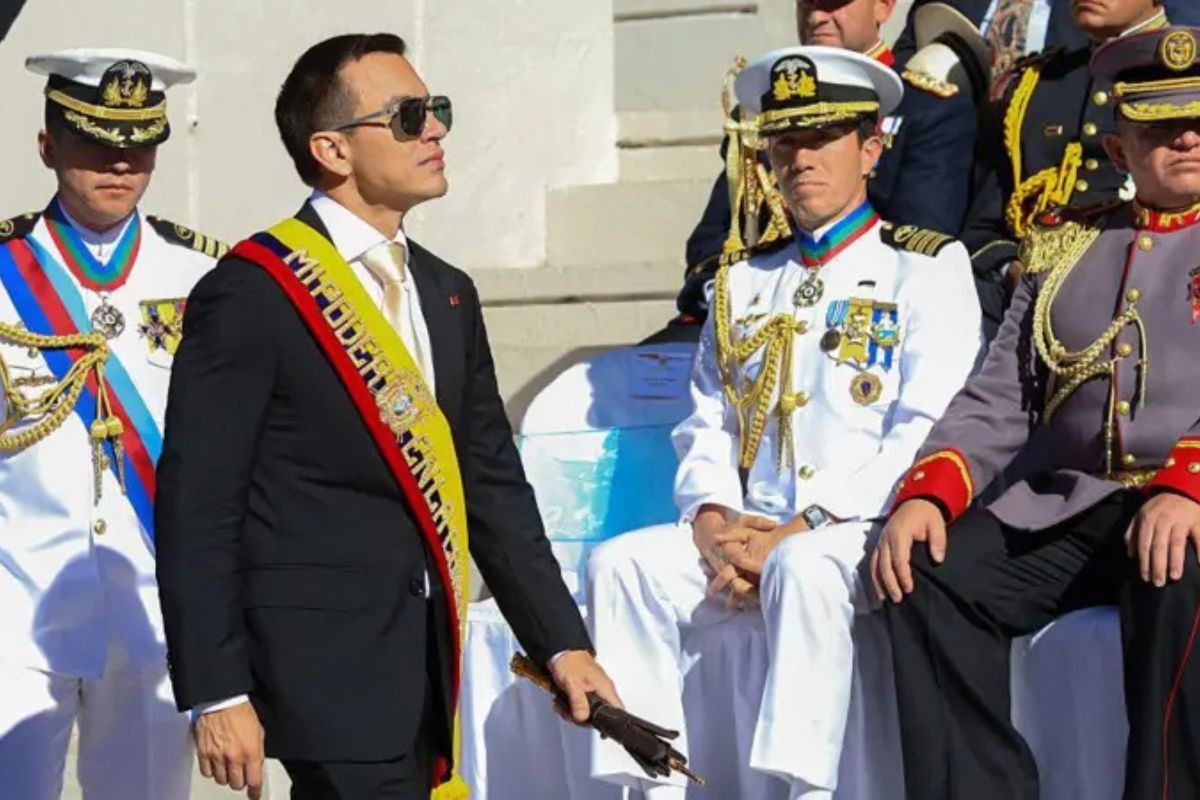
Ecuadoran President Daniel Noboa declared an internal armed conflict on January 9, 2024, tasking the military with neutralizing 22 organized crime groups. This militarization initially reduced violence, particularly in prisons. However, by 2025, homicides surged to 9,216, a 30.48% increase from 2024, marking one of the country's most violent periods. While extortion reports dropped by 40% and kidnapping cases slightly decreased compared to 2024, the homicide spike is a stark indicator of escalating violence.
In response, Noboa's government adopted measures mirroring those of El Salvador's President Nayib Bukele, including security militarization, construction of a mega-prison, expanded states of exception, and territorial control operations. Noboa stated in December 2025 that these decisions were necessary to confront 'narco-terrorism.' However, critics question the strategy's effectiveness. Researcher Luis Córdova noted that Ecuador imported the 'aesthetic' of Bukele's crime war, exemplified by the "La Encuentro" prison, which is significantly smaller than El Salvador's CECOT. Córdova argues this 'Bukelism aesthetic' is politically beneficial for Noboa but hasn't controlled organized crime.
Experts highlight significant differences making the Salvadoran model difficult to replicate. Karen Sichel, a doctoral candidate at Cambridge University, points out that Ecuador faces transnational crime groups linked to the global cocaine market with virtually unlimited funding, unlike El Salvador's gangs. Ecuador's larger territory, diverse geography, and vulnerable borders further complicate control. The criminal networks in Ecuador are also described as more disorganized and chaotic than El Salvador's, with constant alliances and confrontations leading to fragmentation. These groups have diversified their illicit activities beyond drug trafficking to include illegal mining, human and arms trafficking, money laundering, and extortion, expanding their presence across more than 150 of Ecuador's 222 cantons.
Ecuador's adoption of a 'Bukele-style' security approach, characterized by militarization and a focus on punitive incarceration, has yielded mixed results, with a significant increase in homicides in 2025 despite initial reductions in some crime metrics. This suggests that replicating external security models without accounting for distinct local socio-geographic and criminal network characteristics may prove insufficient. The analysis indicates that the Ecuadorean government faces a complex challenge involving deeply entrenched transnational criminal organizations with substantial financial resources and a diversified portfolio of illicit activities, rather than a more monolithic gang structure. Furthermore, the pervasive involvement of societal actors, including public officials and professionals, in facilitating organized crime suggests that a purely security-focused strategy may overlook critical governance and institutional reform needs. Future policy considerations might benefit from a more nuanced understanding of organized crime as a systemic issue, requiring robust judicial strengthening and anti-corruption measures alongside security operations to achieve sustainable public safety.
AI-generated to prompt reflection — not editorial opinion, not advice, not a statement of fact. How this works.