Eduardo Bolsonaro Granted US Green Card by Trump Administration
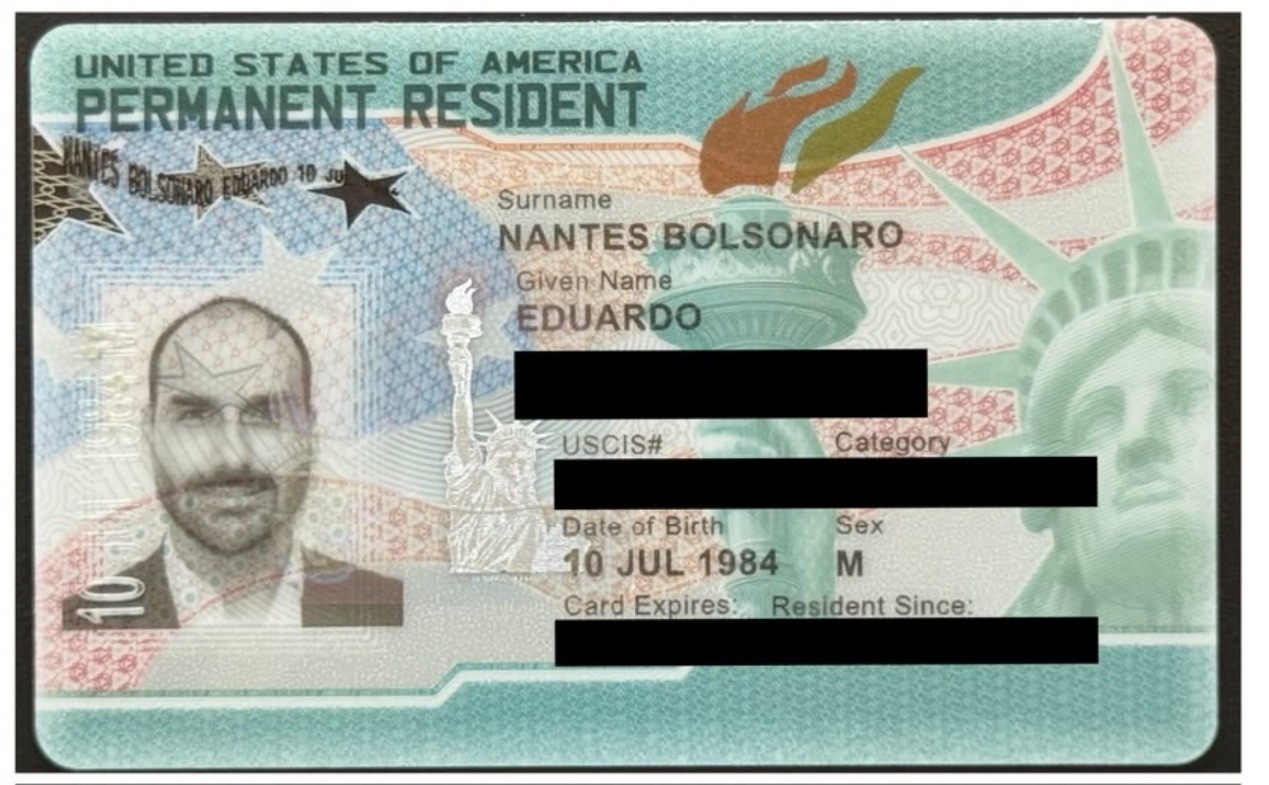
Former federal deputy Eduardo Bolsonaro has been granted a 'green card' by the Trump administration, allowing him to live and work permanently in the United States. This document confers permanent resident status but does not alter his Brazilian citizenship or nullify ongoing legal proceedings in Brazil. The green card enables Bolsonaro to reside in any U.S. state, work legally, and facilitates easier entry and exit from the country. It also allows for applying for certain family visas and accessing specific public services under U.S. law. After meeting residency requirements, he may eventually apply for U.S. naturalization, though this is a separate process from obtaining permanent residency. Holders of a green card are obligated to pay U.S. taxes on worldwide income, maintain their primary residence in the U.S., and adhere to immigration laws, with extended absences potentially leading to loss of status. The green card does not function as political asylum and would not automatically prevent an extradition request from Brazil, which would depend on U.S. authorities and existing treaties. It also does not grant the right to vote in U.S. federal elections or provide a U.S. passport. This development occurs amidst diplomatic tensions between Brazil and the U.S., including recent U.S. tariffs on Brazilian goods. Bolsonaro faces legal challenges in Brazil, including a recent conviction by the Supreme Federal Court (STF) for coercion during legal proceedings, related to alleged efforts to influence U.S. officials regarding sanctions against Brazilian authorities.
The granting of permanent residency to Eduardo Bolsonaro by the U.S. administration, particularly in the context of diplomatic and trade tensions between Brazil and the U.S., warrants examination through the lens of geopolitical incentives and legal frameworks. While the green card provides legal residency, it is crucial to distinguish this status from citizenship and understand its implications within both U.S. immigration law and Brazil's judicial processes. The U.S. immigration system, governed by specific eligibility criteria and administrative discretion, operates independently of foreign legal judgments, though international cooperation on matters like extradition exists. This event highlights the complex interplay between national sovereignty, international relations, and individual legal standing, prompting consideration of how such decisions might influence future diplomatic exchanges and the perception of U.S. policy under varying administrations.
AI-generated to prompt reflection — not editorial opinion, not advice, not a statement of fact. How this works.