Eduardo Sosa Reinstated as Prosecutor General 31 Years After Unjust Removal
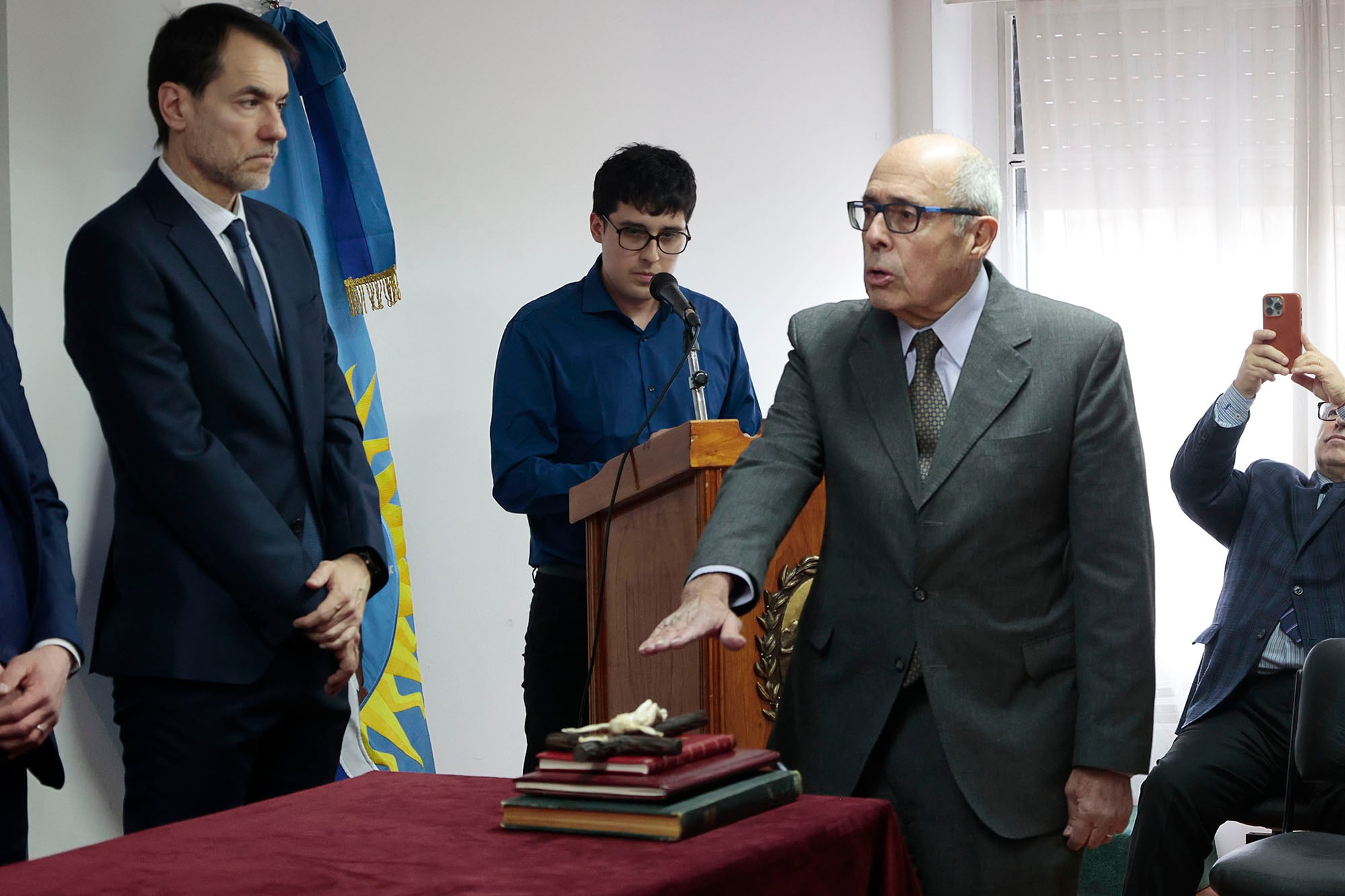
After a 31-year wait, Eduardo Sosa has been formally reinstated as the Prosecutor General of Justice for Santa Cruz, Argentina. In 1995, a reform initiated by then-Governor Néstor Kirchner, with support from legislators including Cristina Kirchner, effectively eliminated Sosa's position and removed him from the legal system without justification. This action was a clear violation of the principle of judicial immovability. The Supreme Court of Justice repeatedly ordered Sosa's restitution, but these orders were consistently ignored by successive Kirchnerist governments for three decades. During this period, Santa Cruz became a model where the judiciary served as a tool of the executive branch rather than an independent power. In June, the provincial legislature approved Sosa's reinstatement, and his recent swearing-in formally closed a significant institutional debt. Sosa's persistent pursuit of justice through legal channels, his measured public statements, and his unwavering coherence between words and actions have been noted. The gravity of the original injustice is underscored by the Supreme Court initiating a criminal case against former governor Daniel Peralta, who was among those who did not vote for Sosa's restoration. Governor Claudio Vidal championed Sosa's reinstatement from the outset of his term, apologizing to Sosa and committing to a resolution, stating it was about repairing injustice and respecting institutions above political circumstances. The situation highlights a paradox where current judicial officials who resist executive influence were themselves complicit in ignoring Supreme Court rulings for thirty years and subordinating themselves to the executive. The article posits that the current state of justice in Santa Cruz is the inevitable outcome of past actions, particularly the Kirchnerist era's construction of a judiciary aligned with its needs for impunity. Sosa's restitution is deemed just and necessary, but its true impact depends on a sustained commitment to judicial independence, ensuring that future injustices are not left unaddressed for decades.
This case illustrates a prolonged struggle for institutional accountability, where judicial rulings were systematically disregarded for three decades, highlighting a significant challenge to the rule of law and the separation of powers. The eventual reinstatement of Eduardo Sosa represents a corrective measure against executive overreach and a potential step toward restoring judicial independence in Santa Cruz. However, the systemic issues that allowed for such a prolonged injustice, rooted in the politicization of the judiciary, remain a critical concern. The long-term challenge for democratic governance lies in establishing robust institutional safeguards that prevent the judiciary from becoming subservient to political interests, ensuring that legal decisions are respected and enforced irrespective of political shifts. This requires a sustained commitment to judicial autonomy, transparency, and accountability mechanisms that transcend political cycles and protect the integrity of the justice system for the future.
AI-generated to prompt reflection — not editorial opinion, not advice, not a statement of fact. How this works.