Egypt's 'Garbage City' Recyclers See Demand Surge Amidst Iran Conflict
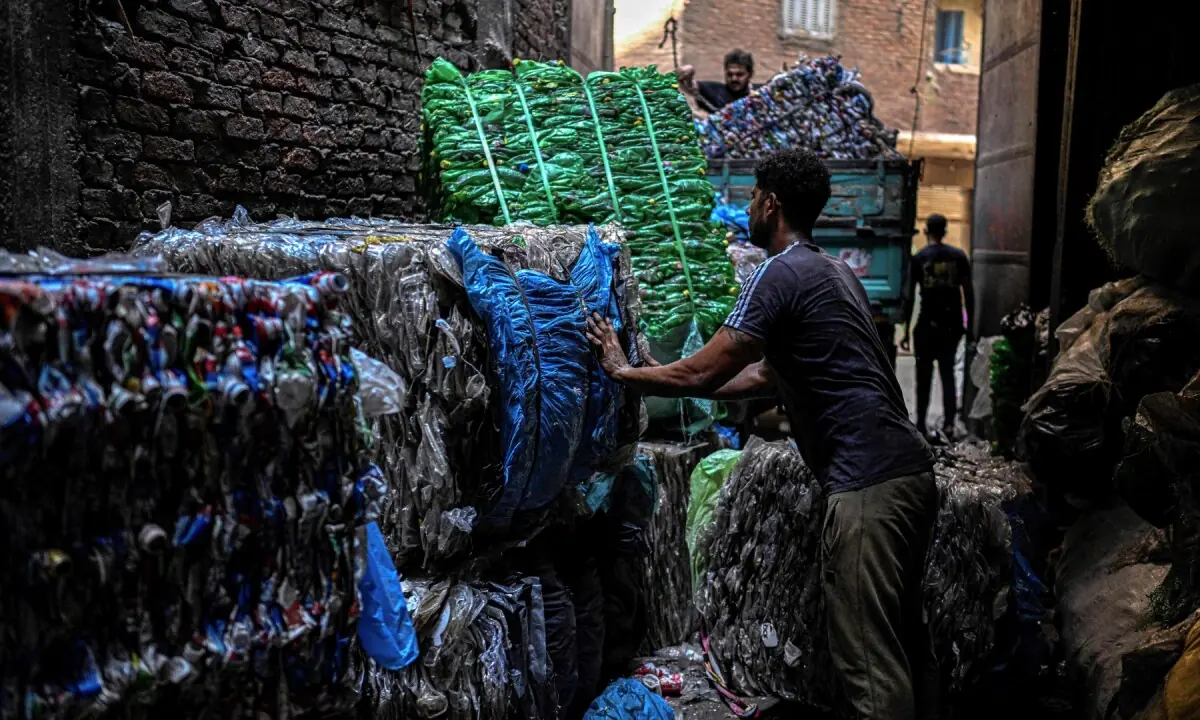
Recyclers and manufacturers in Cairo's Manshiyet Nasser, known as 'Garbage City,' are experiencing a significant increase in demand for plastic materials. This boom is directly linked to supply chain disruptions caused by the US-Israel conflict with Iran, which has impacted the Strait of Hormuz, a critical shipping route for plastic raw materials. Recyclers like Peter Romany, 25, report that factories are now actively seeking their products, a reversal from previous conditions where they had to solicit business. Manshiyet Nasser, home to over 115,000 residents, operates a sophisticated informal recycling system, processing more than a third of Cairo's waste. Generations of families live and work amidst mountains of waste, facing health risks from fumes and odors, while children study and families manage daily life. The increased demand has led to a doubling of prices for some plastic products, pushing manufacturers towards locally recycled alternatives. Rizq Yousif, a PET recycler, noted a tripling of demand and a 60% price increase for some recycled plastics. Companies like Sadat City Chemical Fibre Factory and Uflex Egypt have expanded their markets and seen up to a 40% rise in orders for recycled products. However, industry figures anticipate this boom may be temporary, as prices and demand showed signs of easing when diplomatic negotiations between the US and Iran appeared to progress. Despite this volatility, recent escalations in conflict have already led to renewed customer interest, suggesting a pattern of increased demand during geopolitical instability.
The geopolitical conflict involving Iran and the disruption of the Strait of Hormuz have inadvertently created an economic opportunity for Egypt's informal recycling sector. This situation highlights the fragility of global supply chains and the potential for localized, informal economies to adapt and benefit from international disruptions. The increased demand and prices for recycled plastics demonstrate a market's responsiveness to scarcity, pushing manufacturers to explore alternative, more readily available domestic resources. However, the reliance on geopolitical instability for economic growth presents a precarious model. As supply routes normalize or alternative global sources emerge, this economic advantage may diminish, underscoring the need for sustainable, long-term strategies for the recycling industry. The long-term challenge will be to institutionalize these gains and improve working conditions within Manshiyet Nasser, ensuring that economic benefits translate into improved livelihoods and reduced health risks, rather than remaining a temporary consequence of global conflict.
AI-generated to prompt reflection — not editorial opinion, not advice, not a statement of fact. How this works.