Eiffel Tower's Height: Physics Explains Thermal Expansion, Not Exact Measurement
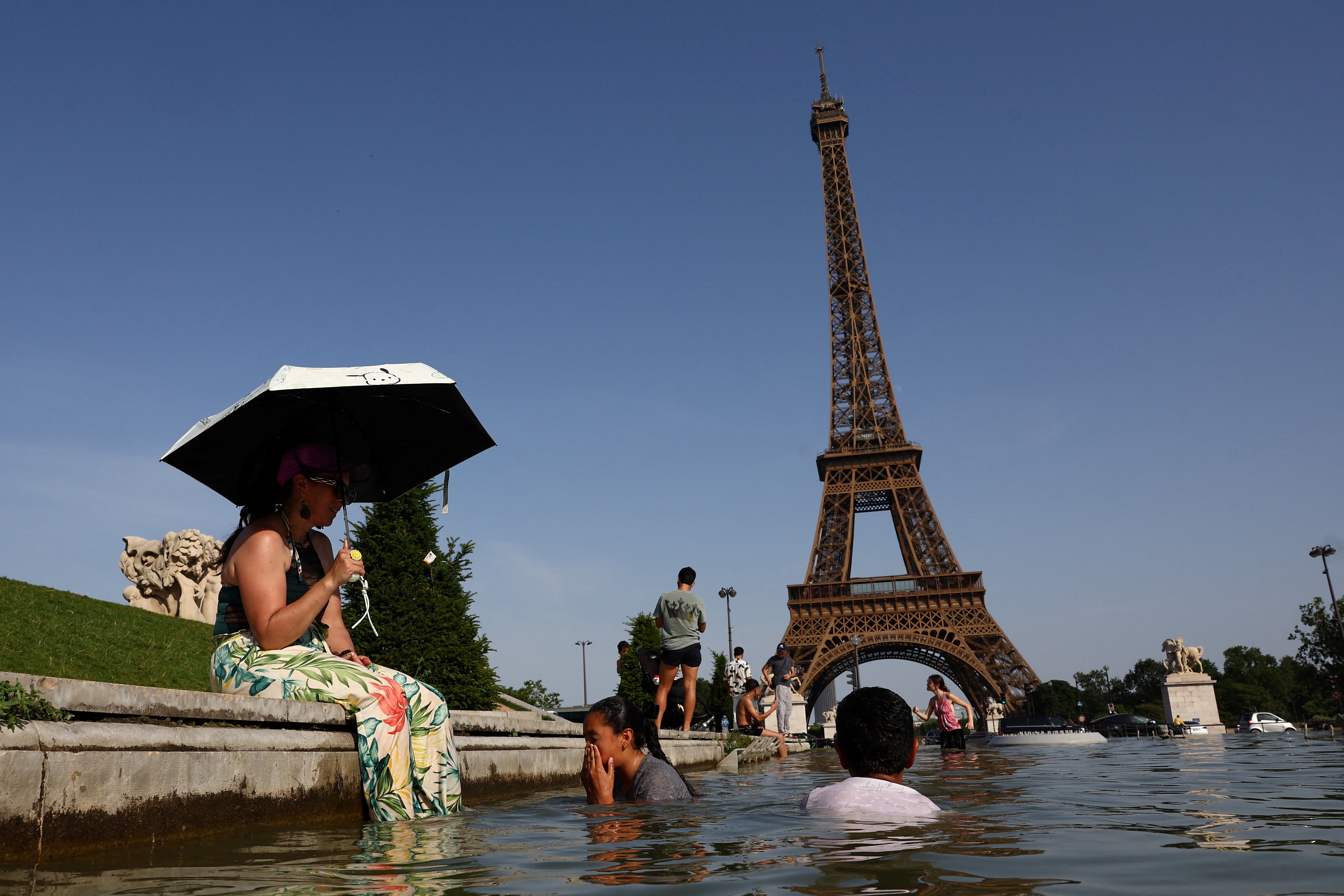
During a recent heatwave in France, social media buzzed with claims that the Eiffel Tower had grown 10 centimeters taller due to the heat. While thermal expansion is a real and expected phenomenon for the tower's metal structure, the exact 10-centimeter figure is an approximation based on calculations, not a direct measurement taken during the current heatwave. Physicists explain that when metals heat up, their particles vibrate more, causing them to spread apart and leading to expansion. For a structure as large as the Eiffel Tower, which stands about 330 meters tall including its antenna, this expansion can amount to several centimeters. A physics professor estimated a potential expansion of around 13 centimeters under specific temperature conditions, suggesting that a figure of 10 to 15 centimeters is physically plausible, but it remains an estimate. The tower's administration is more conservative, noting that heat can alter its dimensions by a few millimeters and cause slight top displacement. These changes are natural, anticipated by engineers, and pose no risk to the structure. The precise measurement is complex because the tower is not a uniform metal bar; it comprises thousands of components that heat up differently. Factors like solar radiation, wind, and shading create temperature variations across the structure, making exact calculations difficult without detailed data and sophisticated modeling. The Eiffel Tower can also lean slightly due to uneven heating, with one side potentially reaching 60-65°C while the shaded side remains cooler. This displacement is barely perceptible and is a normal behavior for large metal structures, accounted for in their design and maintenance.
The discourse surrounding the Eiffel Tower's height during a heatwave highlights the public's fascination with monumental structures and the tangible effects of environmental conditions. While the scientific principle of thermal expansion is well-established, the dissemination of specific figures like '10 centimeters' through social media demonstrates how approximations can be presented as definitive facts, often overshadowing nuanced scientific explanations. This phenomenon underscores the challenge of communicating complex scientific concepts accurately in the digital age, where simplified narratives can gain rapid traction. Future infrastructure projects, particularly those in regions experiencing extreme temperature fluctuations, must continue to integrate robust engineering considerations for thermal dynamics. Understanding these systemic behaviors is crucial for ensuring long-term structural integrity and for educating the public on the predictable, yet often surprising, ways physics influences our built environment.
AI-generated to prompt reflection — not editorial opinion, not advice, not a statement of fact. How this works.