Eight Nations Condemn Israeli Minister's Visit to Al Aqsa Mosque Compound
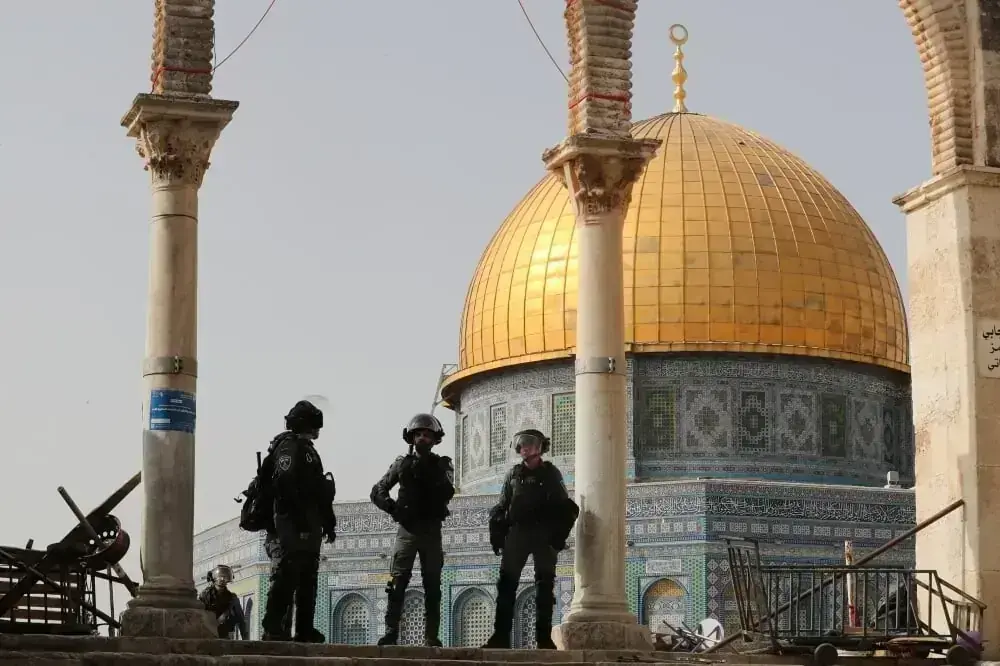
Pakistan, along with Egypt, Turkiye, Indonesia, Jordan, Qatar, Saudi Arabia, and the United Arab Emirates, has issued a joint statement condemning the recent incursion by Israeli National Security Minister Itamar Ben Gvir into the Al Aqsa mosque compound. The foreign ministers of these eight countries described the actions as "provocative" and "unacceptable," constituting a "flagrant violation of international law" and the established "status quo" arrangement governing the site. This arrangement permits Jewish visits but prohibits Jewish prayer, while ensuring uninterrupted Muslim worship. The statement specifically denounced the mass incursions by Israeli settlers, the raising of the Israeli flag, and the erection of tents by Israeli police within the courtyards, labeling these as "inflammatory acts."
The ministers further condemned "illegal and extremist acts of incitement" by Israeli ministers and groups, warning that such behavior fuels hatred and hinders efforts towards a two-state solution. They emphasized that Israel holds no sovereignty over occupied Jerusalem or its holy sites, and that these actions are an unlawful attempt to alter the historical and legal character of East Jerusalem. The statement reaffirmed the exclusive Muslim right to worship at the Al Aqsa Mosque, which spans 144 dunams, and recognized the Jordanian Ministry of Awqaf and Islamic Affairs' jurisdiction over its administration. The countries urged Israel, as the occupying power, to remove access restrictions and called upon the international community to compel Israel to cease its violations against Islamic and Christian holy sites.
The joint condemnation by eight nations highlights a significant international diplomatic challenge concerning the Al Aqsa Mosque compound, a site with profound religious and political sensitivities. The ministers' statement frames the issue as a violation of international law and the historical status quo, emphasizing the need for adherence to established agreements governing access and worship. This perspective underscores the potential for such events to exacerbate regional tensions and impede peace processes, particularly the pursuit of a two-state solution. The analysis of incentives suggests that actions perceived as provocative by one group can be interpreted by another as asserting national or religious rights, creating a cycle of escalation. Future governance of such sensitive sites will likely require robust international oversight and a commitment to de-escalation mechanisms to prevent the recurrence of these conflicts and their broader geopolitical implications.
AI-generated to prompt reflection — not editorial opinion, not advice, not a statement of fact. How this works.