Eindhoven Students Unveil World's First Solar-Powered Ambulance
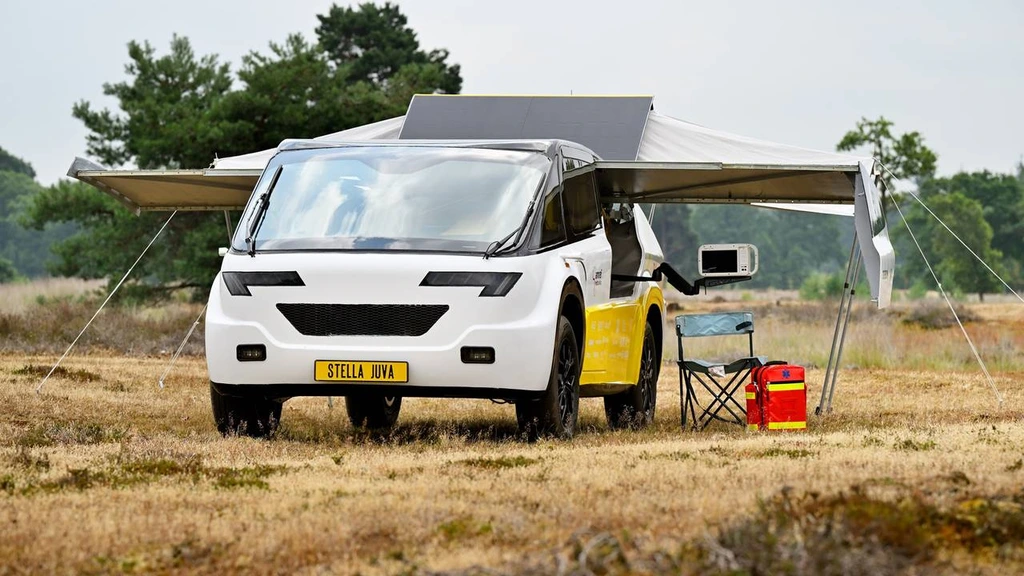
A team of 23 students from TU Eindhoven has designed and built the Stella Juva, which they claim is the world's first ambulance powered entirely by solar energy. The vehicle is equipped with solar panels on its roof, providing power for both propulsion and onboard medical equipment. According to the students, the Stella Juva can travel approximately 715 kilometers on a sunny day on paved roads. The ambulance is outfitted with essential medical devices, including an AED and a portable X-ray machine. Student Yarno Basten, 23, highlighted its potential to diagnose conditions like tuberculosis, a leading cause of death in many African countries. The solar ambulance is intended to serve as an alternative for remote regions facing shortages of fuel and electricity, which currently hinder access to healthcare. Basten clarified that the vehicle's purpose is not to transport patients to hospitals but rather to bring healthcare services directly to people in isolated areas. The Solar Team Eindhoven, which pauses their studies for a year to develop problem-solving vehicles, has a history of participating in solar challenges, including the World Solar Challenge in Australia and a journey through Morocco and the Sahara. The Stella Juva is scheduled for test drives in Kenya in August, where it will visit locations of the aid organization Amref Health Africa to demonstrate its capabilities in challenging terrains. While the students aim to inspire the industry, the prospect of large-scale production remains uncertain, with their focus being on showcasing technological possibilities.
This development highlights the potential for renewable energy integration into critical public services, particularly in contexts where traditional infrastructure is lacking. The innovation addresses systemic challenges in healthcare access for remote populations by leveraging solar power, offering a sustainable alternative to fossil-fuel-dependent vehicles. The project's focus on inspiring industry suggests a strategy to accelerate adoption by demonstrating feasibility and potential, rather than immediate commercialization. Future considerations may involve assessing the long-term operational costs, maintenance requirements in diverse environmental conditions, and the scalability of such solutions within existing healthcare frameworks. The initiative prompts reflection on how decentralized, renewable energy technologies can be strategically deployed to enhance global health equity and resilience in the face of resource constraints.
AI-generated to prompt reflection — not editorial opinion, not advice, not a statement of fact. How this works.