Einstein's Scientific Errors: A Re-evaluation of His Theories
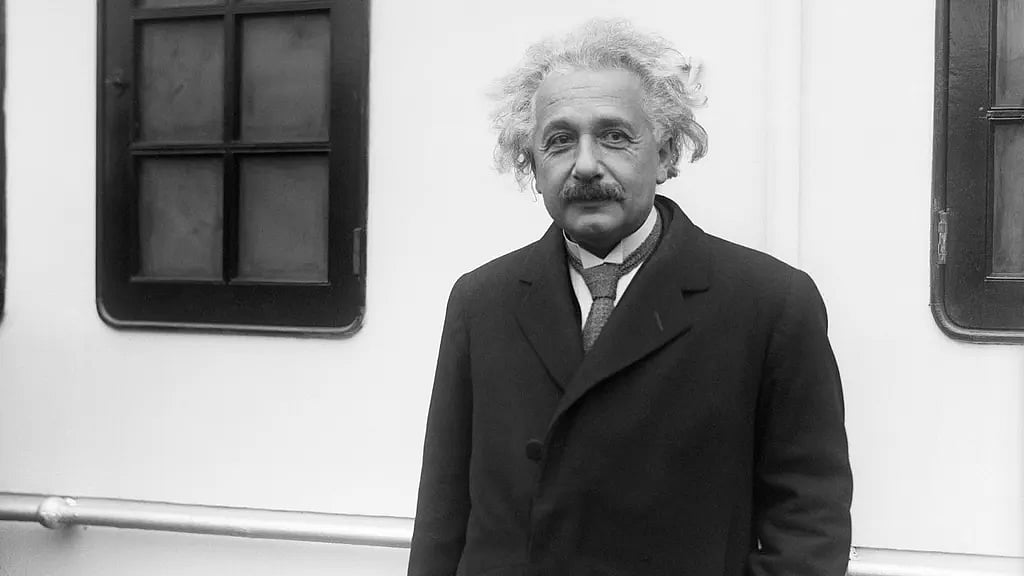
Albert Einstein, renowned for his groundbreaking theories of relativity and the photoelectric effect, is often seen as a flawless genius. However, physicist Nicholas Yunes from the University of Illinois Urbana-Champaign suggests that Einstein, like all scientists, made numerous mistakes. These errors, while significant, do not diminish his legacy, as his correct discoveries profoundly impacted science and humanity.
One of Einstein's most notable errors concerned his belief in a static universe. In 1917, he introduced the cosmological constant into his general relativity equations to counteract gravity's pull and maintain a stable universe, contrary to his own mathematical predictions. This belief was overturned in 1929 when Edwin Hubble observed the universe's expansion. Ironically, the cosmological constant, which Einstein later called his "biggest blunder," is now used by modern scientists to explain dark energy and the accelerating expansion of the universe.
Einstein also made a significant mathematical error regarding gravitational waves. Initially, he and Nathan Rosen encountered mathematical singularities, leading Einstein to conclude they didn't exist. A peer reviewer identified an error in their coordinate system, which, once corrected, validated the existence of gravitational waves. Einstein was initially angered but eventually corrected his paper. Similarly, Einstein doubted the existence of black holes, believing singularities would form at the event horizon, a view that contradicted his own mathematical findings. He also famously disagreed with quantum mechanics, particularly quantum entanglement, which he believed violated his theory of special relativity due to its instantaneous nature. Despite his lifelong efforts to unify gravity and electromagnetism, these theories remain in conflict, especially concerning black holes.
This analysis of Albert Einstein's scientific missteps highlights the iterative nature of scientific progress. While Einstein's genius is undeniable, his errors, particularly concerning the static universe and gravitational waves, demonstrate that even revolutionary thinkers can be influenced by prevailing scientific dogma or mathematical complexities. The re-emergence of the cosmological constant as a key component in understanding dark energy underscores how discarded ideas can find new relevance with evolving data and theoretical frameworks. Einstein's skepticism towards quantum entanglement, while rooted in a desire for a deterministic universe, ultimately proved to be a resistance to a phenomenon that has become foundational to modern physics and technology. This narrative encourages a nuanced view of scientific authority, emphasizing critical evaluation and the potential for groundbreaking discoveries to arise even from initial misinterpretations or incomplete understandings.
AI-generated to prompt reflection — not editorial opinion, not advice, not a statement of fact. How this works.