Einstein's Skepticism: Was He Quantum Mechanics' Greatest Foe?
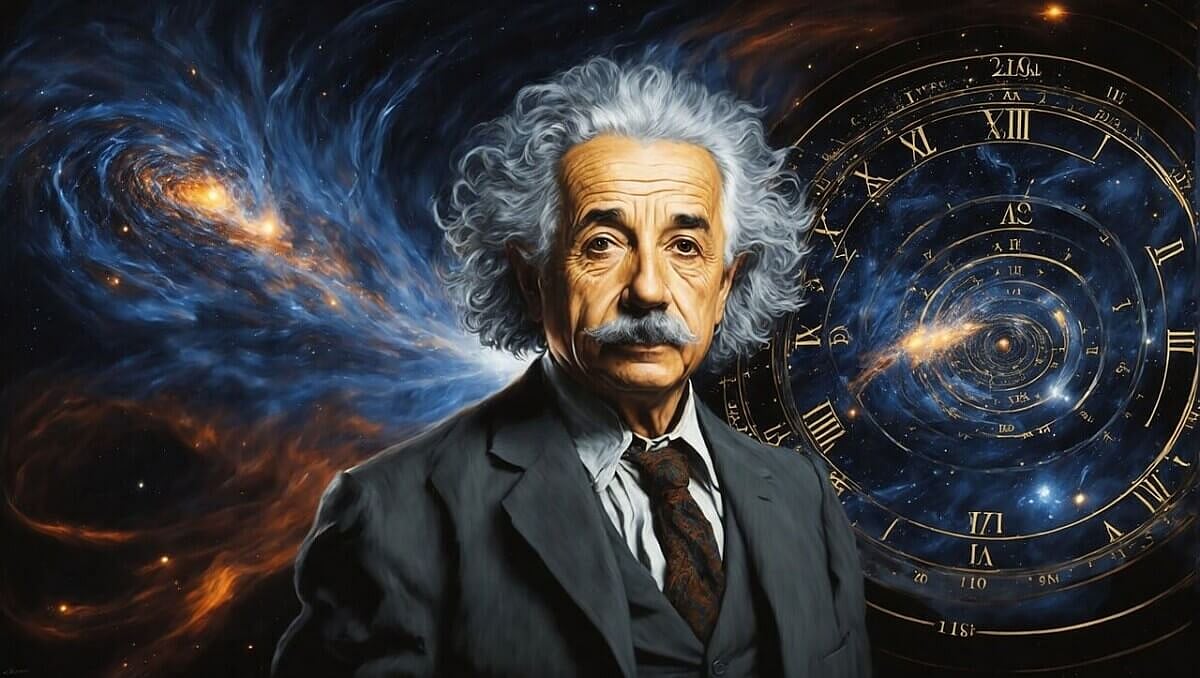
Albert Einstein famously quipped, "If I had known science worked like this, I would have become a cobbler instead of a scientist," expressing his disdain for quantum mechanics. The renowned debate between Einstein and Niels Bohr in the 1930s, stemming from Werner Heisenberg's 1927 uncertainty principle, has become legendary. Heisenberg's principle challenged classical physics' deterministic nature, where precise predictions are possible for macroscopic objects like cars. In contrast, quantum mechanics posits that for subatomic particles, position and momentum cannot be simultaneously known with perfect accuracy; measuring one precisely introduces uncertainty in the other. This uncertainty permeates quantum mechanics, where particles exist in a superposition of states, behaving as both waves and particles. Einstein questioned whether particles could somehow read human intentions, asking if the moon only exists when observed. At the 1927 Solvay Conference, Einstein rigorously challenged Bohr and his colleagues on these perplexing quantum phenomena, employing thought experiments like the EPR paradox to highlight what he considered the theory's lack of logical explanation. Despite Bohr's team refuting his arguments, Einstein remained a vocal critic, leading some to believe he was quantum mechanics' greatest adversary. His sentiment was echoed in his statement, "Does the moon exist only when I look at it?" Einstein believed that our inability to know something with certainty was a limitation of human knowledge, not a flaw in nature's laws. He conveyed this to his friend Max Born in a letter, stating, "Quantum mechanics is certainly imposing, but an inner voice tells me that it is not yet the real thing. Everything is explained, but we do not seem to be able to step into it. It is as if the Lord God were a perfect mathematician, but only a bad one."
Albert Einstein's profound skepticism towards quantum mechanics, particularly its probabilistic and uncertain nature, stemmed from his deeply held belief in a deterministic universe. His famous "God does not play dice" quote encapsulates his discomfort with the inherent randomness that quantum theory introduced. While Einstein was instrumental in the early development of quantum theory, notably through his work on the photoelectric effect which earned him the Nobel Prize, he fundamentally disagreed with the implications of the uncertainty principle and superposition. His critiques, though persistent, were met with robust defenses from physicists like Niels Bohr, who championed the Copenhagen interpretation. This historical debate highlights a fundamental tension between deterministic and probabilistic worldviews in physics. The enduring legacy of this conflict lies not in Einstein being an 'enemy' of quantum mechanics, but in his role as a critical catalyst, pushing the field's proponents to rigorously defend and refine its foundational principles. His objections forced a deeper examination of reality at its most fundamental level, ultimately strengthening the scientific understanding of the quantum realm and its counterintuitive nature.
AI-generated to prompt reflection — not editorial opinion, not advice, not a statement of fact. How this works.