Elderly Couple Marries Alongside Three Children in Acre
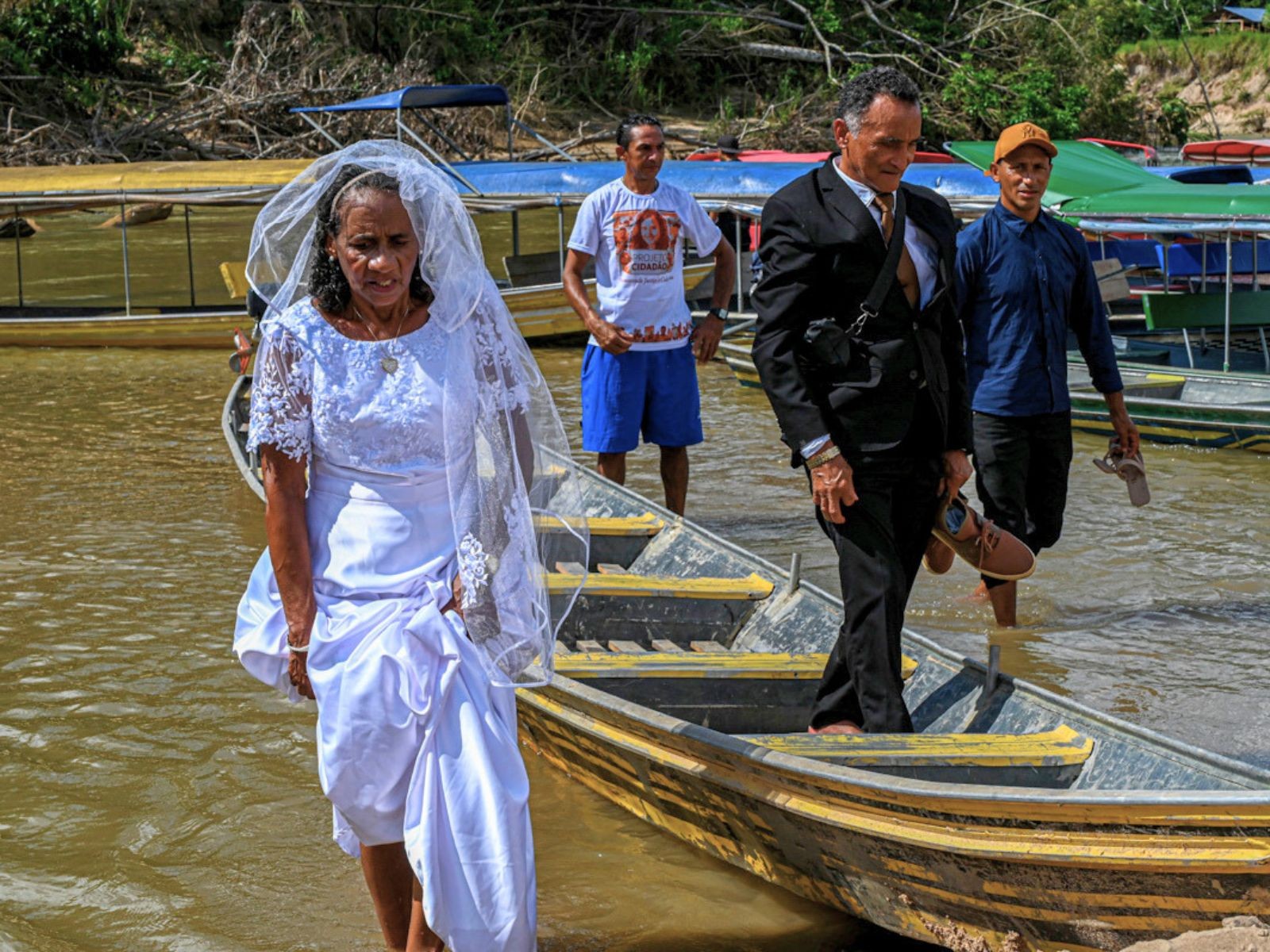
Maria Dacisete Mendes de Araújo, a 69-year-old retiree, and her partner Sebastião da Silva, 73, officially celebrated their union after nearly 50 years together. The ceremony took place on Friday, October 10th, on the banks of the Gregório River in Tarauacá, an interior region of Acre, Brazil, approximately 400 kilometers from the capital, Rio Branco. This unique collective wedding ceremony was held at Aldeia Yawatxivã and was organized by the 'Projeto Cidadão' initiative of the Court of Justice of Acre (TJ-AC). In total, four marriages from the same family were solemnized on the same day, alongside 16 other couples from various riverside communities. Maria Dacisete expressed immense joy, fulfilling a lifelong dream of wearing a wedding dress with a veil, which she received as a donation. She stated that this event, which she had waited decades for, was perfect and a testament to God's timing. The couple, who will celebrate 50 years of cohabitation next year, have built a large family including five children, 14 grandchildren, and six great-grandchildren. The celebration continued at their home in Colônia Cinco Irmãos, marked by a large family gathering and barbecue. The collective ceremony also included indigenous couples from the Yawanawa and Noke Koi ethnicities, such as Marcílio Yawanawa, 22, and Girlene Yawanawa, 33, and brothers Cláudio Yawanawa, 35, and Ivanete Yawanawa, 31, who participated wearing traditional adornments. The 'Projeto Cidadão' event aims to bring public services to remote communities and, in addition to marriage services, offered free legal and governmental assistance from various state and federal agencies.
This event highlights the intersection of personal aspirations and community-supported initiatives in remote regions. The collective wedding ceremony, facilitated by the judiciary and other public bodies, addresses a practical need for legal recognition of unions while simultaneously celebrating deeply held cultural and personal milestones. The participation of indigenous communities and riverside dwellers underscores the importance of culturally sensitive public services that cater to diverse populations. From a systemic perspective, such events demonstrate the potential for judicial and governmental bodies to foster social cohesion and provide essential civil services beyond urban centers, thereby strengthening the social fabric and ensuring legal inclusivity for often underserved populations. The initiative offers a model for how public institutions can positively impact individual lives by fulfilling both legal requirements and emotional desires, particularly for long-standing relationships and those who may have faced barriers to formalizing their unions.
AI-generated to prompt reflection — not editorial opinion, not advice, not a statement of fact. How this works.