Elderly Woman and Nephew Die in Rural Pescador House Fire
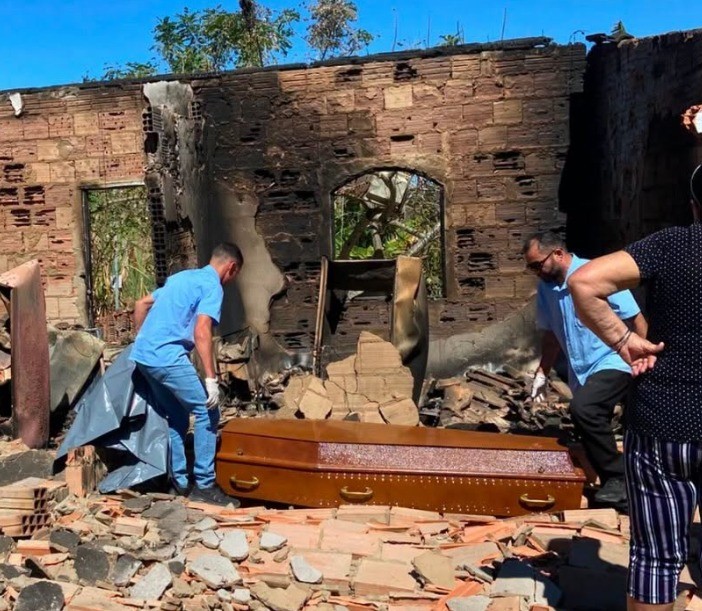
An elderly woman, identified as Mirinha Martins dos Santos, 65, and her nephew, Rogério Lemos Teixeira, 48, were found carbonized after a fire completely destroyed their home in rural Pescador, located in the Vale do Rio Doce region. Their bodies were discovered on Wednesday morning, May 29th. Authorities suspect the fire may have started between Sunday night, May 26th, and early Monday morning, May 27th. Upon arrival, military police found the residence almost entirely demolished, with only the facade still standing and burnt appliances and debris scattered throughout the ruins. Witnesses last saw the victims on Sunday afternoon. A neighboring farmhand confirmed he had been with them over the weekend. The fire's devastation was only noticed on Wednesday morning by a local dairy farmer transporting milk, who alerted a vacationing police officer, leading to the official report. The Civil Police conducted forensic analysis at the scene, and the bodies were subsequently sent to the Medical Legal Institute (IML). Captain John Langholz of the Military Police stated that the cause of the fire is currently undetermined due to the extensive destruction. Investigations will consider that the victims reportedly had habits of consuming alcohol and smoking, though the official cause awaits the Civil Police's forensic report.
This tragic event highlights the vulnerability of individuals in rural settings and the challenges in determining fire origins when destruction is extensive. The investigation's focus on the victims' habits, while potentially relevant, should not overshadow a thorough examination of potential external factors or accidental causes. In the context of increasing frequency of extreme weather events and aging infrastructure, a comprehensive review of fire safety protocols and emergency response capabilities in remote areas is warranted. Future considerations should include accessible early warning systems and community-based fire prevention education to mitigate risks for isolated populations.
AI-generated to prompt reflection — not editorial opinion, not advice, not a statement of fact. How this works.