Electric Car Fire Kills Driver After Collision on BR-277 in Paraná; Seven Injured
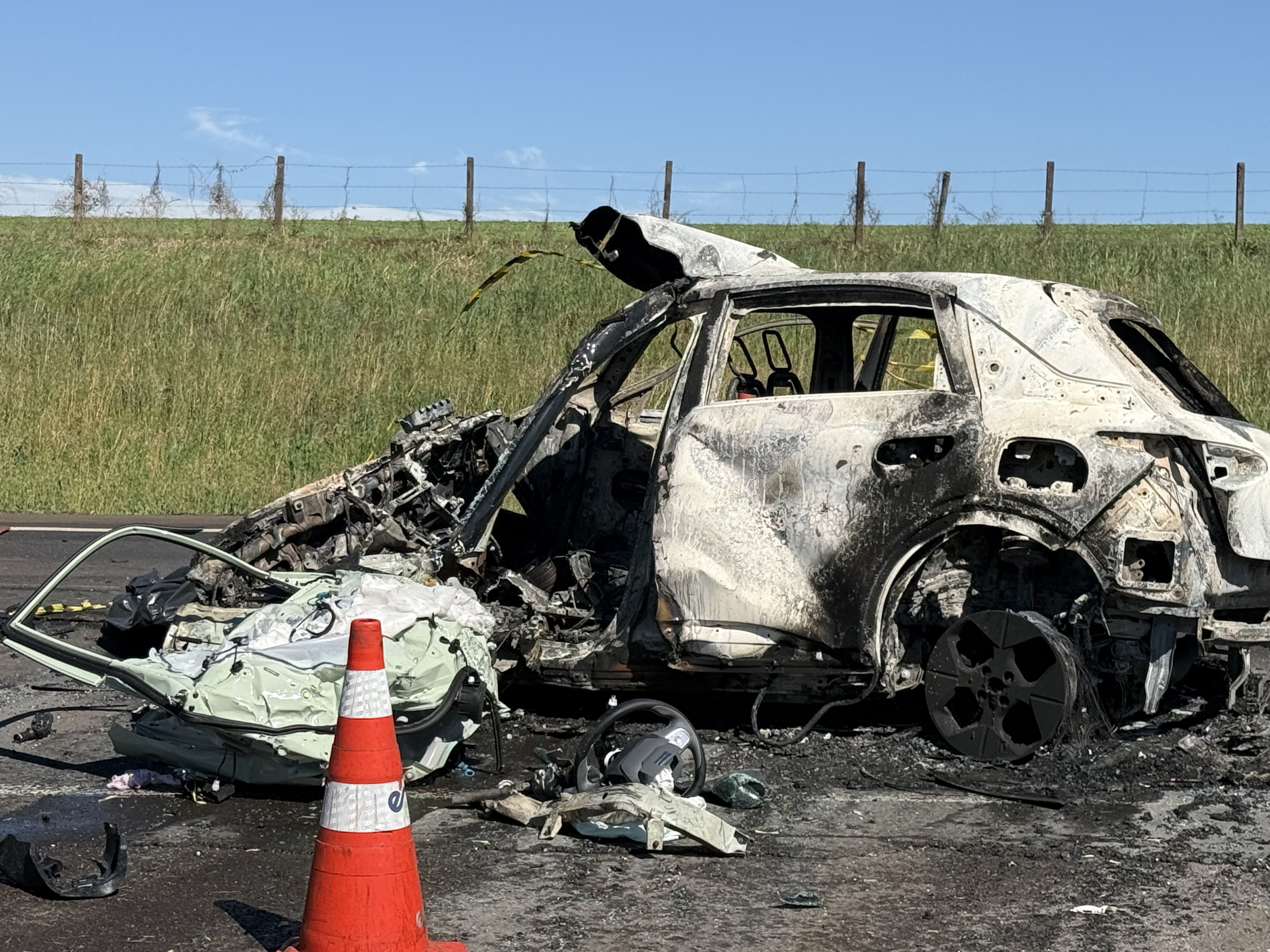
A fatal accident occurred on Sunday, May 19th, on BR-277 in Candói, Paraná, when an electric car collided head-on with a pickup truck, resulting in a fire and the death of the electric car's driver. Seven other individuals sustained injuries in the incident. The electric car carried the driver, his wife, and their three children, aged 2, 9, and 11. The wife and the two older daughters suffered serious injuries, while the youngest child, a boy, was hospitalized with critical injuries. The pickup truck was occupied by a 53-year-old driver, his 53-year-old wife, and their 28-year-old son; all three sustained moderate injuries. Preliminary reports from the Federal Highway Police suggest the electric car driver attempted to overtake a truck, entered the opposing lane, and struck the pickup truck. A truck involved in the incident was also hit but its driver was unharmed. The accident, which took place around 11 AM at km 407, caused a traffic blockage for approximately two and a half hours in the direction of Cascavel. The road was later reopened to single-lane traffic, with no immediate estimate for full clearance. The identities of those involved have not been released, and an investigation into the accident's circumstances is underway.
This tragic collision highlights the critical importance of driver behavior and road infrastructure safety, irrespective of vehicle propulsion technology. While the electric nature of the car led to a fire, the primary cause appears to be a dangerous overtaking maneuver. This incident underscores the need for robust enforcement of traffic laws and continuous public awareness campaigns on safe driving practices, particularly concerning high-speed maneuvers like overtaking. Future considerations for road safety should include advanced driver-assistance systems that can mitigate human error, as well as infrastructure design that minimizes opportunities for head-on collisions. The investigation's findings will be crucial for understanding the precise sequence of events and identifying any contributing factors beyond driver error, potentially informing future regulatory or design changes in vehicle safety and highway engineering.
AI-generated to prompt reflection — not editorial opinion, not advice, not a statement of fact. How this works.