Electric Dipoles Shift Sideways in Ultra-Thin Ferroelectric Film
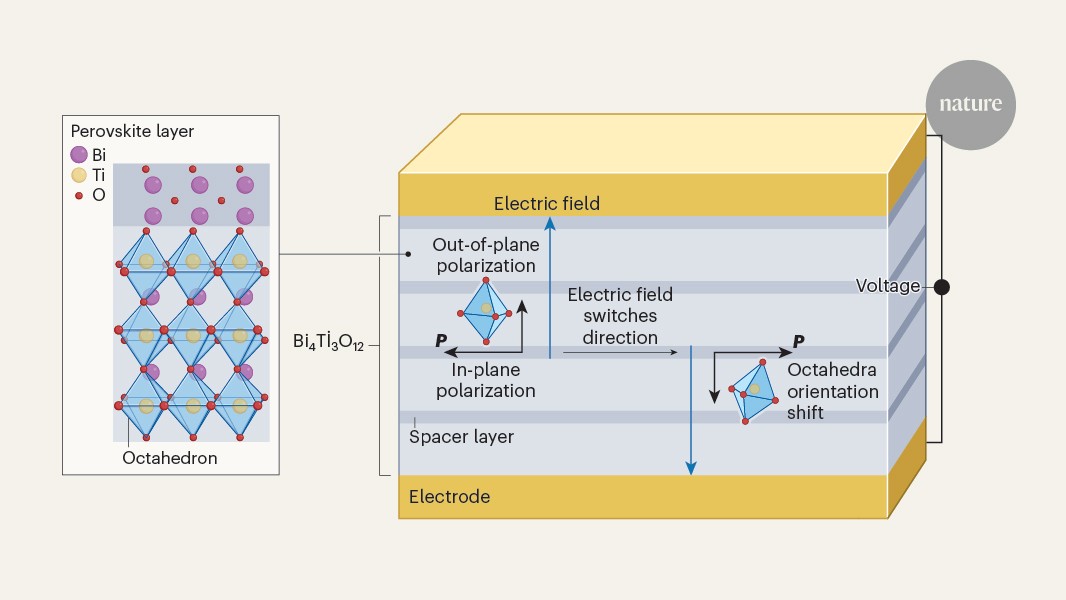
Researchers have observed electric dipoles in an ultra-thin ferroelectric film orienting themselves sideways, a phenomenon previously not understood. This discovery challenges existing models of ferroelectricity, which typically assume dipoles align perpendicular to the film surface. The study utilized advanced microscopy techniques to visualize the dipole behavior at the nanoscale. The findings suggest that surface effects and quantum mechanical interactions play a significant role in determining dipole orientation in extremely thin materials. This sideways alignment could have implications for the development of new electronic devices, such as high-density memory or novel sensors. Understanding this behavior is crucial for harnessing the unique properties of ferroelectric materials in next-generation technologies. The research opens new avenues for exploring ferroelectric phenomena in reduced dimensions. Further studies are planned to investigate the precise mechanisms driving this sideways orientation and its potential applications.
This discovery in ferroelectric films highlights how material behavior can deviate significantly from established models when dimensions are reduced to the nanoscale. The observation of sideways dipole alignment suggests that surface energy and quantum confinement effects become dominant forces, overriding bulk material properties. This presents both a challenge and an opportunity for materials science and engineering. While it necessitates a revision of theoretical frameworks, it also unlocks new possibilities for designing devices with tailored functionalities. Future research could focus on controlling this sideways orientation to engineer specific electronic or magnetic responses, potentially leading to innovations in data storage, sensing, or low-power electronics. The ability to manipulate dipoles at this scale could be a key enabler for advanced computing architectures in the coming decade.
AI-generated to prompt reflection — not editorial opinion, not advice, not a statement of fact. How this works.