Elephant Calorie Needs Suggest Hannibal's Alpine Route
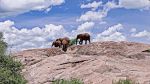
A new bioenergetic study has calculated the caloric needs of humans, horses, and war elephants, offering insights into Hannibal's famous crossing of the Alps. The research focused on determining the energy expenditure required for each type of being involved in the ancient military campaign. By estimating the daily food intake necessary to sustain these animals and soldiers, researchers could better understand the logistical challenges and potential routes available to Hannibal's army. The study suggests that the energy demands of the elephants, in particular, might have dictated certain path choices. These massive animals would have required vast amounts of food and water, influencing where the army could travel and resupply. The findings propose a specific route across the Alps that aligns with these logistical constraints. This scientific approach provides a novel perspective on a historical event, moving beyond traditional textual analysis to incorporate biological and energetic factors.
This study applies bioenergetic principles to historical military logistics, offering a data-driven perspective on Hannibal's Alpine crossing. By quantifying the caloric requirements of his army's components—men, horses, and elephants—researchers can infer route feasibility based on resource availability and terrain. This approach de-emphasizes anecdotal evidence and focuses on the physical limitations and demands of sustaining such a large, diverse group over challenging geography. The analysis highlights how the specific needs of large animals like elephants can act as significant constraints on military operations, potentially guiding strategic decisions and route selection. Future research could explore how varying environmental conditions, such as seasonal food availability, might have further influenced these choices, offering a more dynamic understanding of ancient warfare's interplay with natural resources.
AI-generated to prompt reflection — not editorial opinion, not advice, not a statement of fact. How this works.