ELM11-Feather: FPGA Board for Lua, C, and VHDL Programming Starts at $29
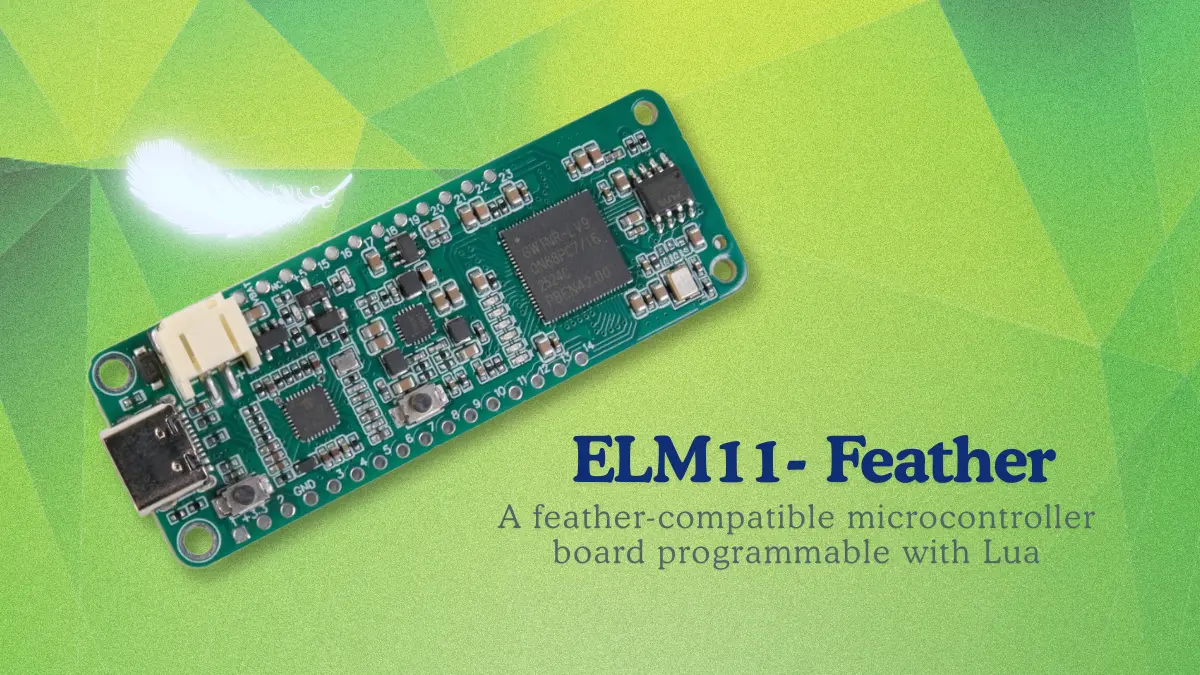
The ELM11-Feather is a new FPGA-based development board designed to offer flexibility in programming hardware. It allows users to write application, driver, and hardware layers using Lua, C, and VHDL/SystemVerilog. This multi-language support aims to cater to a wider range of developers and project complexities. The board is compatible with the Feather ecosystem, suggesting ease of integration with existing modules and accessories. Pricing for the ELM11-Feather begins at an accessible $29, making it a potentially attractive option for hobbyists, educators, and professional engineers alike. The inclusion of Lua as a native programming language is a notable feature, as it is often favored for its simplicity and rapid development capabilities, especially in embedded systems. This approach could lower the barrier to entry for complex hardware design and development.
The ELM11-Feather board's strategy of enabling native Lua programming alongside traditional hardware description languages like VHDL and C represents an interesting convergence of high-level scripting and low-level hardware control. This approach could democratize FPGA development by abstracting away some of the complexities typically associated with hardware design, potentially accelerating prototyping cycles. However, the long-term performance and scalability of Lua for deeply embedded or performance-critical applications will be a key factor in its adoption. The board's pricing strategy suggests a focus on market penetration and accessibility, aiming to capture a segment of the developer community seeking cost-effective and versatile hardware platforms. Future iterations might explore further integration with AI-driven development tools or specialized hardware accelerators.
AI-generated to prompt reflection — not editorial opinion, not advice, not a statement of fact. How this works.