Embraer Secures Deal for Up to 45 E195-E2 Jets with Abra Group
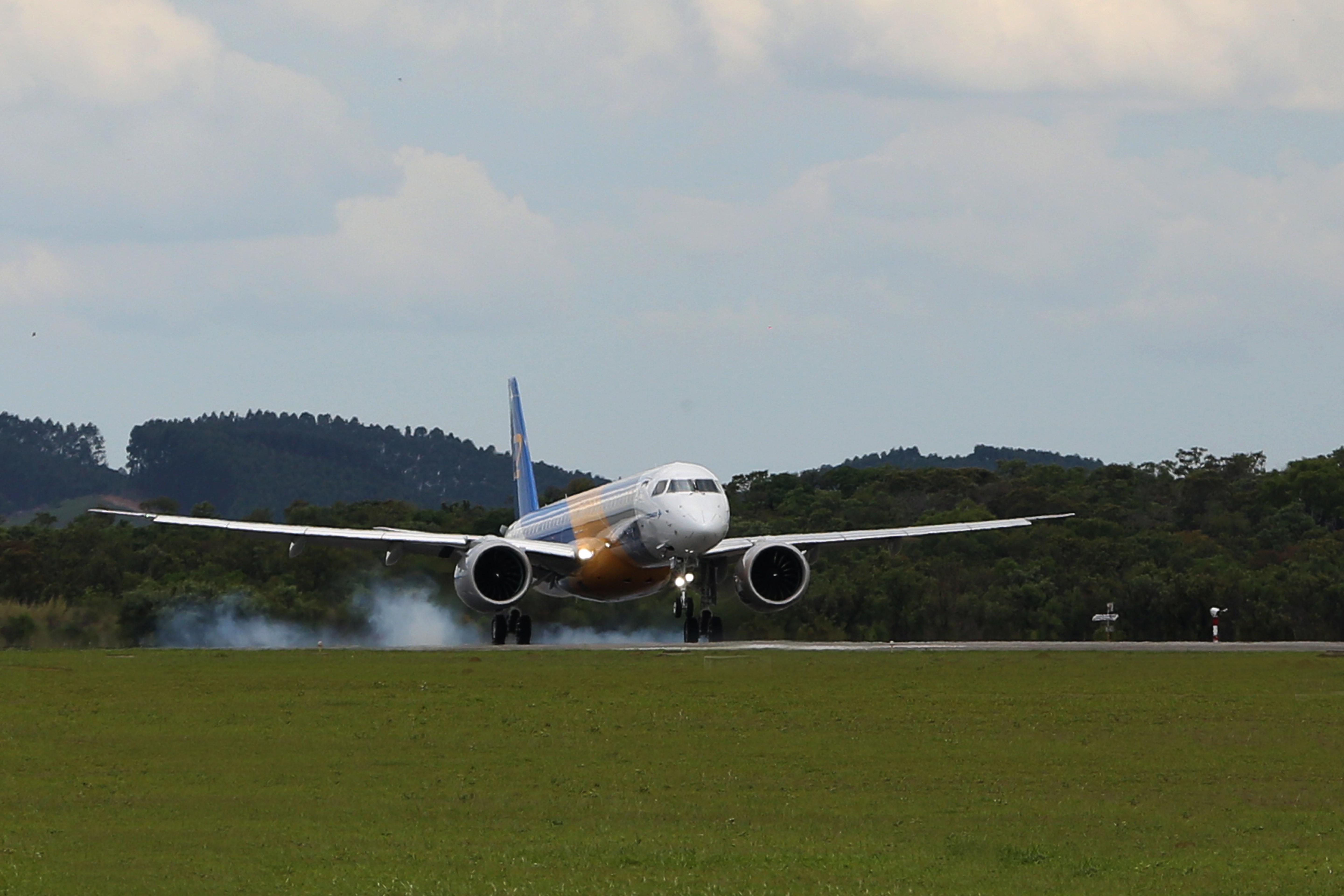
Embraer has announced a significant deal to sell up to 45 E195-E2 aircraft to Abra Group, the parent company of airlines Gol, Avianca, and Wamos Air. The agreement was revealed during the Farnborough Airshow in the United Kingdom. The deal comprises a firm order for 20 aircraft, with additional options for 10 and purchase rights for 15 more, potentially bringing the total to 45 planes. The financial terms of the transaction were not disclosed. Deliveries are scheduled to commence in the fourth quarter of 2027, and the order will be officially recorded in Embraer's third-quarter 2026 backlog upon contract finalization. Abra Group intends to utilize these new aircraft to enhance fleet flexibility, enabling the expansion of routes, increased flight frequencies, and better service to Latin American domestic and regional markets. The E195-E2 is Embraer's largest commercial jet, featuring next-generation engines that reduce carbon emissions and noise pollution compared to older models. In addition to the Abra Group agreement, Embraer also finalized other deals at Farnborough, including an order for five more E195-E2s from Binter and a conversion of purchase rights into a firm order for three E190-E2s by Luxair. Furthermore, Azorra, a US-based company, agreed to convert up to 30 Embraer E190 passenger jets into freighters, with 20 firm conversion orders and 10 additional purchase rights, targeting the express cargo market.
This agreement highlights the ongoing demand for efficient, modern narrow-body aircraft in the regional and emerging markets. Embraer's E2 family offers a compelling value proposition with its fuel efficiency and reduced environmental impact, aligning with evolving industry and regulatory pressures. The Abra Group's strategic fleet expansion signals confidence in post-pandemic travel recovery and a focus on optimizing route networks within Latin America. The simultaneous freighter conversion deal with Azorra demonstrates Embraer's strategy to diversify its product applications and tap into the growing air cargo sector, leveraging its existing platforms for new revenue streams. These transactions underscore the competitive dynamics within the commercial aviation manufacturing sector, where innovation in fuel efficiency and adaptability to market shifts are crucial for sustained growth over the next decade.
AI-generated to prompt reflection — not editorial opinion, not advice, not a statement of fact. How this works.