Emotional Support Chicken Aids Autistic Teenager in Managing Anxiety
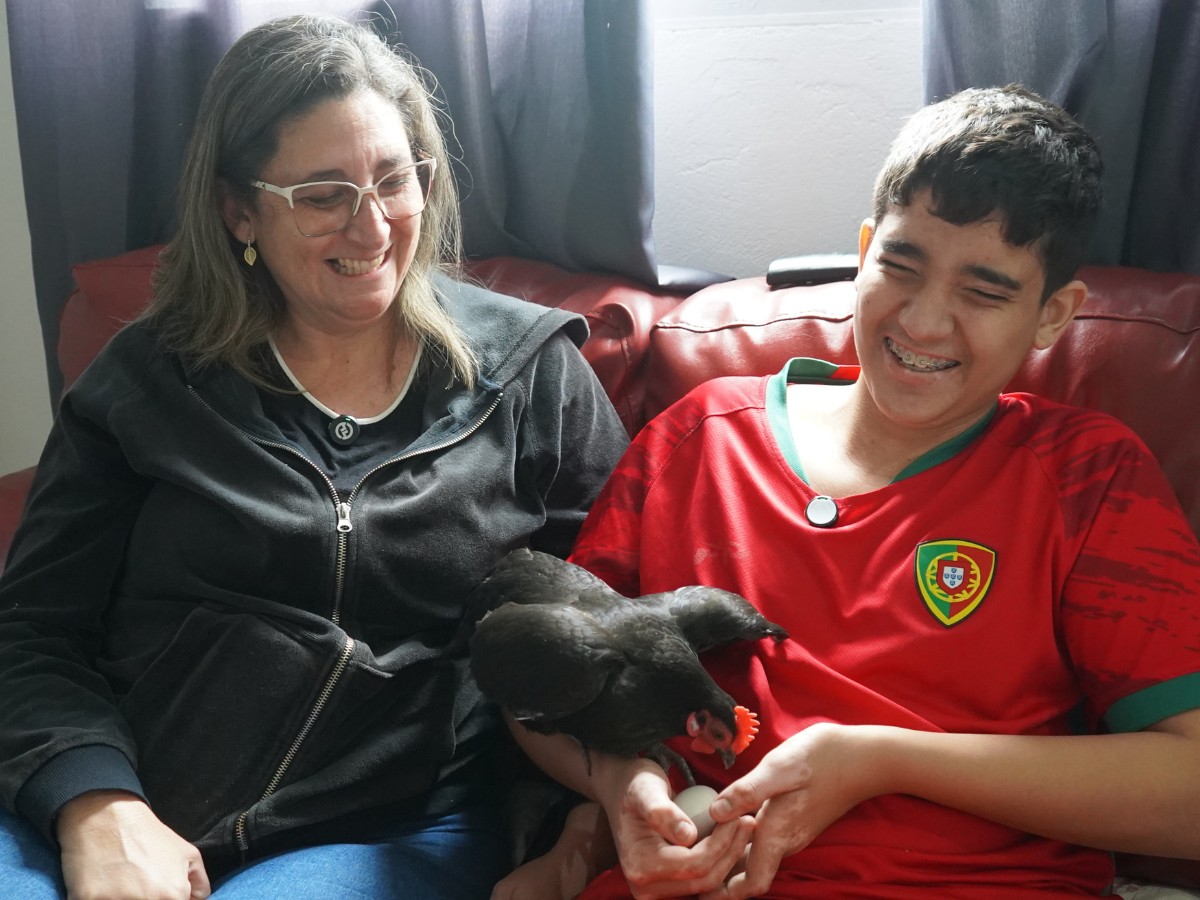
A 14-year-old boy named Nicolas Silva, who has Autism Spectrum Disorder (ASD), finds significant emotional support from his pet chicken, Pops, in Campinas, Brazil. His mother, Priscila Silva, a rideshare driver, explains that the hen helps Nicolas calm down during moments of anxiety and stress. Nicolas himself states that being with Pops makes him feel calmer and he appreciates the affection from the bird. Pops has been with the family for nearly three years and has developed a unique bond with Nicolas, often staying on his lap or shoulder. Priscila noticed Nicolas's developmental differences early on, including walking on tiptoes and speech difficulties. He was born prematurely at seven months and later developed vitiligo at age 3, leading to medical evaluations. Initially treated for anxiety, Nicolas was diagnosed with autism at age 8 after consulting a neurologist, a diagnosis Priscila found illuminating. He currently receives ongoing psychological treatment and medication, having previously completed speech and occupational therapy. During the COVID-19 pandemic, Nicolas's psychiatrist recommended an emotional support animal. After unsuccessful attempts with hamsters and existing dogs, a chicken introduced by a friend of his grandmother formed a special connection with Nicolas. The family observed that Pops was more than just a pet, as she began accompanying Nicolas to some therapies. Priscila notes that Nicolas has even taken Pops to places like a gas station, indicating his strong attachment. Nicolas has faced prejudice in school, including physical aggression from peers and discriminatory remarks from an institution. He is currently a scholarship student in a technical information technology course and previously participated in robotics classes. Priscila describes Pops as small, docile, and affectionate exclusively towards Nicolas, contributing to his socialization and autonomy development. Nicolas even built a wooden house for the birds in the yard. Priscila's primary focus is Nicolas's well-being and future independence, stating, "I live for this."
The case of Nicolas Silva and his emotional support chicken, Pops, highlights the growing recognition of non-traditional animal companionship in supporting individuals with neurodevelopmental differences. While conventional support animals like dogs and cats are widely accepted, the integration of a chicken into a therapeutic role suggests a broader potential for diverse species in emotional regulation and social interaction. This situation prompts consideration of how regulatory frameworks and public perception might adapt to accommodate a wider range of support animals. The family's proactive approach in seeking solutions for Nicolas's anxiety and social challenges, coupled with the positive outcomes observed, underscores the importance of individualized care and the exploration of unique therapeutic modalities. Future considerations may involve understanding the specific behavioral and sensory attributes of different animals that contribute to their efficacy as support companions for individuals with conditions like ASD, and how these can be leveraged within accessible and ethical frameworks.
AI-generated to prompt reflection — not editorial opinion, not advice, not a statement of fact. How this works.