Enantioselective Biosensors Aid Evolution of Asymmetric Biocatalysts
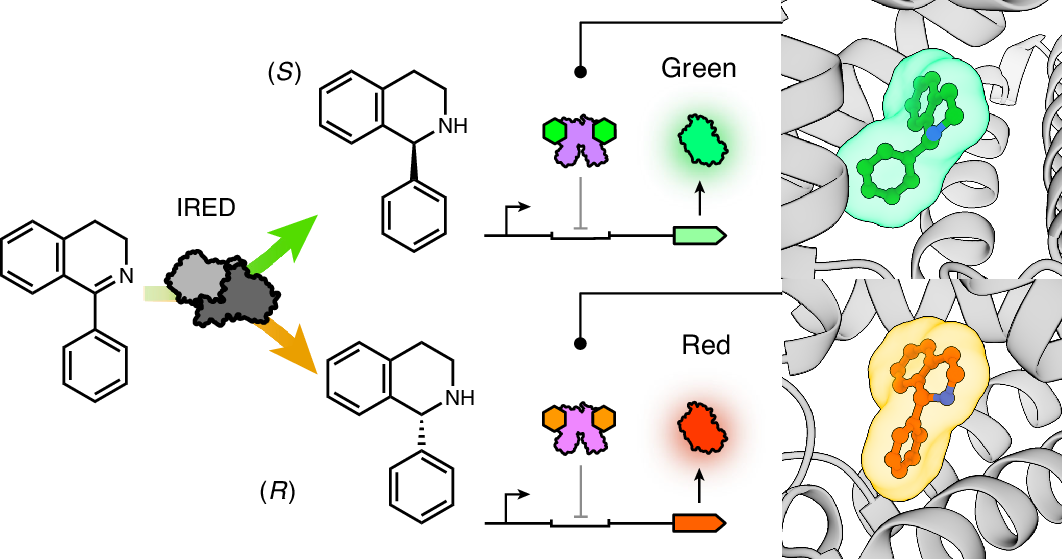
Researchers have developed a novel method for evolving asymmetric biocatalysts by employing enantioselective biosensors. This innovative approach allows for the precise selection and enhancement of enzymes capable of producing specific enantiomers, which are crucial in various chemical and pharmaceutical applications. The biosensors are designed to detect and signal the production of a desired enantiomer, guiding the evolutionary process of the biocatalysts. This targeted evolution leads to more efficient and selective enzymes, reducing the need for complex separation techniques and improving overall process yields. The methodology holds significant promise for the sustainable production of chiral compounds, which are vital building blocks for many drugs and fine chemicals. By leveraging the power of biosensing, scientists can accelerate the discovery and optimization of biocatalysts tailored for specific asymmetric transformations. This advancement could lead to greener and more cost-effective manufacturing processes in the chemical industry. The development represents a significant step forward in the field of enzyme engineering and synthetic biology.
The development of enantioselective biosensors for evolving asymmetric biocatalysts represents a sophisticated advancement in enzyme engineering. This technology leverages biological sensing mechanisms to guide directed evolution, a process that can significantly accelerate the discovery of highly specific and efficient catalysts. By providing real-time feedback on enantiomeric excess, these biosensors allow for a more precise and rapid optimization of enzyme performance compared to traditional screening methods. This approach aligns with the growing demand for sustainable and precise chemical synthesis, particularly in the pharmaceutical industry where chiral purity is paramount. The future implications may include the development of on-demand biocatalyst libraries for a wide range of asymmetric transformations, potentially reducing reliance on less environmentally friendly chemical synthesis routes and enabling more personalized medicine through efficient drug precursor production.
AI-generated to prompt reflection — not editorial opinion, not advice, not a statement of fact. How this works.