Endangered seabirds nesting on bridge pillars face chick mortality, prompting rescue efforts in Brazil
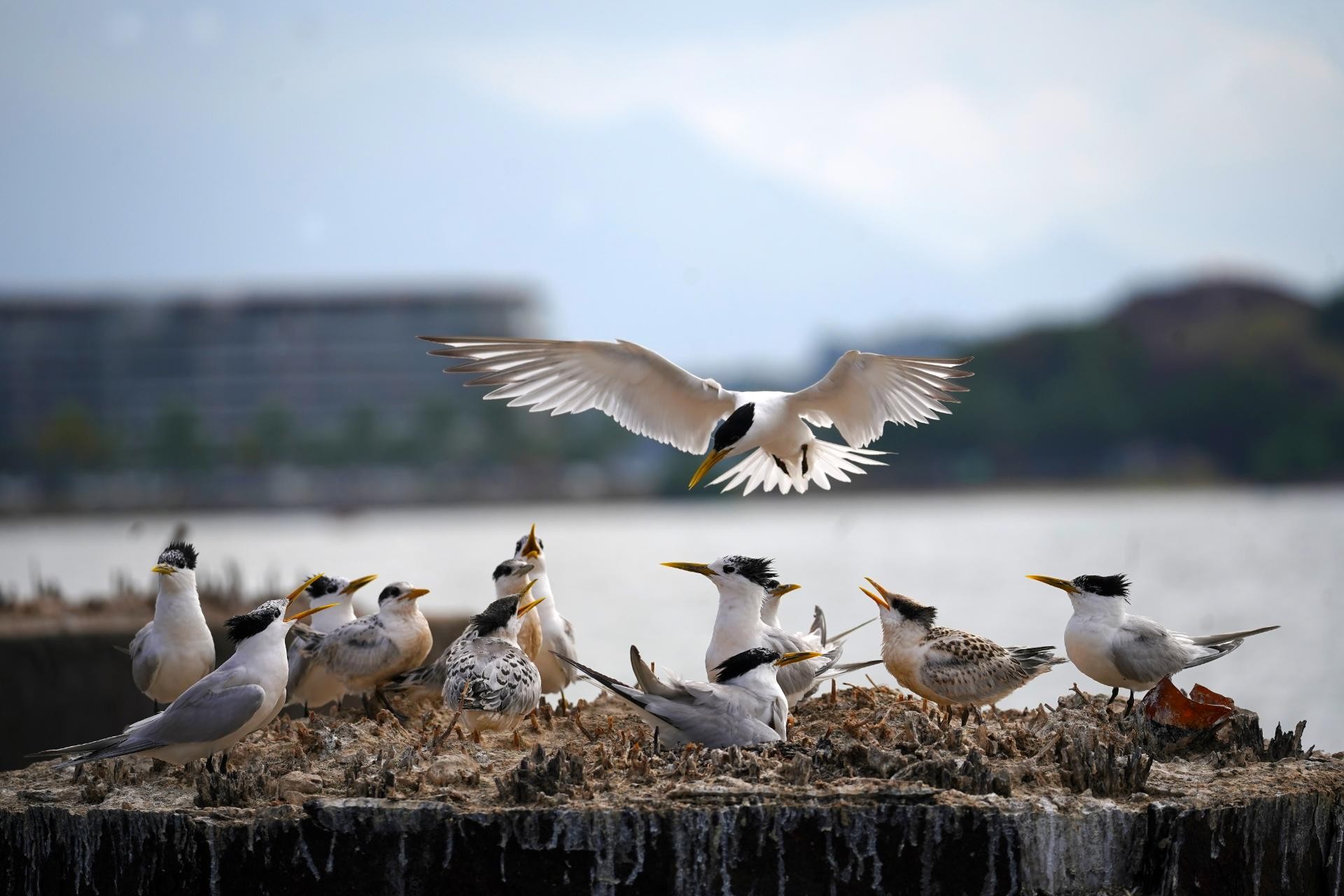
A colony of endangered yellow-billed terns, also known as seagulls, has established a nesting site on one of the 61 concrete pillars of the Third Bridge in Espírito Santo, Brazil. This species was officially listed as endangered in the state in 2022. The birds' shift to this man-made structure occurred after a severe avian flu epidemic in 2023 decimated their traditional nesting islands, particularly in Vila Velha. While adaptation is key to survival, the bridge's limited space presents a significant challenge for the young chicks. Unlike their natural island habitats where chicks gather in large groups, the narrow concrete ledges offer little room to maneuver. This often results in chicks falling into the sea from the six-meter-high structure before they are capable of flight, leading to death from the impact or hypothermia. Researchers, veterinarians, and volunteers have formed a task force to monitor the colony, rescue fallen chicks, implement protective measures, and seek solutions to mitigate losses for this already vulnerable population. The yellow-billed terns previously played a crucial role in alerting Brazil to the arrival of highly pathogenic avian influenza in 2023, a fact that highlights the species' ecological importance and the irony of its current plight. Population estimates show a drastic decline, from approximately 14,000 breeding pairs in the 1990s to an estimated 1,500 to 1,700 adults today, making the survival of each chick critical for the species' recovery.
The relocation of the yellow-billed tern colony to the Third Bridge highlights the critical intersection of human infrastructure development and wildlife habitat loss. The species' adaptation to a concrete pillar, while a testament to its resilience, underscores the diminishing availability of natural nesting sites due to factors like urbanization and disease outbreaks. The high mortality rate among chicks falling into the sea points to a systemic challenge: the design and maintenance of infrastructure must increasingly account for ecological impacts. Future urban planning and construction projects, particularly in coastal areas, should integrate biodiversity considerations from the outset to prevent such conflicts and proactively create or preserve suitable habitats. This situation serves as a stark reminder that human progress can inadvertently create ecological traps, necessitating innovative, collaborative solutions between environmental agencies, engineers, and conservationists to ensure species survival in increasingly human-dominated landscapes.
AI-generated to prompt reflection — not editorial opinion, not advice, not a statement of fact. How this works.