Enel Submits Final Defense Before Aneel Decision on SP Concession Revocation
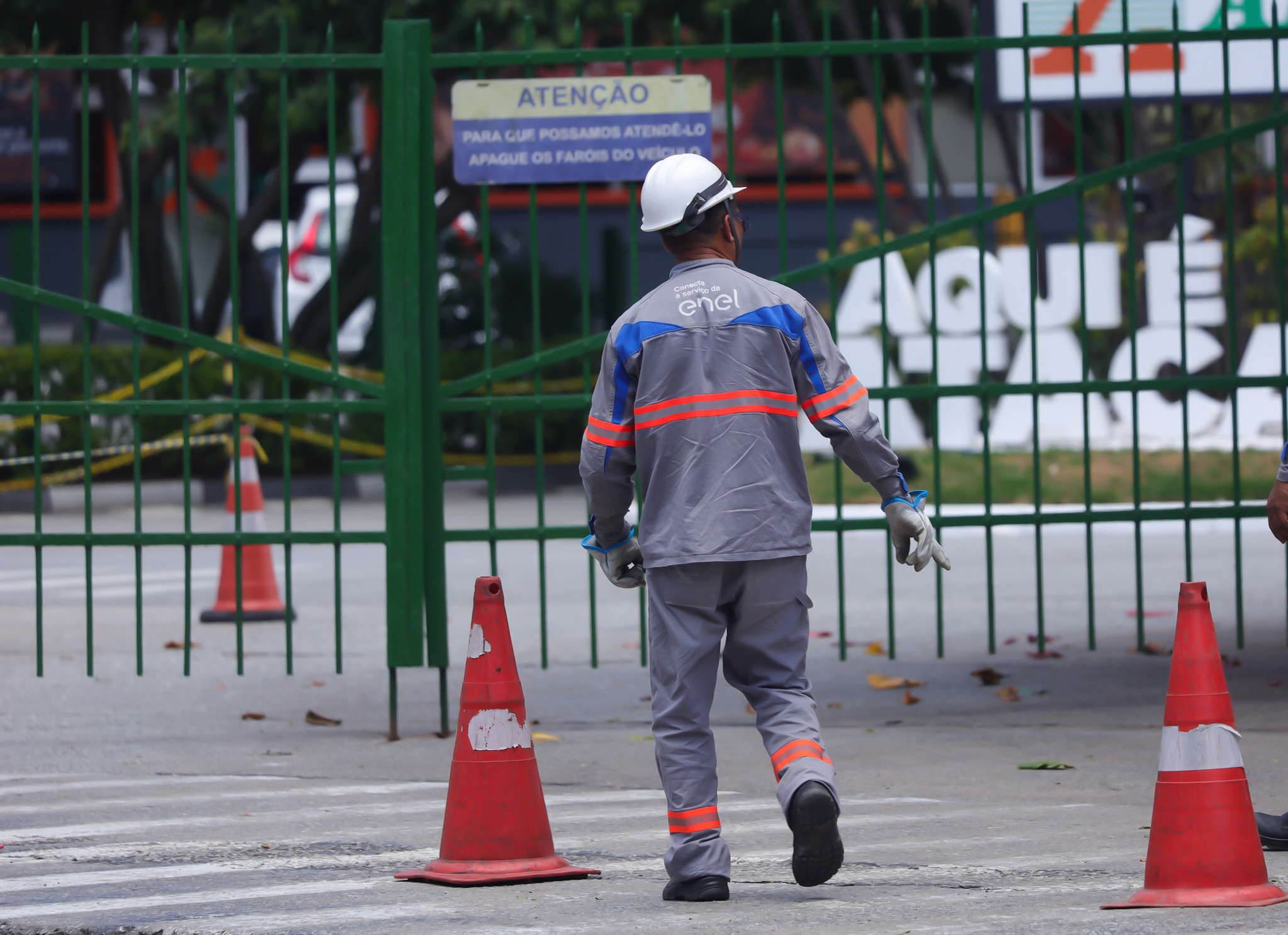
Enel has submitted its final defense to the National Electric Energy Agency (Aneel) in a process that could lead to the revocation of its electricity distribution concession in São Paulo and 23 surrounding municipalities. The 25-page document, presented to rapporteur Fernando Mosna, counters Aneel's technical assessment and the Federal Prosecutor's Office's recommendation to proceed with the concession's termination. The termination process, known as 'caducity', is an extreme measure considered when a concessionaire fails to meet contractual obligations and cannot ensure service continuity to the public. This submission follows Enel's request for reconsideration after Aneel initiated the termination process in April, citing massive failures in energy distribution and restoration delays in Greater São Paulo during 2024. Aneel's technical area had previously concluded that Enel's arguments did not invalidate the initiation of the process, stating the company's disagreement pertained only to the methodology for assessing service restoration after the December 2025 blackout, not other identified failures.
In its defense, Enel argues that Aneel applied criteria not formally agreed upon to evaluate the recovery plan post-2024 blackouts, asserting that the agency itself had previously acknowledged a lack of consensus on regularization targets. The company contends it cannot be held responsible for failing to meet parameters that were never officially established. A key point of contention is the methodology used to calculate the percentage of consumers whose power was restored within 24 hours after the December 2025 storm. Enel claims Aneel used a 67% figure based on the 'simultaneous peak' method, which the rapporteur himself deemed inadequate. Enel asserts that using Aneel's preferred method, based on interruption duration, would yield an 80.2% restoration rate. However, the Prosecutor's Office maintains that the agency applied a consistent 'simultaneous peak' methodology, as used in prior events, and that Enel's objection is merely a disagreement over calculation methods, not an agency error.
Furthermore, the Prosecutor's Office argues that even if Enel's calculation methodology were accepted, it would not be enough to overturn the termination process. The initiation was based on a broader set of failures identified by Aneel's inspection, including long average response times for emergencies, numerous interruptions exceeding 24 hours, inadequate planning for extreme weather, low field team productivity, and insufficient network restoration infrastructure. The Prosecutor's Office stated that each of these failures, individually, could justify the administrative process. The legal opinion also noted that legislation does not strictly require the breach of specific regulatory indicators to prove inadequate service, as overall operational deficiencies, slow system recovery, and inability to handle critical events can also demonstrate poor service quality.
The legal and regulatory battle between Enel and Aneel highlights the complex interplay between contractual obligations, service performance metrics, and regulatory oversight in essential public utilities. Enel's defense centers on disputing the agreed-upon methodologies for evaluating service restoration, suggesting a potential disconnect between regulatory expectations and operational realities, or perhaps a strategic challenge to the established performance benchmarks. Aneel's position, supported by the Prosecutor's Office, emphasizes a pattern of systemic failures beyond a single metric, suggesting that the concessionaire's overall operational capacity and preparedness are under scrutiny. The ultimate decision by the federal government will likely weigh the evidence of Enel's performance against the imperative of ensuring reliable energy distribution for the public, considering the potential implications for future concession agreements and the balance of power between regulators and private operators in Brazil's energy sector.
AI-generated to prompt reflection — not editorial opinion, not advice, not a statement of fact. How this works.