Enem 2026: Top 5 Subjects Per Discipline With 100 Days to Go
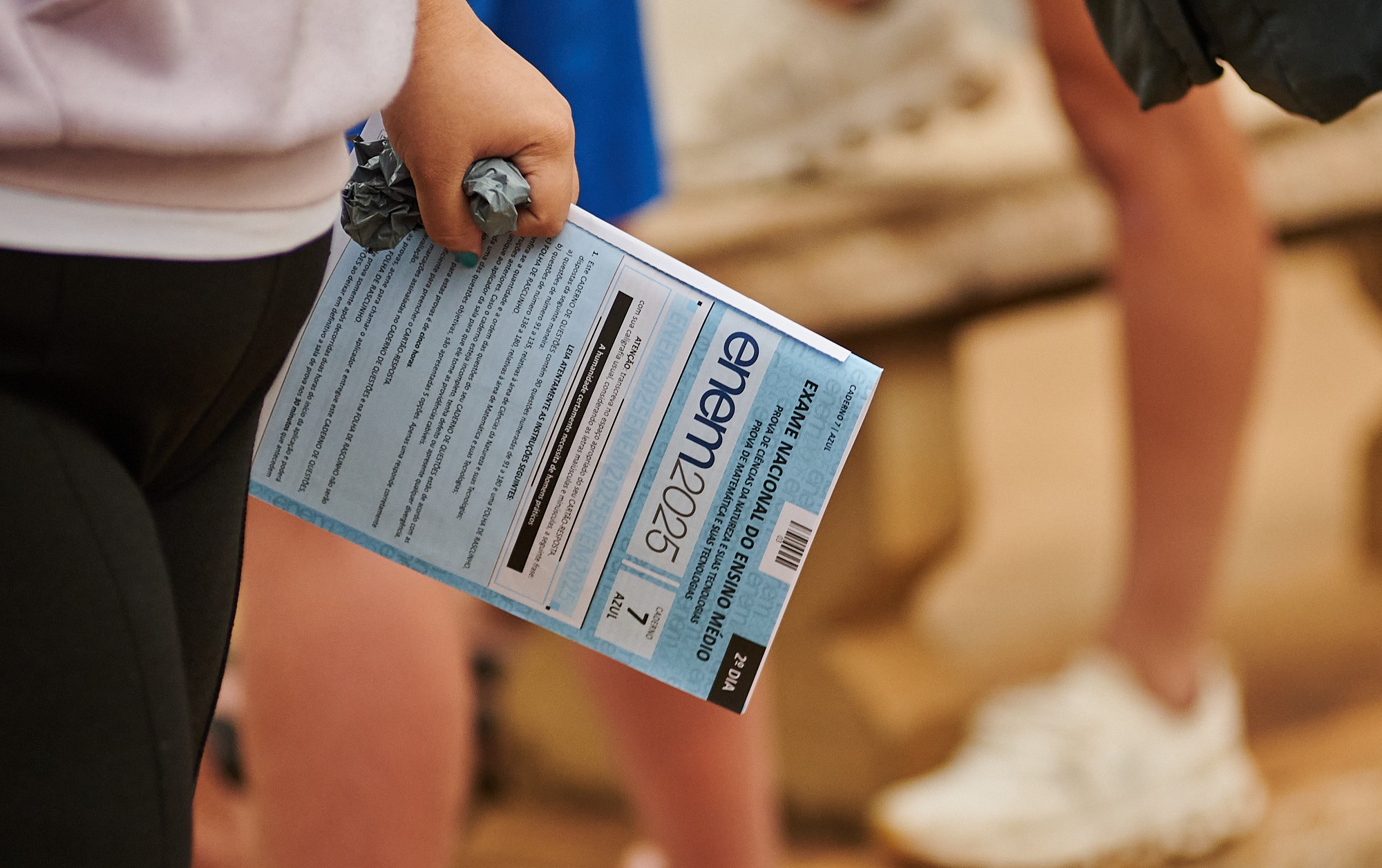
With 100 days remaining until the Enem 2026 national high school exam, students are advised to adopt strategic preparation methods. The exam is scheduled for November 8 and 15. The first day will include 45 questions each on Languages and Humanities, plus an essay. The second day will feature 45 questions on Natural Sciences and 45 on Mathematics. Professor Idelfranio Moreira, director of education and innovation at SAS Educação, emphasizes that the Enem requires not only foundational knowledge from basic and secondary education but also strategic planning, concentration, and both emotional and physical endurance. He recommends practicing with past exams and simulations to identify strengths and weaknesses, guiding revision focus. SAS Educação compiled a list of the most frequently tested topics between 2009 and 2025 to assist students in prioritizing their studies. The Languages and Codes section covers Portuguese, literature, foreign languages, arts, physical education, and IT, emphasizing text interpretation and contextualized, interdisciplinary content. Portuguese questions assess reading comprehension, understanding of language structures, verbal/non-verbal communication, linguistic variation, discourse analysis, and Brazilian literature. The Humanities block, comprising geography, history, philosophy, and sociology, strongly features interdisciplinary connections, such as linking geographical aspects to historical events or social movements to concepts of inequality. Students must apply knowledge to understand problems within their contexts, identifying causes, consequences, and solutions. Top topics include urbanization, economic development, geopolitics in Geography; political philosophy, ethics, and modern philosophy in Philosophy; colonial Brazil, Vargas Era, and public history in History; and rights, citizenship, social movements, and identity in Sociology. Natural Sciences (biology, physics, chemistry) requires understanding phenomena and applying concepts to daily life, like environmental impacts or electrical circuits. Interdisciplinary environmental topics are common. Key areas are ecosystem imbalances, viral diseases, DNA, biochemistry, and cell biology in Biology; calorimetry, electrical circuits, thermodynamics, and energy consumption in Physics; and organic chemistry, chemical kinetics, batteries, and mixture separation in Chemistry. Mathematics, with 45 contextualized questions, focuses on interpreting graphs, tables, and modeling real-world situations, prioritizing logical reasoning and application over complex calculations. Frequently tested math concepts include proportionality, statistics, plane and solid geometry, and probability.
As the Enem approaches, the focus shifts to strategic content review, highlighting a common challenge in standardized testing: balancing breadth of knowledge with depth in frequently assessed areas. The emphasis on contextualization and problem-solving across disciplines reflects a pedagogical shift towards applying theoretical knowledge to practical scenarios, a trend likely to intensify with the increasing integration of AI in education. This approach aims to foster critical thinking and adaptability, skills crucial for navigating future technological and societal landscapes. The detailed breakdown of common topics provides a data-driven approach to exam preparation, underscoring the importance of understanding historical trends in curriculum design and assessment. Future educational systems may leverage AI to personalize these preparation strategies further, adapting to individual learning paces and identifying nuanced knowledge gaps.
AI-generated to prompt reflection — not editorial opinion, not advice, not a statement of fact. How this works.