Erdogan warns Israel against undermining US-Iran deal
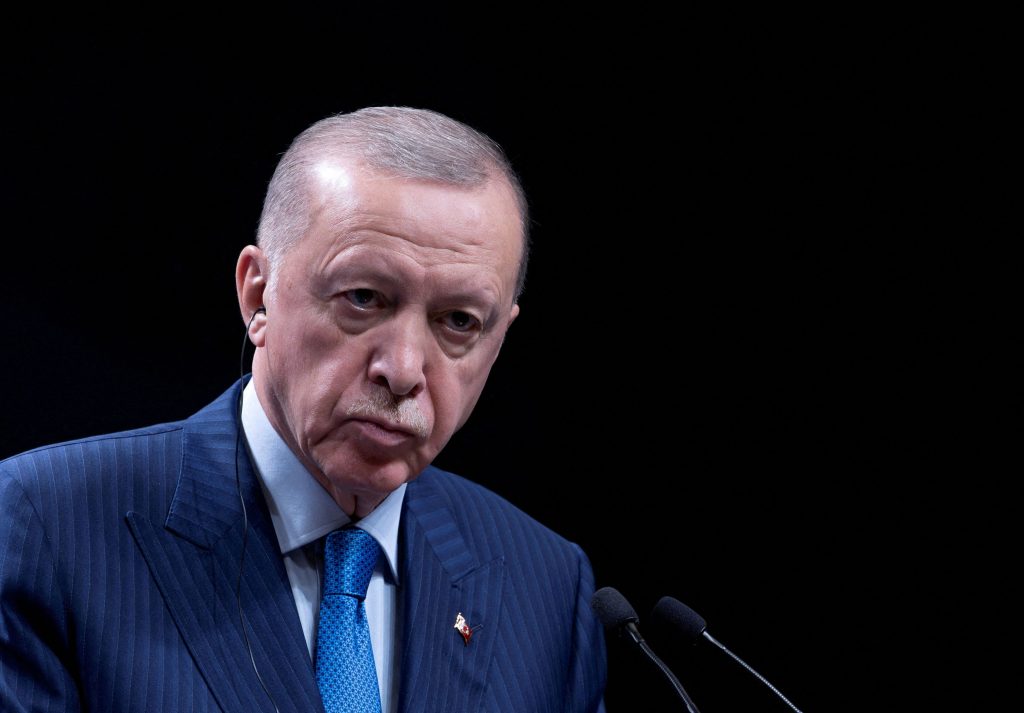
Turkish President Recep Tayyip Erdogan stated that peace efforts in the Middle East cannot succeed without the active involvement of regional countries. Speaking in Istanbul, he cautioned against allowing Israel to "undermine" a potential peace agreement between the United States and Iran. Erdogan emphasized the necessity of regional participation in achieving peace, suggesting that external actors should not be permitted to disrupt these delicate diplomatic processes. He made these remarks in the presence of Pakistani Prime Minister Shehbaz Sharif. The Turkish President's comments highlight a broader concern regarding the complex geopolitical dynamics of the Middle East and the role of various international and regional players in shaping its future stability. Erdogan's stance underscores Turkey's position on fostering regional cooperation and dialogue as a prerequisite for lasting peace in the area. The warning to Israel indicates a perceived risk of Israeli actions negatively impacting broader diplomatic initiatives aimed at de-escalation and conflict resolution.
President Erdogan's statement frames the US-Iran diplomatic process as a regional concern, advocating for local buy-in to ensure its success. This perspective suggests that external mediation, even by major powers like the US, may falter without the consent and cooperation of Middle Eastern states. The warning directed at Israel implies a belief that Israeli policy could act as a destabilizing force, potentially jeopardizing broader regional security architectures. This highlights a systemic tension between national security interests of individual states and the collective stability of the region, particularly in the context of evolving geopolitical alignments and the ongoing competition for influence. The emphasis on regional agency over external agreements points to a potential shift in global governance models, where local actors increasingly demand a central role in resolving regional conflicts.
AI-generated to prompt reflection — not editorial opinion, not advice, not a statement of fact. How this works.