ESA's Cebreros Space Tracking Station Resumes Normal Operations After Wildfire Evacuation
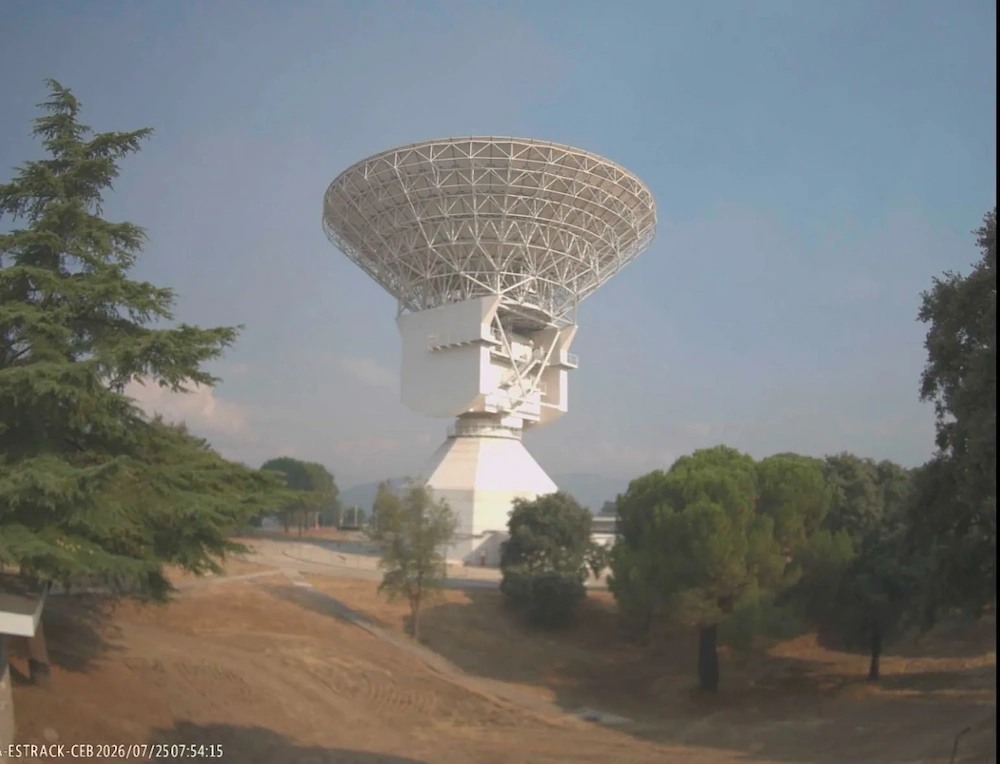
The European Space Agency's (ESA) Cebreros space mission tracking station in Ávila, Spain, has resumed normal operations. The station, equipped with the DSA-2 antenna, was evacuated last Friday due to a wildfire affecting the province. Following necessary checks and tests, ESA Director Asbacher confirmed the station is now operational as of today. However, personnel presence will be kept to a minimum essential level until the wildfire is fully controlled and extinguished, despite indications of improving conditions. The Cebreros station is part of ESA's European Space Tracking (ESTRACK) network, which comprises seven globally distributed stations enabling continuous communication with ESA missions and those of collaborating space agencies. Four ESTRACK stations monitor near-Earth satellites and rockets, while three focus on deep-space probes. The network is managed from the European Space Operations Centre in Darmstadt, Germany, with real-time activity accessible via ESTRACK Now. Separately, NASA's Deep Space Network (DSN) station in Robledo de Chavela, also evacuated on Friday, has had its equipment accessed by INTA teams. While not yet officially in service, minor damages are reported and require repair.
The incident highlights the critical vulnerability of essential space infrastructure to environmental factors, even in regions not typically associated with extreme weather. The rapid response and successful recovery of the ESA's Cebreros station underscore the resilience and preparedness of its operational protocols. However, the parallel evacuation and reported minor damage at NASA's DSN station in Robledo de Chavela suggest a broader systemic risk across multiple agencies' ground support networks. As space activities intensify and reliance on these ground stations grows, future planning must increasingly integrate climate change projections and potential environmental disruptions into site selection, infrastructure hardening, and contingency strategy development. This ensures the continued integrity of global space operations and scientific endeavors in the face of evolving environmental challenges.
AI-generated to prompt reflection — not editorial opinion, not advice, not a statement of fact. How this works.