ESA's Planet Hunter Plato Spacecraft Passes Crucial Testing Phase
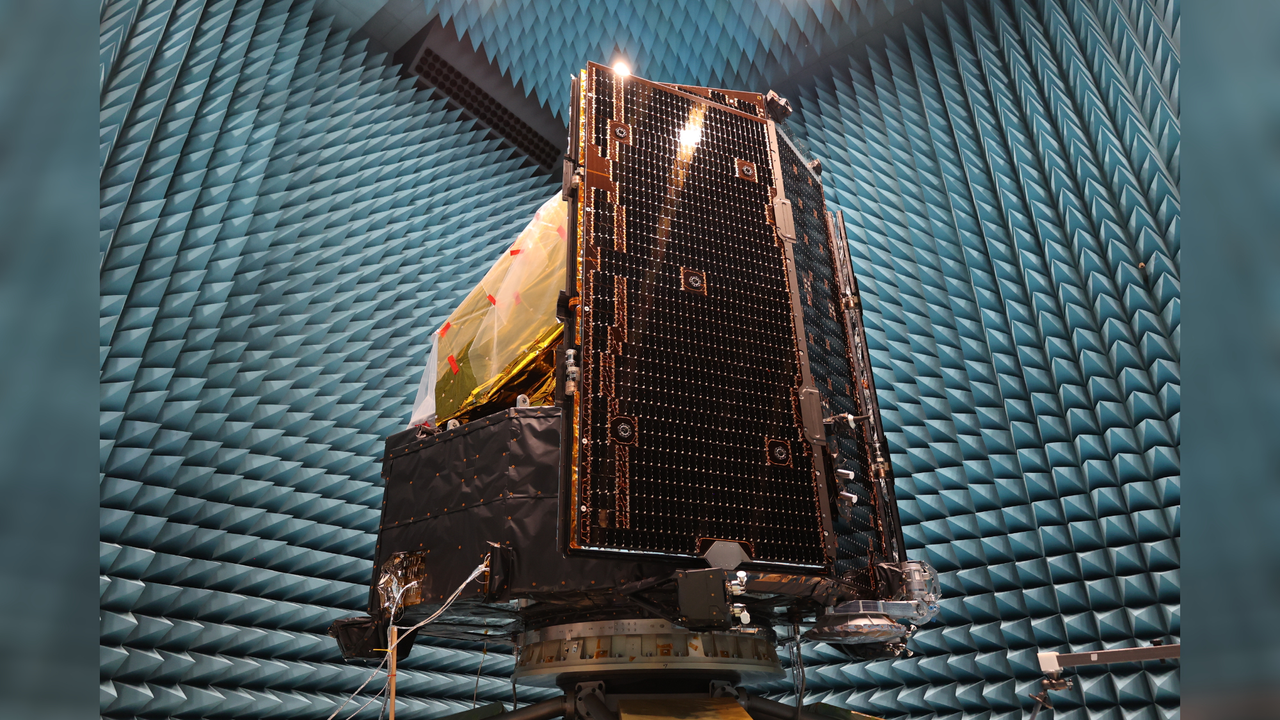
The European Space Agency's (ESA) PLATO (PLAnetary Transits and Oscillations of stars) spacecraft has successfully completed a vital testing phase. This milestone brings the ambitious planet-hunting mission closer to its scheduled launch. PLATO is designed to discover and study exoplanets, particularly those in the habitable zones of their stars. Its primary objective is to find Earth-like planets orbiting Sun-like stars. The spacecraft will utilize a unique array of 26 cameras to observe a large portion of the sky simultaneously. This advanced instrumentation will enable it to detect the subtle dimming of starlight caused by transiting planets. By studying these transits, scientists can determine the size, mass, and orbital period of exoplanets. Furthermore, PLATO will analyze stellar oscillations to precisely measure the mass of the host stars, which is crucial for understanding planetary properties. The successful completion of this testing phase indicates that the spacecraft is on track for its upcoming spaceflight. This mission represents a significant step forward in the search for life beyond Earth.
The successful completion of critical testing for ESA's PLATO spacecraft underscores the rigorous engineering required for deep space missions. This phase is essential for ensuring the reliability of complex instruments designed for long-duration observation and data collection. As the mission progresses towards launch, attention will shift to the operational execution and the subsequent analysis of vast datasets. The PLATO mission's focus on exoplanets within habitable zones aligns with broader scientific and societal interests in astrobiology and the potential for extraterrestrial life. Future advancements in AI and data processing will be instrumental in maximizing the scientific return from such sophisticated observatories, enabling more nuanced interpretations of planetary characteristics and stellar behavior over the next decade.
AI-generated to prompt reflection — not editorial opinion, not advice, not a statement of fact. How this works.