ESA's Rosalind Franklin Rover to Probe Martian Clay for Signs of Life
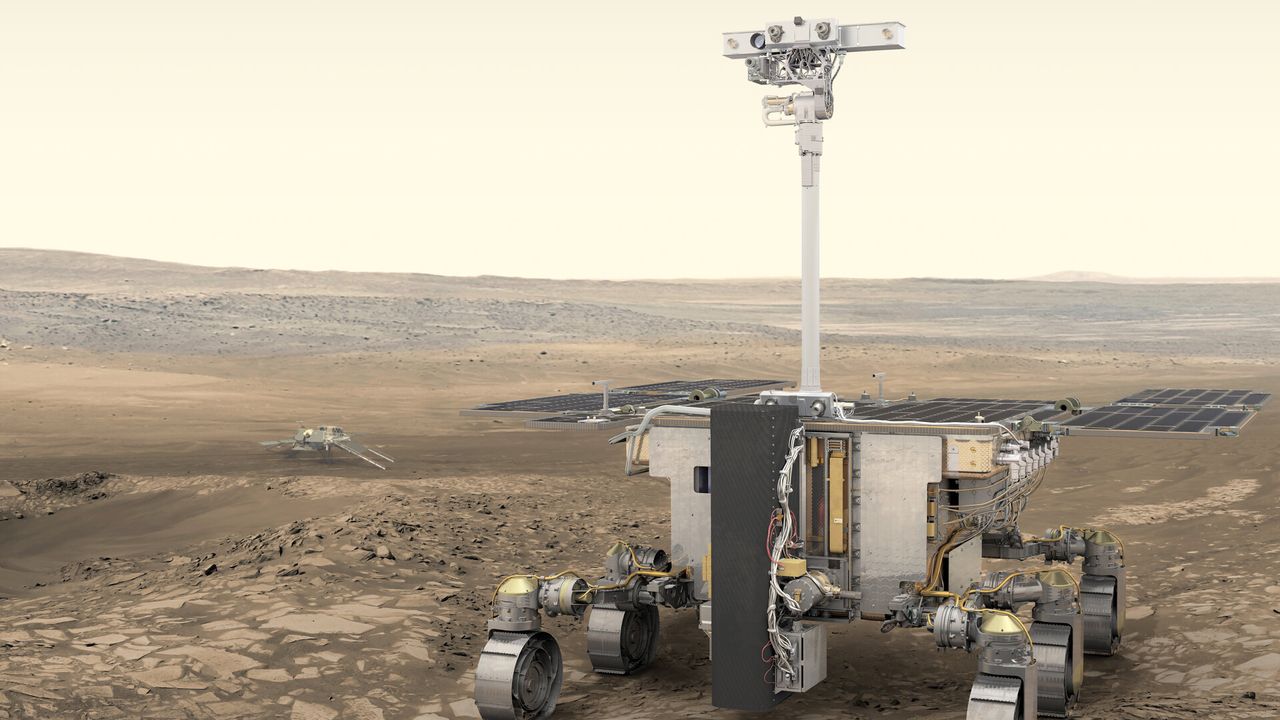
The European Space Agency (ESA) is planning a mission to Mars with its Rosalind Franklin rover. The primary objective of this mission is to investigate the Martian clay for potential evidence of life. Scientists believe that clay deposits on Mars could hold clues to past or present biological activity. The rover is equipped with advanced instruments designed to analyze the composition of the Martian soil and subsurface. By drilling into the clay, the rover aims to access samples that may have been protected from harsh surface conditions. This investigation is a crucial step in the ongoing search for extraterrestrial life within our solar system. The mission highlights Europe's commitment to planetary exploration and the scientific pursuit of understanding Mars' potential habitability. The findings from the Rosalind Franklin rover could significantly advance our knowledge of Mars' geological history and its capacity to support life.
The ESA's Rosalind Franklin rover mission exemplifies the scientific community's persistent drive to answer fundamental questions about life beyond Earth. By focusing on Martian clay, the mission targets geological formations known on Earth to preserve organic matter, suggesting a rational, evidence-based approach. This endeavor aligns with a broader, long-term trend in space exploration towards seeking biosignatures in environments with past or present water. The success of such missions hinges on technological reliability and the ability to interpret complex data, underscoring the interplay between engineering and scientific discovery in the coming decade of enhanced planetary science.
AI-generated to prompt reflection — not editorial opinion, not advice, not a statement of fact. How this works.