ESP32 Microcontroller Now Features a Web Browser
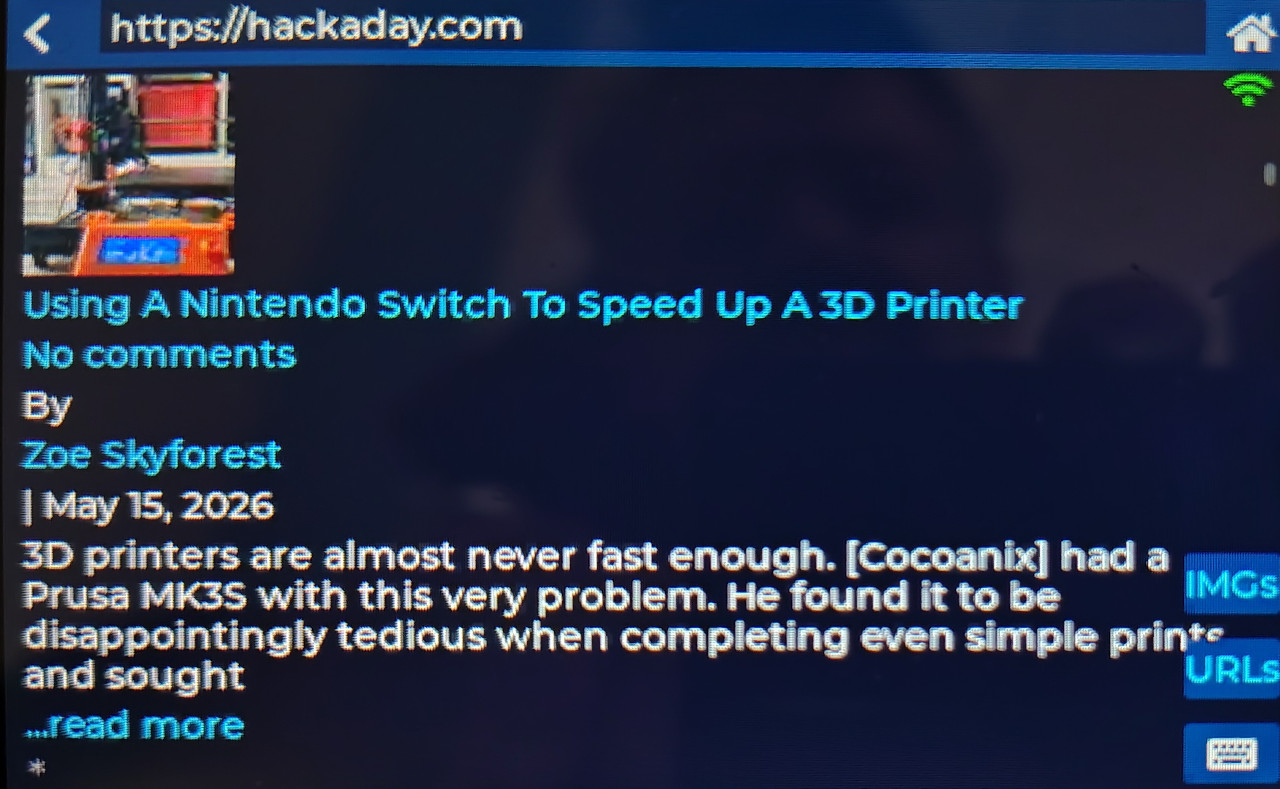
A demonstration at the Hackaday Europe conference, held earlier this year in Italy, showcased an intriguing device. Developed by Alun Morris, the device utilizes an ESP32 microcontroller and a Cheap Black Display. This innovative setup allows the ESP32, typically used for embedded systems and IoT applications, to render and display web content. The project highlights the growing capabilities of small, low-power microcontrollers and their potential for more complex tasks beyond basic sensor reading and control. Morris's work suggests a future where even resource-constrained devices can interact with the internet in more sophisticated ways. The integration of a web browser onto such a platform opens up possibilities for new user interfaces and data visualization directly on embedded hardware. This development could significantly expand the applications for ESP32-based projects, enabling richer interactions and more dynamic information display.
This development signifies a notable advancement in the capabilities of low-power microcontrollers like the ESP32. By enabling web browsing functionality, such devices can move beyond simple data collection and control towards more interactive and information-rich applications. This trend aligns with the broader technological shift towards distributed intelligence and edge computing, where processing power is pushed closer to the data source. The ability for embedded systems to render web content could lead to more intuitive user interfaces and dynamic data presentation, potentially reducing reliance on external displays or complex companion applications. Future implications may include more sophisticated IoT devices capable of displaying real-time dashboards or receiving complex instructions directly from web services, fostering a more interconnected and intelligent environment.
AI-generated to prompt reflection — not editorial opinion, not advice, not a statement of fact. How this works.