EU Accession Talks: Ukraine Awaits EU Unity on Opening Negotiation Clusters
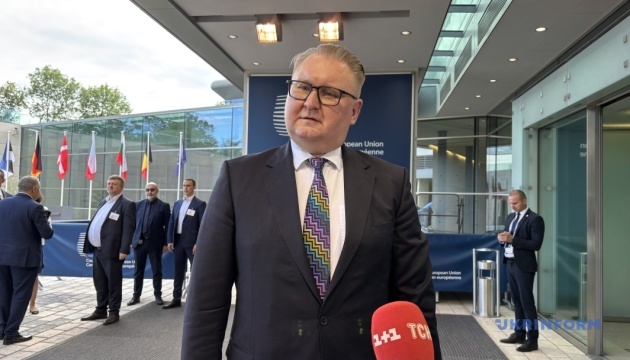
Ukraine's progress in opening new negotiation clusters within its European Union accession talks now rests entirely on the unity of the 27 EU member states. While no single member state has expressed opposition to advancing these talks, the collective agreement of all is required. The decision to proceed with further opening of these clusters is therefore dependent on consensus among all EU nations. This situation highlights the procedural hurdles Ukraine faces in its bid to join the European Union. The ball is now in the EU's court to demonstrate this necessary unity. Ukraine's aspiration for EU membership hinges on this collective political will. The current stage emphasizes the importance of unanimous support within the bloc for enlargement. The outcome remains contingent on the internal dynamics and decision-making processes of the European Union.
The progression of Ukraine's EU accession negotiations, specifically the opening of new clusters, is presented as contingent on unanimous member state agreement. This procedural dependency underscores the complex governance structures within the EU, where individual state consensus is paramount for collective action, even when no explicit opposition exists. From a systems perspective, this reliance on absolute consensus can create bottlenecks, potentially delaying strategic geopolitical objectives. The current dynamic invites consideration of alternative decision-making frameworks within the EU that could expedite such processes without compromising core principles, particularly in the context of geopolitical shifts and the strategic importance of Ukraine's integration.
AI-generated to prompt reflection — not editorial opinion, not advice, not a statement of fact. How this works.