EU Aspirations Face Internal Challenges in a Balkan Nation
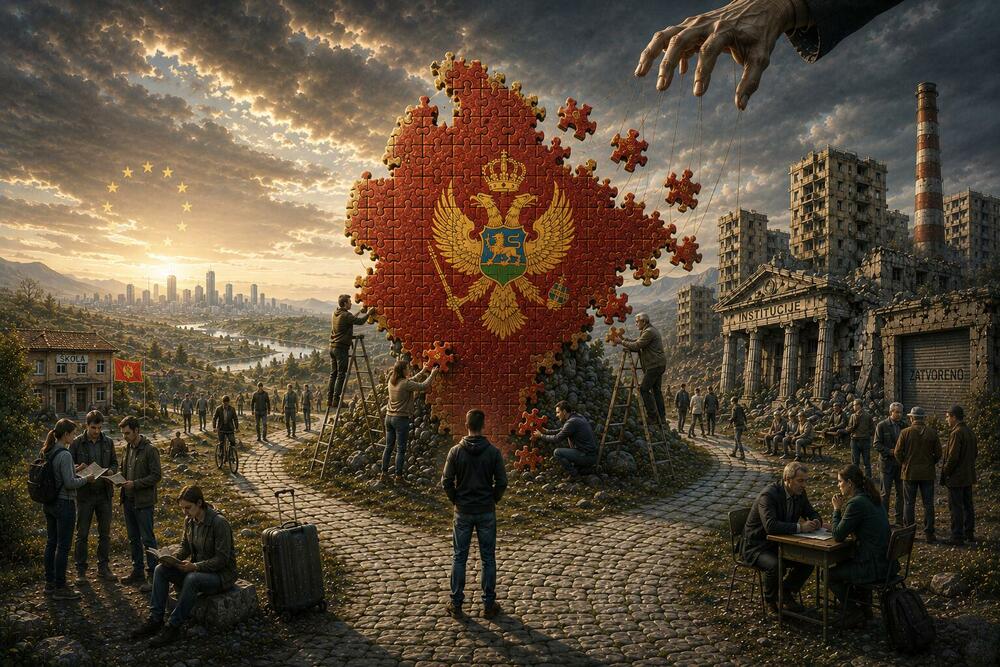
Despite aspirations for European Union membership, a Balkan nation faces significant internal challenges that EU accession alone will not resolve. Experts warn that issues such as societal divisions, weak institutions, declining demographics, and economic vulnerabilities require dedicated domestic efforts. Aleksandar Musić highlights that ethno-federalization, a flawed economic structure, and a weak foreign policy are not automatically rectified by joining the EU.
Željko Pantelić emphasizes that even after EU entry, a sustained commitment to combating corruption, crime, and the abuse of power is essential. He stresses the need to prevent the state from being exploited for personal gain. Maja Baćović points out that labor market meritocracy is crucial for boosting efficiency in both public and private sectors and for encouraging investment in human capital.
Furthermore, Dragana Otašević underscores the necessity of a proactive demographic policy. This policy should aim to increase fertility and birth rates, reduce emigration, facilitate the return of the diaspora, and create conditions that encourage young people to remain in the country.
The narrative surrounding EU accession often frames it as a panacea for a nation's systemic issues. However, this perspective overlooks the critical interplay between external integration and internal reform. The cited challenges—institutional weakness, demographic decline, economic structure, corruption, and a lack of meritocracy—are deeply ingrained and require sustained, context-specific policy interventions. Without addressing these foundational elements, the benefits of EU membership may be diluted, or the integration process could exacerbate existing fragilities. Future governance models will need to balance the pursuit of external alignment with the imperative of domestic resilience and equitable development, particularly as demographic shifts and technological advancements reshape labor markets and societal structures over the next decade.
AI-generated to prompt reflection — not editorial opinion, not advice, not a statement of fact. How this works.