EU Commission advised to ban social media for children under 13
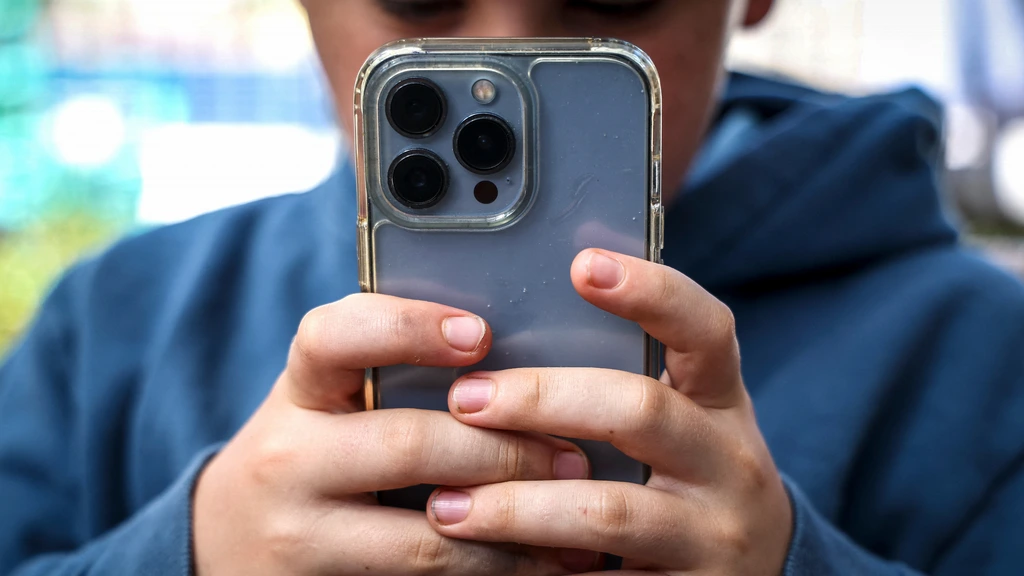
An advisory committee established by the European Commission has recommended a ban on the independent use of social media for children under the age of thirteen. The committee's comprehensive report, spanning over one hundred pages, details the significant influence of social media on young people. Researchers propose that children younger than thirteen should only access social media under the supervision of parents or teachers, and with strict time limits. Commission President Ursula von der Leyen described the recommendations as "very convincing" and highlighted the dangers of excessive screen time, including sleep deprivation, depression, anxiety, cyberbullying, and exposure to harmful content, noting that young people spend four to six hours daily on screens. The advisory panel also suggests that social media companies must prove their platforms are safe for young users, by preventing harmful content and reducing addictive features like infinite scrolling and constant push notifications. The committee advises a gradual increase in online freedom for adolescents aged thirteen to eighteen, with tech companies adapting their applications to ensure age-appropriate safety. The European Commission is expected to present a proposal to limit social media use for children after the summer, which will then proceed to the European Parliament and EU member states. Many EU countries, including France, Spain, Slovenia, and Austria, are already developing their own age restrictions, with the possibility for national governments to set a higher age limit than thirteen. The Netherlands also supports an age limit and prefers to await European agreements. However, Estonia has expressed criticism, advocating for digital literacy and arguing that age restrictions are easily circumvented, citing examples from Australia where a ban for under-sixteens has proven ineffective. The researchers acknowledge the limited evidence for the effectiveness of a strict age limit and propose that access for thirteen-year-olds should be coupled with media literacy education and a mandate for tech companies to enhance app safety. Von der Leyen anticipates that age-limit regulations will not be perfectly implemented immediately, emphasizing the need for a cultural shift akin to the adoption of drunk driving bans or seatbelt laws. Niels Zagema, a Dutch advisor to Von der Leyen, supports the report but cautions against an overly strict approach, emphasizing the importance of social media for developing online skills and participating in modern society.
The European Commission's consideration of age-based social media restrictions, prompted by an internal advisory committee, reflects a growing global concern over the impact of digital platforms on child development. The proposed measures, including age verification and supervised access, aim to mitigate risks such as addiction, cyberbullying, and exposure to inappropriate content. However, the analysis must consider the inherent challenges in enforcing such regulations, particularly the ease with which age verification can be bypassed, as evidenced by experiences in Australia. The report's acknowledgment of these limitations, alongside a call for media literacy education and platform accountability, suggests a nuanced approach. The debate highlights a fundamental tension between protecting vulnerable users and fostering digital citizenship. Future policy will likely involve a complex interplay between technological safeguards, educational initiatives, and the evolving responsibilities of social media corporations, all within the context of an increasingly interconnected digital world where global coordination remains a significant hurdle.
AI-generated to prompt reflection — not editorial opinion, not advice, not a statement of fact. How this works.