EU Commission Proposes Delay on Fines for Methane Rule Violations by Oil and Gas Firms
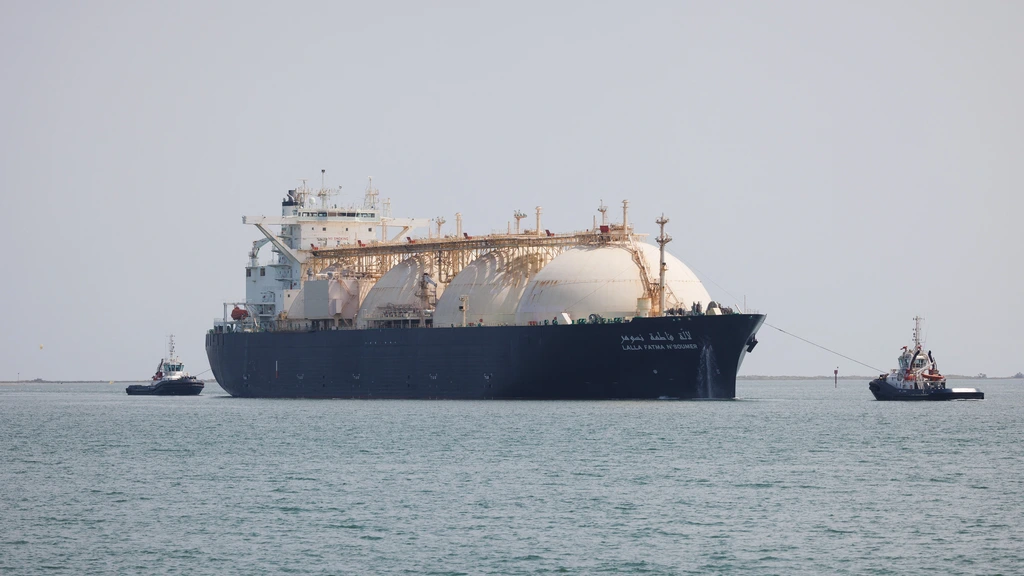
The European Commission has recommended that EU member states temporarily refrain from imposing fines on companies that violate new climate regulations concerning methane emissions. These regulations are set to take effect from 2027. The Commission's rationale is to ensure that the legislation does not jeopardize the European Union's energy security, a concern echoed by experts and several EU countries. The primary objective of these rules is to curb the release of methane, a potent greenhouse gas that contributes to global warming, similar to CO2. Significant amounts of methane are released during the extraction of oil and, particularly, natural gas, though precise figures are often unknown due to difficulties in detecting colorless and odorless leaks. Under the new EU legislation, both domestic and international companies will be required to monitor and report their methane emissions to facilitate leak reduction. Non-compliance with these reporting obligations could lead to fines up to 20% of annual turnover. The proposed regulations have faced considerable opposition from industry stakeholders and fossil fuel-exporting nations like the United States and Qatar, with some threatening to seek less stringent markets. The U.S. Ambassador to the EU warned of a potentially harsh winter for Europe if the rules were implemented as planned. The International Energy Agency (IEA) has also cautioned that the methane regulations could significantly reduce oil supply to the EU. In response to these concerns, the Commission is now suggesting a three-year grace period without penalties for non-compliance. However, it remains uncertain whether this proposal will alleviate the anxieties of EU member states, including Germany, the Czech Republic, and the Netherlands, which had advocated for a complete postponement of the reporting requirements to provide greater legal certainty for energy suppliers.
The European Commission's proposed delay in enforcing methane emission fines reflects a complex balancing act between environmental policy objectives and immediate energy security concerns. The pushback from industry and certain exporting nations highlights the potential economic friction inherent in ambitious climate regulations, particularly when energy markets are already volatile. This situation underscores the systemic challenge of transitioning to cleaner energy sources without disrupting supply chains or incurring significant economic costs. The Commission's approach, while pragmatic in the short term, raises questions about the long-term commitment to decarbonization goals and the potential for regulatory arbitrage if enforcement is perceived as inconsistent. Future policy design will need to integrate robust enforcement mechanisms with clear transition pathways to ensure both environmental integrity and market stability in the evolving global energy landscape.
AI-generated to prompt reflection — not editorial opinion, not advice, not a statement of fact. How this works.