EU Crisis Center Monitors European Wildfires, Seeks Prevention Strategies
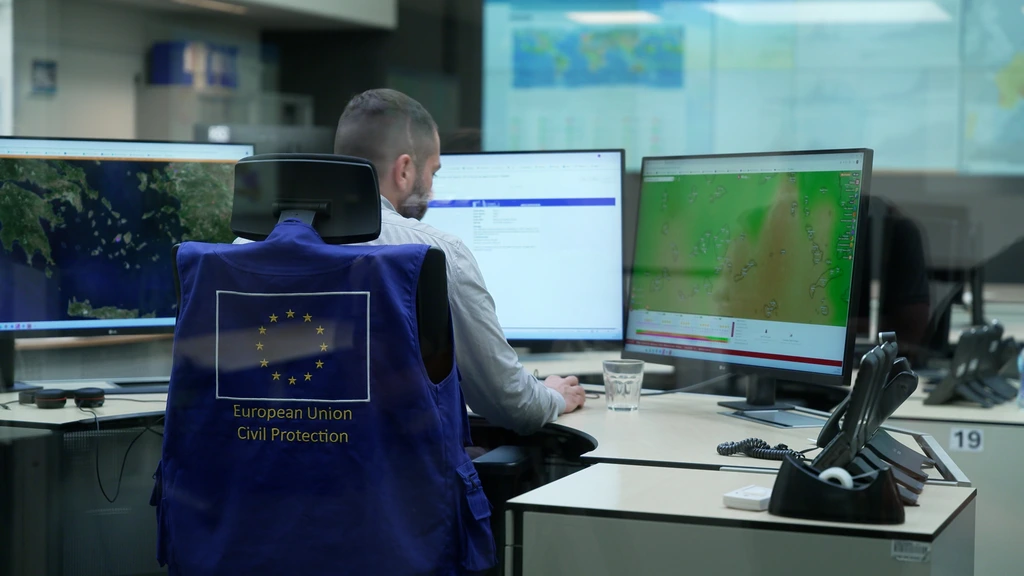
The European Union is intensifying its monitoring of wildfires across the continent through its Coordination Centre for Disaster Management in Brussels. While most EU officials are on holiday, a dedicated team of experts is working around the clock, analyzing satellite imagery to track fire development, provide forecasts, and share real-time information with all EU member states. This year's wildfire season is proving to be exceptionally severe, with the area burned in the EU already matching last year's record-breaking figures. Current concerns are focused on Greece and Italy due to dry and hot conditions, with France also expected to face difficulties in the coming days.
The center acts as a hub for international aid requests, coordinating the deployment of firefighting resources like planes, helicopters, and personnel from participating countries. This system includes all 27 EU nations plus ten additional countries, such as Turkey and Ukraine. Notably, the Netherlands was the first to report fires this season in April, receiving assistance from Germany and France. The EU also maintains a reserve fleet of 22 firefighting planes, five helicopters, and 777 firefighters, on loan from member states, strategically positioned in high-risk areas. For instance, Dutch firefighters have been deployed to Spain, while France is receiving aid from Portugal and Croatia, and Spain from Italy, Greece, and Turkey.
Recognizing the limitations of its current emergency fleet, the EU has ordered twelve new Canadair water bombers and five helicopters, but these are not expected to be delivered until 2030. Officials acknowledge that even a significantly larger fleet might struggle against the rapid spread of modern wildfires. Consequently, the focus is shifting towards prevention, with strategies including improved early warning systems, land management practices like grazing, public awareness campaigns against arson, and better forest management. These preventative measures are considered as crucial as the deployment of firefighting aircraft.
The EU's response to escalating wildfire threats highlights a critical gap between immediate crisis management and long-term systemic resilience. While the coordination center's real-time monitoring and resource allocation are vital, the projected 2030 delivery for new aircraft underscores a significant lead time challenge in adapting to climate-driven environmental shifts. This temporal lag suggests that current procurement and deployment models may not adequately anticipate the accelerating pace of extreme weather events. The increasing emphasis on prevention, beyond traditional firefighting, indicates a necessary strategic pivot. However, the effectiveness of these preventative measures will depend on sustained investment and cross-border cooperation, addressing the complex interplay of land use, climate change, and human activity. The situation calls for exploring innovative financing and technological solutions to bridge the gap between current capabilities and future needs, ensuring that the EU's disaster response infrastructure can evolve proactively rather than reactively.
AI-generated to prompt reflection — not editorial opinion, not advice, not a statement of fact. How this works.