EU Opens New Membership Talks with Ukraine and Moldova; Albania, Montenegro Advance
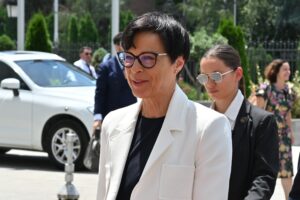
The European Union has initiated a new phase of accession negotiations with Ukraine and Moldova, marking a significant step forward in their bids for membership. European Commissioner for Neighborhood and Enlargement, Olivér Várhelyi, described the day as a "super Tuesday" for EU enlargement, highlighting that the Union held four intergovernmental accession conferences on the same day for the first time in over two decades. This development signifies substantial progress for Ukraine and Moldova in their integration with the EU. Concurrently, Albania and Montenegro have also moved closer to potential EU membership, as indicated by their participation in these advanced stages of the accession process. The concurrent progress of these four nations underscores a renewed momentum in the EU's enlargement policy. The Commissioner's remarks suggest a strategic push by the EU to deepen its ties with Eastern European and Balkan countries. This series of conferences represents a critical juncture for all involved nations, signaling a commitment from the EU to continue its expansion. The specific details of the progress made by each country were not fully elaborated in the provided text, but the overall tone suggests a positive and active engagement in the accession framework.
The EU's decision to advance accession talks with Ukraine and Moldova, alongside progress for Albania and Montenegro, reflects a strategic geopolitical realignment driven by evolving security and economic imperatives in Eastern Europe. This accelerated pace, unprecedented in recent history, suggests a response to external pressures and a desire to solidify the EU's influence and stability in its neighborhood. While this expansion offers potential benefits in terms of market integration and shared values, it also presents significant governance and economic integration challenges for both the EU and the candidate countries. The success of these accession processes will hinge on the candidates' capacity to implement deep reforms and the EU's ability to manage the complexities of a larger, more diverse Union, particularly in the current global economic climate.
AI-generated to prompt reflection — not editorial opinion, not advice, not a statement of fact. How this works.