EU's Tech Sovereignty Dilemma: The Unavoidable Reliance on China
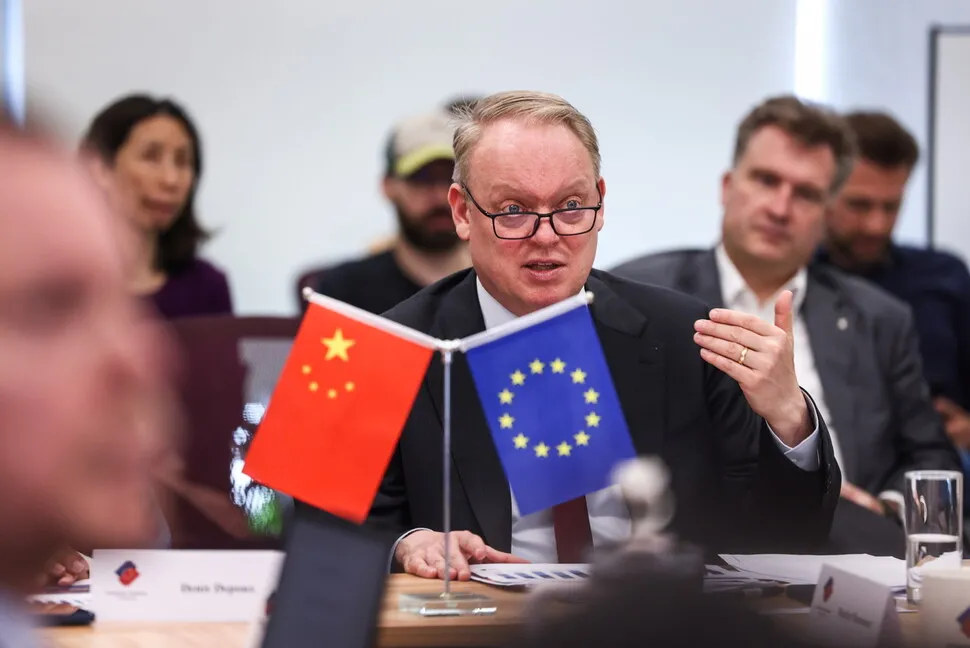
The European Union faces a significant dilemma in its pursuit of technological sovereignty, as it remains heavily reliant on China for critical technologies. Despite efforts to bolster domestic production and reduce dependence, the EU's industrial ecosystem is deeply intertwined with Chinese supply chains. This dependence is particularly evident in sectors like renewable energy, electric vehicles, and advanced manufacturing, where Chinese components and manufacturing capabilities are essential.
The EU's strategy for technological sovereignty aims to strengthen its own innovation capacity and reduce strategic dependencies on external powers. However, the economic realities and the current state of global supply chains present considerable obstacles. Many European industries have benefited from access to China's vast market and its competitive manufacturing base, making a complete decoupling economically unfeasible in the short to medium term.
This situation creates a complex balancing act for EU policymakers. They must navigate the geopolitical pressures and security concerns associated with reliance on China while simultaneously ensuring the competitiveness and growth of European industries. The challenge lies in finding a path that fosters greater EU autonomy without causing significant economic disruption or isolating European businesses from crucial global markets.
The European Union's aspiration for technological sovereignty highlights a fundamental tension between geopolitical ambitions and economic interdependence. While aiming to reduce reliance on external actors like China is a strategic imperative for national security and economic resilience, the deep integration of global supply chains presents a formidable challenge. The EU's industrial base has, over decades, leveraged efficiencies and market access offered by China, creating a complex web of dependencies that cannot be unwound without substantial economic cost and potential loss of competitiveness. Future policy decisions will likely involve a nuanced approach, focusing on targeted investments in key domestic technologies and diversification of supply chains, rather than a complete disengagement. The long-term success of the EU's tech sovereignty strategy will depend on its ability to foster innovation and scale domestic production effectively, while managing the intricate trade-offs inherent in a globally interconnected economy.
AI-generated to prompt reflection — not editorial opinion, not advice, not a statement of fact. How this works.