EU to Hold Emergency Meeting on Ceuta Migrant Crisis
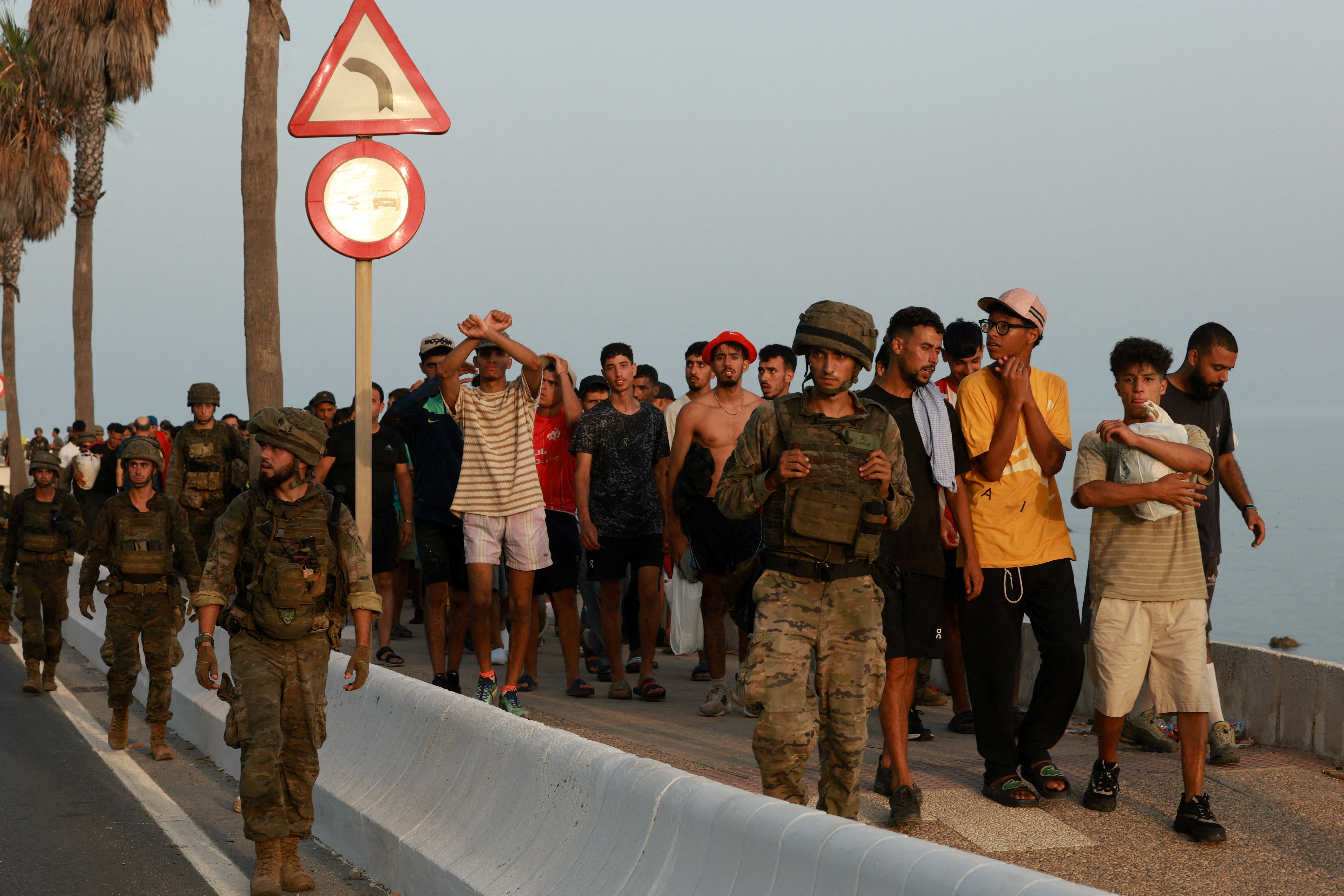
The European Union is convening an emergency meeting of Interior Ministers on Tuesday, May 4th, to address the significant migrant crisis in Ceuta, a Spanish enclave in North Africa. This gathering aims to formulate a coordinated response to the influx of migrants from Morocco, which has placed immense pressure on one of the EU's external borders. The meeting was requested by 22 member states, who also proposed potentially reinforcing the European border agency, Frontex, and re-evaluating cooperation with Morocco. Spain, the epicenter of the crisis, along with Ireland, France, Luxembourg, and Portugal, did not sign the letter initiating the meeting.
The crisis began on Thursday, April 30th, when approximately 60,000 individuals attempted to reach Ceuta by swimming or circumventing maritime border barriers from Morocco. The perilous journey resulted in at least 72 deaths, primarily from drowning in the Mediterranean Sea, with search teams continuing to recover bodies. Spanish police and the military have increased surveillance in Ceuta, though the situation is reported to be stabilized after most migrants were returned to Morocco. However, an estimated 3,000 to 5,000 people remain in Ceuta, many sleeping outdoors amidst overcrowded reception centers. The presence of 862 unaccompanied minors, who are legally protected from deportation, has exacerbated the humanitarian challenge, leading to the collapse of two reception centers.
To deter further entries, Spanish authorities installed a temporary 500-meter floating barrier in the sea. The crisis has also sparked political friction within the EU, with Italy temporarily suspending free movement under the Schengen Area with Spain. Spanish Prime Minister Pedro Sánchez criticized this move as selfish and polarizing, while European Commission President Ursula von der Leyen acknowledged Spain's efforts and advocated for stronger external border reinforcement. The events in Ceuta have been noted as strengthening anti-immigration rhetoric, providing political leverage for right-wing parties in Europe and the United States by associating immigration with fear and insecurity.
The migrant influx into Ceuta highlights systemic challenges at the EU's external borders, exacerbated by geopolitical factors and differing national interests among member states. The emergency meeting signifies a reactive approach to a crisis that has been building due to complex push factors in North Africa and pull factors within Europe, alongside the EU's evolving border management policies. The proposed solutions, such as reinforcing Frontex and cooperation with Morocco, address immediate containment but may not tackle the root causes of migration. The political fragmentation within the EU, evidenced by Spain's criticism of Italy's Schengen suspension, reveals internal contradictions in the bloc's commitment to free movement versus border security. Looking ahead, the increasing strain on border regions and the politicization of migration suggest a continued struggle to balance humanitarian concerns with national security imperatives, potentially leading to more restrictive policies and further diplomatic tensions.
AI-generated to prompt reflection — not editorial opinion, not advice, not a statement of fact. How this works.
