Euclid Telescope Discovers 31 Distant Quasars, Offering Glimpse into Early Universe
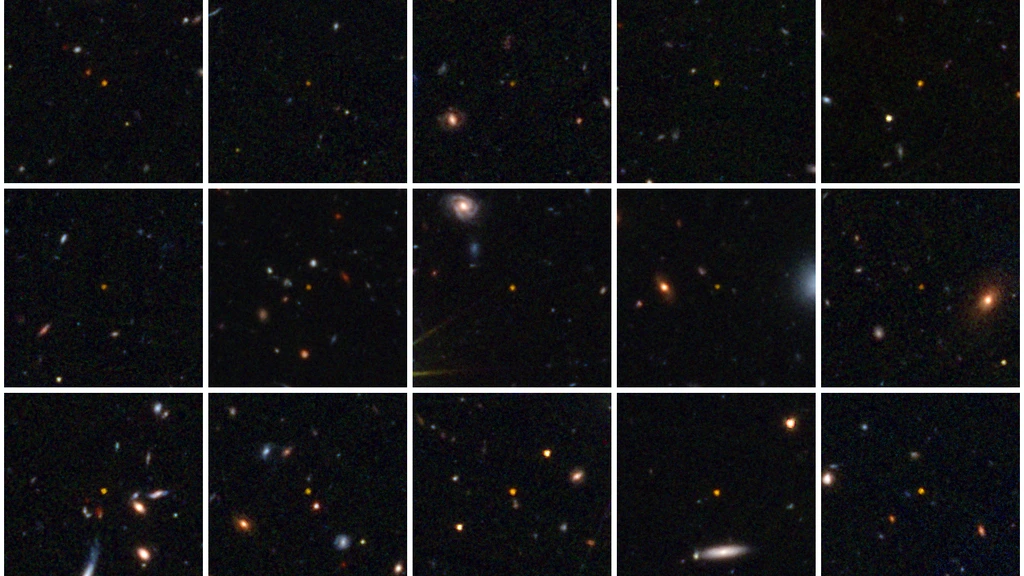
Astronomers, including Dutch scientists, have identified 31 extremely distant quasars using the Euclid space telescope, marking a significant advancement in observing the early universe. Quasars, the luminous cores of galaxies powered by supermassive black holes consuming matter, are among the brightest objects in the cosmos, capable of outshining a trillion stars. Two of the newly discovered quasars existed when the universe was only 670 million years old, approximately 5% of its current age, and are located over 13 billion light-years from Earth. This discovery, published in Astronomy & Astrophysics, provides crucial data for understanding the universe's formative years. Researchers are particularly interested in these quasars as they represent the "childhood of the universe," offering insights into the rapid formation and growth of early galactic systems, a major puzzle in astrophysics. Further analysis of the second-most distant quasar reveals it resides within a rapidly star-forming galaxy filled with ash and dust, shedding light on the evolution of early galaxies and their environmental impact. Scientists anticipate finding hundreds more such distant objects, potentially including quasars from when the universe was as young as 640 million years old. The Euclid telescope, launched in 2023, aims to explain how galaxies and black holes achieved such massive sizes so quickly, building on its previous achievements like capturing an image of over 50,000 previously unobserved galaxies.
The discovery of these extremely distant quasars by the Euclid telescope represents a significant leap in observational cosmology, pushing the boundaries of our understanding of the early universe. By probing these ancient objects, scientists are gathering empirical data to test theoretical models of galaxy and black hole formation, particularly addressing the rapid growth observed in the nascent cosmos. This empirical approach is crucial for refining astrophysical theories, moving beyond speculation to data-driven insights. The findings highlight the power of advanced observational instruments to reveal previously inaccessible epochs, enabling a more comprehensive picture of cosmic evolution and potentially uncovering new physical processes at play in the early universe. Future observations with Euclid are expected to further illuminate the complex interplay between early galaxies, black holes, and their surrounding environments, offering a clearer narrative of cosmic development over the next decade.
AI-generated to prompt reflection — not editorial opinion, not advice, not a statement of fact. How this works.