Europe Battles Intense Heat and Widespread Wildfires
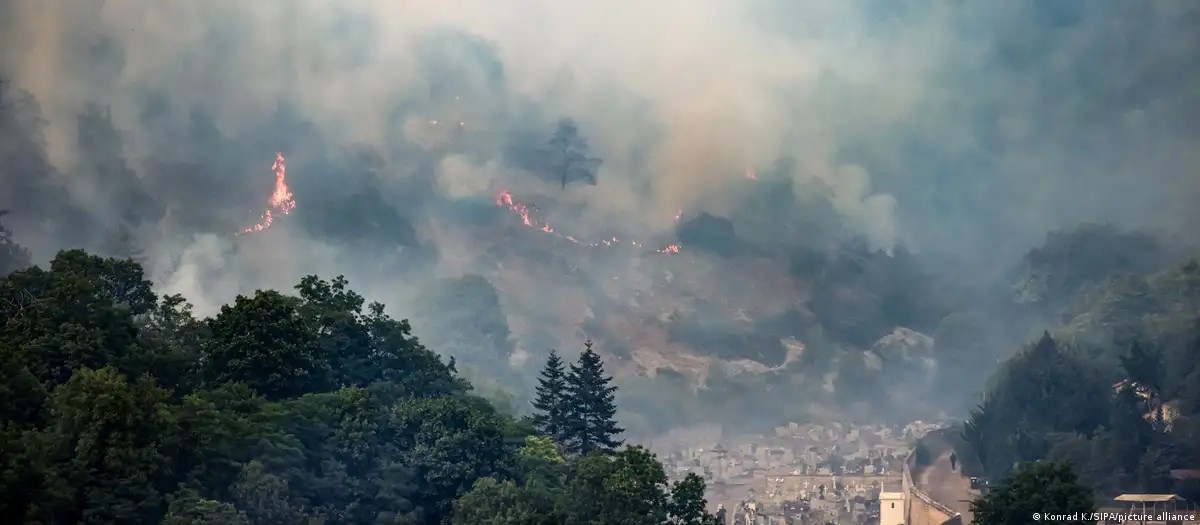
Europe is grappling with extreme heatwaves, prompting widespread wildfires across France, Spain, and Portugal as of Sunday, July 5th. These intense heat events, which have caused at least 4,700 deaths this year, are strongly linked by experts to climate change. The recent fires have already consumed over 17,000 hectares of land in these three nations, with temperatures predicted to reach 40 degrees Celsius over the weekend. In France, the Interior Minister, Laurent Nunez, expressed concern over the summer fire season starting a month early. Nearly 600 firefighters are tackling a blaze in Trevillach that has burned over 1,000 hectares, leading to road closures and the establishment of emergency shelters. Another 300 firefighters are combating a separate fire in the Drôme department. Portugal has requested international assistance, with Spain and Italy sending reinforcements and firefighting aircraft. A fire near Spain's Costa Brava has scorched over 2,200 hectares in two days, with authorities detaining a man in connection with the blaze that impacted the Gavarres natural area. In northern Portugal, 80% of a massive wildfire that burned approximately 13,000 hectares has been controlled, involving 1,200 firefighters and spreading over 35 kilometers since Thursday. Meanwhile, Greece is also experiencing a rapidly spreading wildfire near Thessaloniki, leading to evacuations in three suburbs and damage to businesses. A facility housing 157 individuals with special needs was evacuated, with some transferred to a psychiatric hospital.
The current European wildfires highlight a critical systemic friction between established human infrastructure and evolving climate realities. The early onset and intensity of the fire season, occurring in July, suggest that predictive models and resource allocation for emergency services may require recalibration to account for accelerating climate impacts. The reliance on international aid, as seen with Portugal's request, underscores the transboundary nature of climate-related disasters and the need for enhanced regional cooperation and mutual support mechanisms. This situation prompts consideration of long-term land management strategies, urban planning in fire-prone areas, and investments in climate resilience technologies, moving beyond reactive firefighting to proactive adaptation in anticipation of future, potentially more severe, weather events.
AI-generated to prompt reflection — not editorial opinion, not advice, not a statement of fact. How this works.