Europe Faces Ballistic Missile Threat Amid Shifting Alliances and War in Ukraine
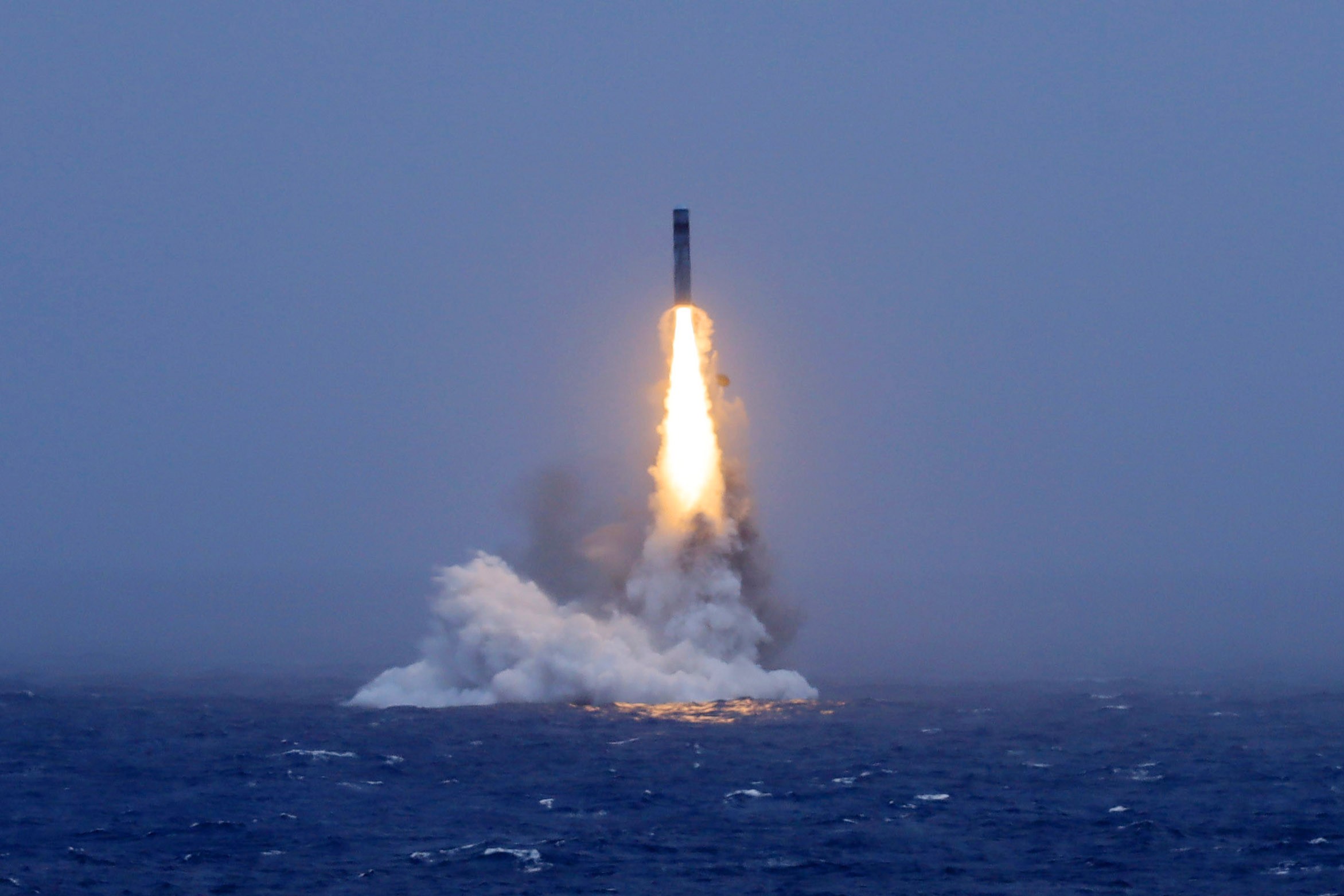
Europe is experiencing a period of intense military and defense reflection, largely influenced by Russia's ongoing war against Ukraine and perceived unpredictable actions from its key ally, the United States. This strategic reevaluation is underscored by the recent announcement of a coalition aimed at protecting Europe from ballistic missiles, a joint initiative championed by French President Emmanuel Macron and Ukrainian President Volodymyr Zelensky. The urgency of this matter was highlighted on the 6th of the month when Russia launched 23 ballistic missiles, none of which were intercepted by Ukrainian defenses. Ukraine's President Zelensky has called for additional US-made Patriot anti-missile systems, which are among the few capable of countering advanced Russian hypersonic missiles like the Oreshnik. However, the continent remains largely reliant on the American Patriot system for deterrence against ballistic missile attacks.
Ballistic missiles are launched at high altitudes, reaching speeds up to twenty times the speed of sound, and can descend at speeds of 3,200 km/h. Unlike cruise missiles that fly low, ballistic missiles are difficult to intercept due to their immense speed in the final phase of flight. While their high-altitude trajectory leaves a detectable radar signature, intercepting them requires highly sensitive detection systems, precise trajectory tracking, rapid data processing, and fast interceptor missiles, all operating at significant distances from the target. Emerging technologies such as cluster warheads, unpredictable flight maneuvers, increased terminal velocity, and stealth features are being incorporated into ballistic missiles to evade interception systems like the Patriot. Russia has been increasingly deploying its Oreshnik hypersonic ballistic missiles, capable of reaching much of Europe from Russian or Belarusian territory.
The European coalition, initially comprising Denmark, France, Germany, Italy, the Netherlands, Norway, Spain, Sweden, the United Kingdom, and Ukraine, aims to build a shared defense capability against ballistic missiles. While Europe is developing its own systems, such as the HYDIS and EU HYDEF projects, the continent's reliance on the US Patriot system persists. The US has been supplying Patriot systems to Ukraine since July 2025, but Ukraine faces a critical shortage, which Russia is exploiting. A proposal for Ukraine to independently produce Patriot missiles has been announced, though experts estimate this would take years to implement. This strategic shift occurs against a backdrop of evolving transatlantic relations, particularly concerning the US's commitment to NATO.
The heightened focus on ballistic missile defense in Europe reflects a complex geopolitical landscape, marked by the conflict in Ukraine and evolving transatlantic security dynamics. The reliance on US-supplied Patriot systems underscores a persistent capability gap in European defense infrastructure, prompting initiatives for integrated, shared defense architectures. The development of indigenous European missile defense capabilities, while ongoing, faces significant time lags and industrial integration challenges, highlighting the trade-offs between immediate security needs and long-term strategic autonomy. Future developments will likely be shaped by the interplay between technological advancements in missile and counter-missile systems, the economic and political will to invest in robust, multi-layered defenses, and the ongoing redefinition of collective security arrangements in an era of renewed great power competition.
AI-generated to prompt reflection — not editorial opinion, not advice, not a statement of fact. How this works.