Europe Uses Drones, AI, and White Paint to Combat Extreme Heat's Impact on Infrastructure
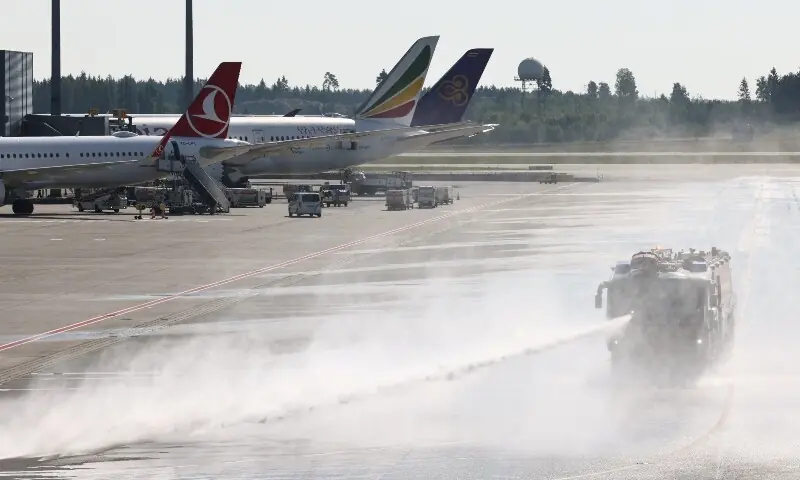
Europe is implementing a range of innovative and traditional solutions to protect its aging infrastructure from the escalating impacts of record heatwaves. As temperatures soar, railways buckle, roads melt, and power grids strain, countries are turning to advanced technologies like drones for track inspections and AI-powered sensors, alongside simpler methods such as painting surfaces white to reflect heat. Norway's Oslo airport, for instance, is testing heat-resistant asphalt and using water to cool runways, a stark adaptation for a nation accustomed to cold weather. Many European roads and railways, built decades ago, are proving inadequate for current extreme weather conditions, with temperatures in Western Europe recently averaging 5.5℃ above the July 15 average. A 2025 report by central banks projects that severe weather events could reduce the euro zone's GDP by up to 4.7% by 2030. An EU report indicated that over 70% of rail managers are experiencing increased disruptions due to extreme weather, with weather-related interruptions equating to one to three years of service across the region between 2015 and 2024. While heat itself can cause track expansion and system failures, the subsequent thunderstorms, strong winds, and landslides pose even greater critical challenges, particularly for rail networks in Northern Europe not designed for such temperature ranges. Britain's Network Rail plans to invest $3.5 billion between 2024 and 2029 to enhance its network's resilience. Less costly measures include Stockholm's transport authority painting metro tracks white, costing approximately $10,300, to prevent buckling. Experts suggest Europe can learn from regions like Riyadh and Dubai, where transport systems are designed for temperatures exceeding 50℃. Road infrastructure also faces pressure, with northern European highways needing adjustments to balance freeze-thaw resistance with increased summer heat, while southern countries may need to adapt their asphalt blends. Paris's RATP has established a heatwave contingency unit, and Norwegian officials are designing more robust roads to accommodate warmer, wetter weather patterns.
Europe's infrastructure, largely designed for historical climate norms, is facing significant stress due to increasingly frequent and intense heatwaves, a direct consequence of climate change. The current adaptive measures, ranging from technological integration like AI and drones to low-cost solutions like white paint, highlight a reactive approach to a systemic problem. While these fixes offer immediate relief and are necessary for operational continuity, they do not address the fundamental challenge of an aging infrastructure not built for the projected climate of the next decade and beyond. The significant investment planned by entities like Network Rail indicates a recognition of the scale of the problem, but the long-term viability of these adaptations will depend on a strategic shift towards future-proofing critical systems. This involves not just reinforcing existing structures but rethinking design standards, material science, and urban planning to align with a new climatic reality, potentially requiring substantial capital reallocation and international collaboration on best practices.
AI-generated to prompt reflection — not editorial opinion, not advice, not a statement of fact. How this works.