European Central Bank reveals 10 finalist designs for new euro banknotes, seeks public input
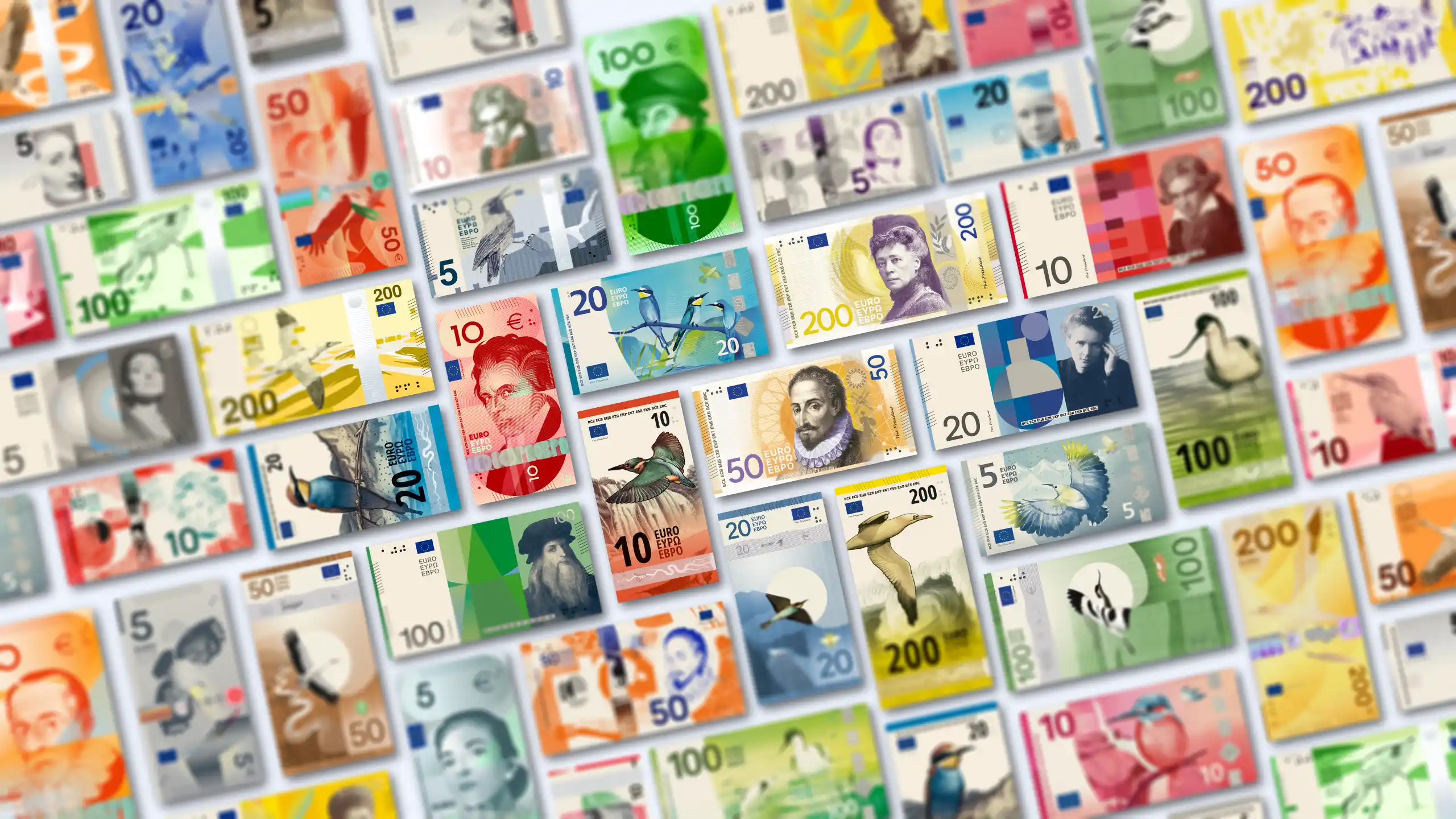
The European Central Bank (ECB) has unveiled ten finalist designs for the next series of euro banknotes and launched a public consultation. European citizens can submit their opinions until September 21, 2026. Over 1,200 designers from across the European Union submitted entries, from which a jury of 21 experts selected the ten finalists. These designs are categorized into two main themes: "European culture" and "rivers and birds." The "European culture" theme features historical figures such as Miguel de Cervantes (Spain), Leonardo da Vinci (Italy), Ludwig van Beethoven (Germany), Maria Callas (Greece), Marie Curie (Poland and France), and Bertha von Suttner (Austria). The ECB aims to incorporate advanced security features to combat counterfeiting, improve accessibility, particularly for visually impaired individuals, and utilize more sustainable materials in production. The existing euro banknotes will remain legal tender and circulate alongside the new designs for an extended period. This marks the first complete redesign of euro banknotes since their introduction in 2002. Following the selection of a winning design, further development and testing will occur before production begins, meaning the new banknotes are not expected to enter circulation for several years, possibly around 2030.
The ECB's initiative to redesign euro banknotes presents a complex interplay of cultural representation, technological advancement, and economic policy. The selection process, involving both expert juries and public consultation, aims to foster a sense of shared European identity while integrating enhanced security and sustainability features. However, the decision to maintain the validity of existing banknotes alongside new ones may inadvertently perpetuate the circulation of 'black money,' a point raised by the source. Future iterations could explore phased withdrawal or mandatory exchange mechanisms to address this, aligning with the declining use of physical cash and the increasing prevalence of digital transactions. The long lead time for implementation suggests a deliberate, albeit slow, approach to currency evolution, reflecting the significant logistical and political considerations involved in such a fundamental monetary update.
AI-generated to prompt reflection — not editorial opinion, not advice, not a statement of fact. How this works.