European Nations React to Moroccan Migrant Influx into Spanish Enclave of Ceuta
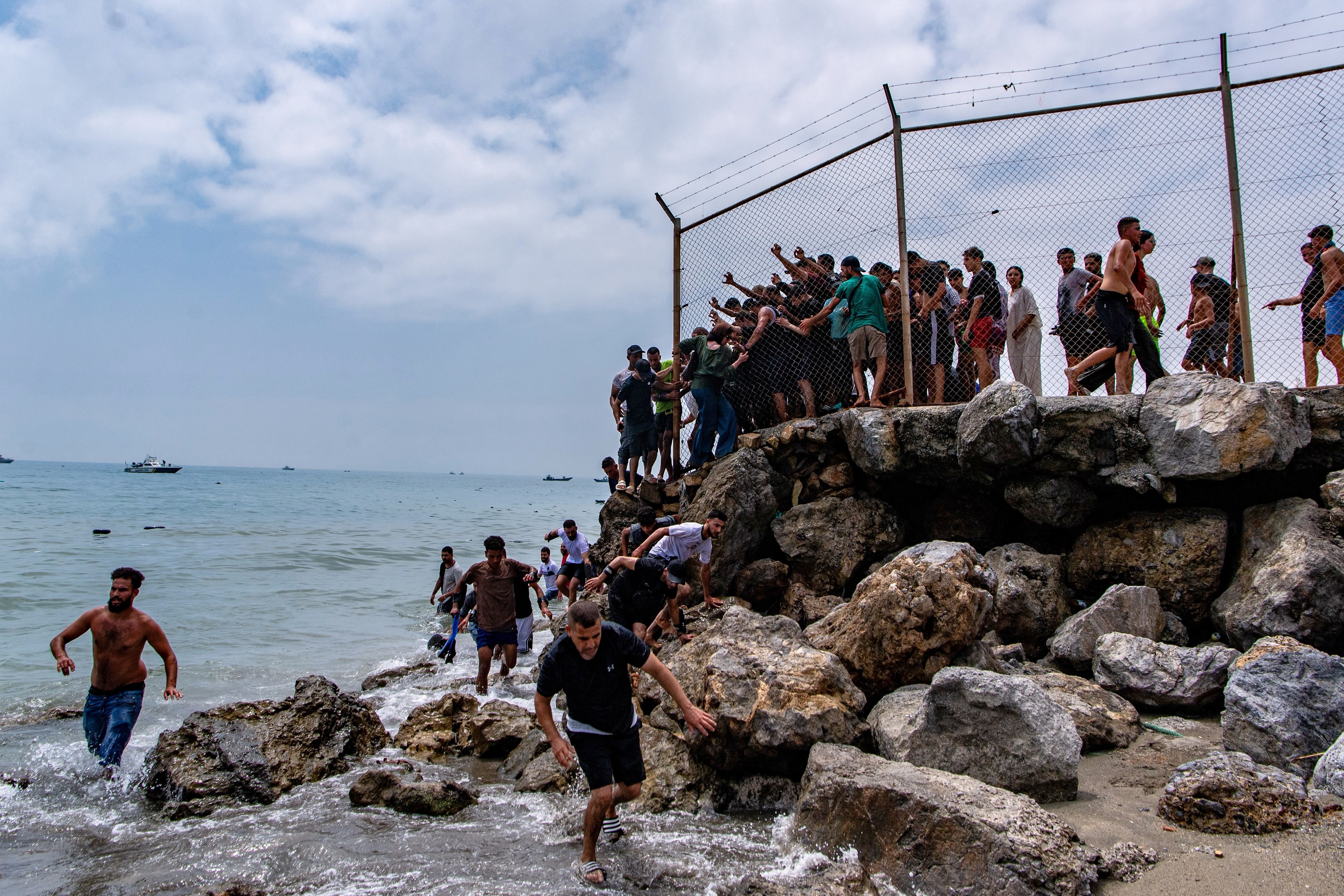
European countries have responded differently to the mass migration of Moroccans into Ceuta, a Spanish city in North Africa, following images of thousands arriving by sea. France's Interior Minister Laurent Nuñez ordered an immediate reinforcement of border controls with Spain and deployed a rapid intervention force. Italy's Prime Minister Georgia Meloni described the situation as "impressive" and a "concrete threat" to European border security, proposing extraordinary measures to suspend Spain from the Schengen Area of free movement. Sweden's Interior Minister Mari Rantanen criticized Spain for failing to adequately control its Schengen external border and supported Meloni's proposal, stating that countries not fulfilling their obligations should not be Schengen members.
Over 49,000 migrants, primarily young Moroccans along with families and children, entered Ceuta in 24 hours, overwhelming reception centers. At least 24 deaths were reported during the crossing. Ceuta, an autonomous Spanish city bordering Morocco, is a key entry point into the European Union for many migrants. The Spanish government deployed military units to support overwhelmed border police and announced a visit to Ceuta by Prime Minister Pedro Sánchez. Spain also pledged to enhance cooperation with Morocco for border control and expedite migrant returns where legally possible. The European Union expressed support for Spain and readiness to increase cooperation, including reinforcing the European Border and Coast Guard Agency (Frontex).
The influx of migrants into Ceuta highlights the persistent challenges of managing external borders within the Schengen Area, particularly for member states with direct land borders to non-EU countries. The differing national responses—from France's immediate border reinforcement to Italy and Sweden's calls for Schengen suspension—underscore the tension between national sovereignty, collective security, and the principle of free movement. This event prompts consideration of the EU's long-term strategy for migration management, the effectiveness of current border control mechanisms like Frontex, and the geopolitical implications of the dispute over Western Sahara, which has previously influenced Spain-Morocco relations and migration flows. Future policy discussions will likely focus on balancing humanitarian concerns with border integrity and fostering more equitable burden-sharing among member states, while also addressing the root causes of migration from North Africa.
AI-generated to prompt reflection — not editorial opinion, not advice, not a statement of fact. How this works.