EV Owners Report Higher Satisfaction Than Gas Car Drivers, JD Power Study Shows
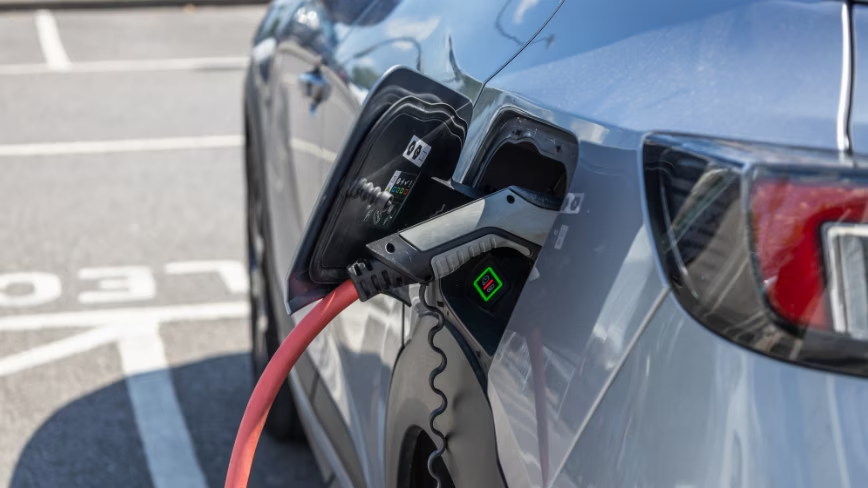
Owners of electric vehicles (EVs) express greater satisfaction with their cars compared to drivers of internal combustion engine (ICE) vehicles across almost all evaluated categories. This finding comes from JD Power's 2026 Automotive Performance, Execution, and Layout (APEAL) study, which surveyed 78,514 owners of 2026 model-year vehicles. The study revealed that EVs scored 109 points higher than ICE vehicles on a 1,000-point scale. The detailed findings indicate a significant preference among EV owners for their vehicles' performance and features. This suggests that current EV technology and user experience are meeting or exceeding expectations for a large segment of the automotive market. The study's release this week highlights ongoing trends in consumer perception of electric versus traditional vehicle technologies. The comprehensive nature of the survey, covering a large sample size of recent model years, lends considerable weight to its conclusions. These results could influence future automotive design and marketing strategies as manufacturers aim to meet evolving consumer demands.
The JD Power study indicates a growing alignment between consumer expectations and the current capabilities of electric vehicles, particularly in areas of performance and user experience. This suggests that the automotive industry's investment in EV technology is yielding positive consumer sentiment, potentially accelerating the transition away from internal combustion engines. As charging infrastructure and battery technology continue to advance, further narrowing any remaining gaps, the competitive landscape will likely shift, favoring manufacturers who can effectively integrate these improvements into compelling vehicle packages. Understanding these evolving consumer preferences is crucial for automakers navigating the complex transition to electrification over the next decade.
AI-generated to prompt reflection — not editorial opinion, not advice, not a statement of fact. How this works.