Ex-DJI Employee's Consumer Textile Machine Secures Hundreds of Millions in Funding
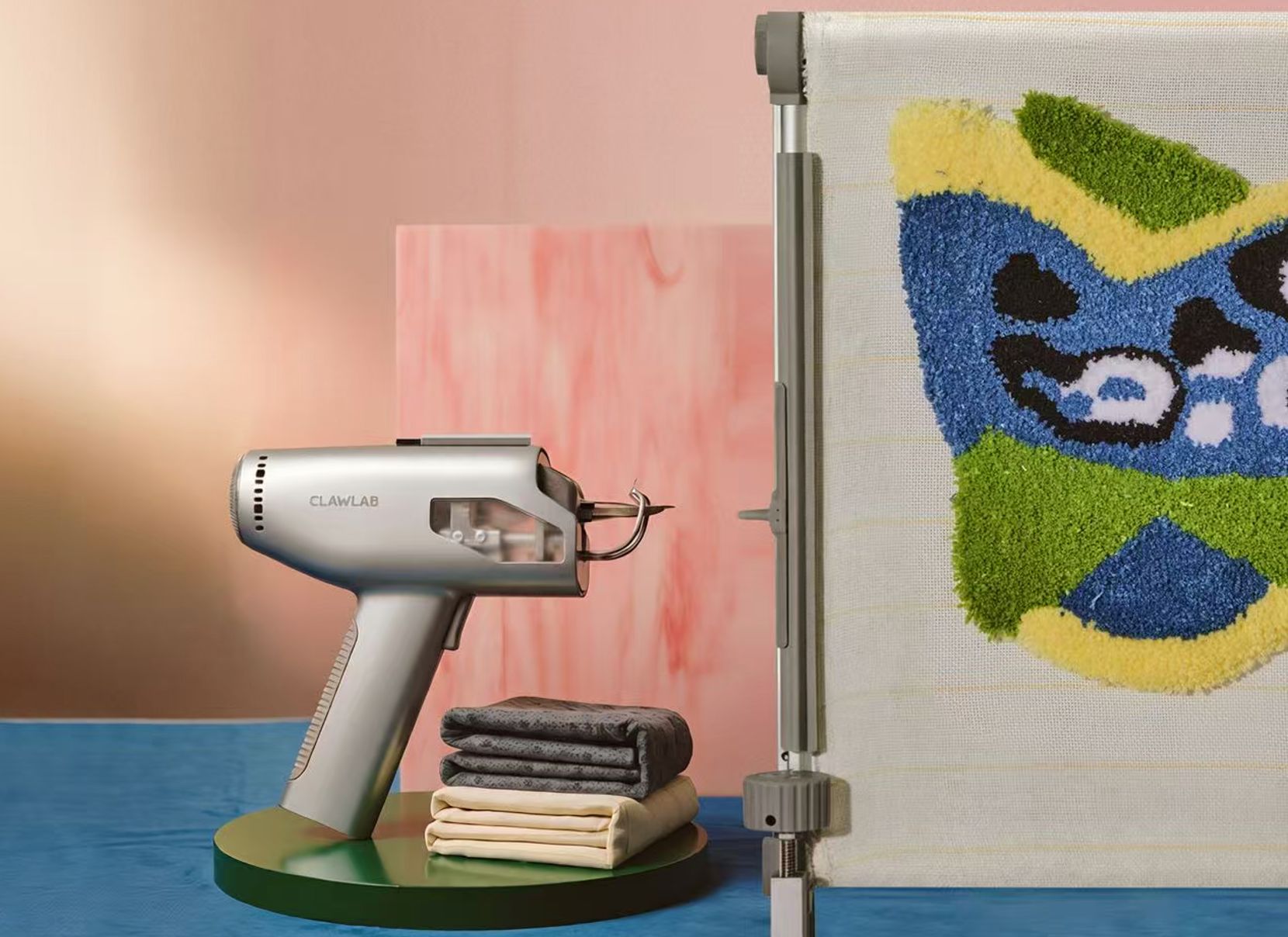
CLAWLAB, founded by former DJI and Meituan engineer Hu Wenxin, has raised hundreds of millions of yuan in funding from investors including Sequoia Capital, Shunwei Capital, and miHoYo. The company is focusing on the consumer-grade textile machine market, a sector largely overlooked for the past three decades. CLAWLAB aims to revolutionize the industry by developing integrated hardware and software solutions, addressing a gap in the global market for smart home weaving machines. Hu Wenxin identified a fundamental need in 'clothing, food, housing, and transportation,' with customization and DIY offering a natural extension for self-expression and personalization. The company's initial product, an automatic tufting gun launched in 2024, achieved nearly 100 million yuan in revenue from small-scale overseas market validation over two years. CLAWLAB's core innovation is its 'Textile Station' platform, a novel physical computing terminal that allows users to generate weaving patterns from simple drawings or photos, enabling the creation of various textiles like scarves, doll clothes, and pet accessories without professional pattern-making skills. This platform is designed to be the company's key competitive advantage, fostering an ecosystem and community for hobbyists and small-scale customization. The company plans to release a new lightweight desktop weaving product and launch a content-sharing community to support creative endeavors and micro-customization needs. CLAWLAB's approach leverages AI and robotics control, motion planning, and computer graphics to digitize and automate the complex weaving process, which traditionally requires extensive manual skill and experience. The Textile Station aims to significantly lower the design barrier, allowing individuals with no prior weaving experience to create custom items, thereby bridging the gap between user intent and physical output within minutes.
CLAWLAB's strategic pivot into the consumer textile machine market, a niche with historically low technological adoption, presents an interesting case study in identifying and capitalizing on underserved segments. By focusing on a 'blue ocean' strategy, the company aims to build a defensible moat through a comprehensive hardware-software-ecosystem approach, rather than relying on incremental hardware improvements. The integration of AI for pattern generation and automated weaving addresses the inherent complexity and steep learning curve of traditional textile crafts, potentially democratizing creation. This move aligns with broader technological trends of personalization and accessible advanced manufacturing, suggesting a potential shift from mass production to individualized, on-demand textile creation. The long-term success will likely depend on the platform's ability to foster a vibrant user community and scale its AI capabilities to meet diverse creative demands, navigating the transition from hobbyist tools to a broader consumer utility.
AI-generated to prompt reflection — not editorial opinion, not advice, not a statement of fact. How this works.