Ex-Olympic Athlete Denies Vandalizing Lincoln Memorial Reflecting Pool
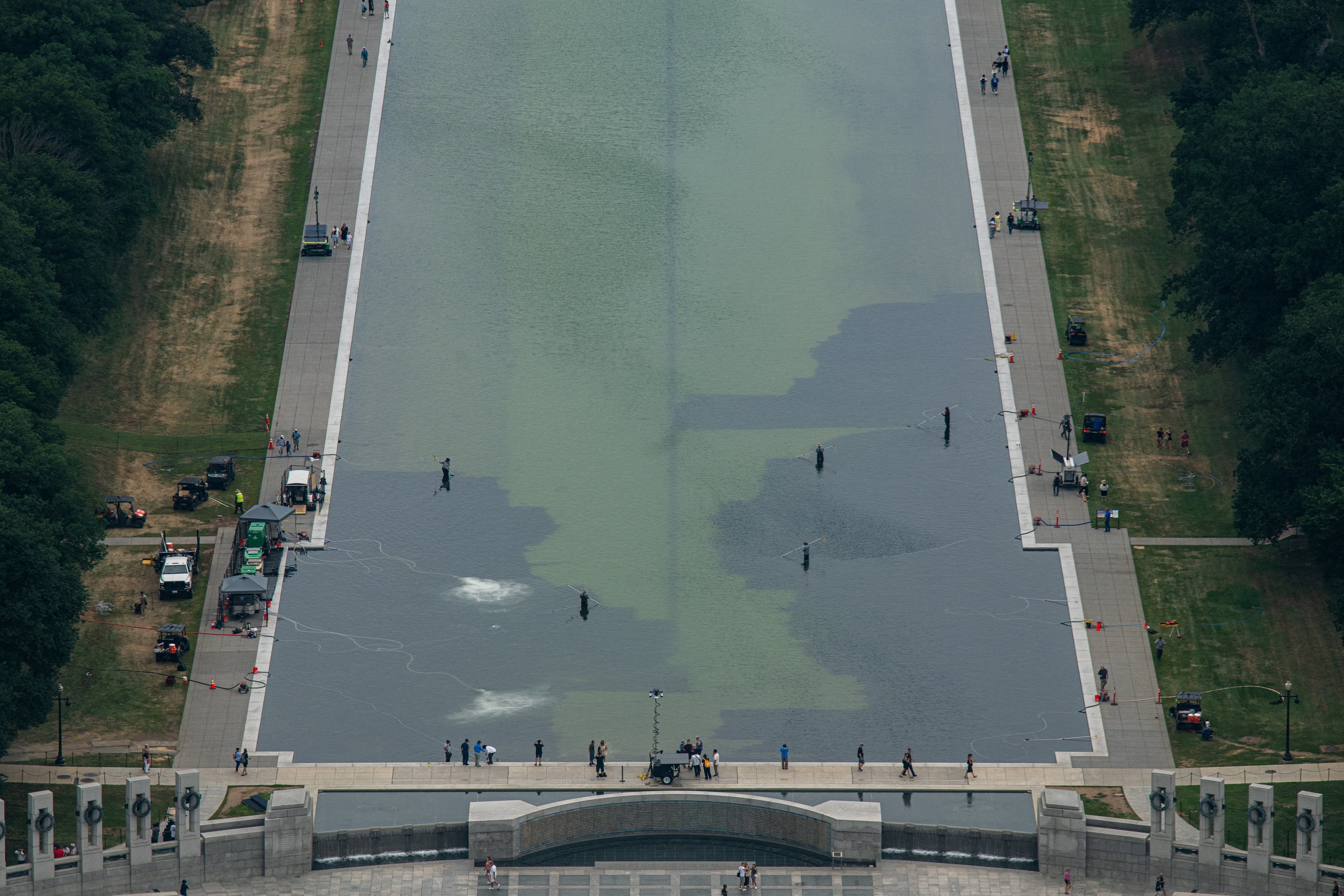
Former Olympic canoeist David Hearn, 67, has pleaded not guilty to charges of vandalizing the Lincoln Memorial Reflecting Pool in Washington D.C. The incident occurred on June 19, with prosecutors alleging Hearn removed a portion of the pool's newly installed lining, causing over $1,000 in damage. The charge carries a potential sentence of up to ten years in prison. Hearn's defense contends that the government is using his case as a distraction from the flawed renovation. They claim he merely touched a piece of lining that was already loose while cycling past the area and denies removing any material. The reflecting pool, a major tourist attraction, recently underwent a $14.7 million renovation. As part of the 4th of July celebrations and leading up to the nation's 250th independence anniversary, President Donald Trump ordered the pool's bottom to be coated in blue, resembling the U.S. flag. However, the renovation quickly drew criticism as algae bloomed and sections of the new lining began to detach shortly after its completion. President Trump accused Hearn and other "vandals" of sabotaging the reforms by adding chemicals to the water and cutting the lining. The U.S. Attorney for the District of Columbia, Jeanine Pirro, who was appointed by Trump, filed the indictment this month. Following the renovation, at least six individuals were arrested on suspicion of vandalism, leading to increased security measures including the National Guard and Park Police. Despite these efforts, Trump stated the pool would require further repairs.
The incident surrounding the Lincoln Memorial Reflecting Pool highlights the intersection of public works, political symbolism, and potential misuse of legal processes. The renovation, costing $14.7 million and intended to align with nationalistic celebrations, faced immediate functional issues, leading to public criticism. President Trump's swift attribution of these problems to deliberate sabotage, coupled with the prosecution of an individual, suggests a narrative aimed at deflecting from potential governance or contractor failures. The defense's claim of the case being a "smokescreen" raises questions about accountability and transparency in public projects, particularly when political figures are heavily involved. Future infrastructure projects, especially those with symbolic national importance, will need robust oversight mechanisms to ensure quality, prevent politically motivated narratives, and maintain public trust, especially in an era where digital dissemination can amplify any perceived failure or success.
AI-generated to prompt reflection — not editorial opinion, not advice, not a statement of fact. How this works.