Exoplanetary Dust May Obscure Biosignatures, Complicating Life Detection
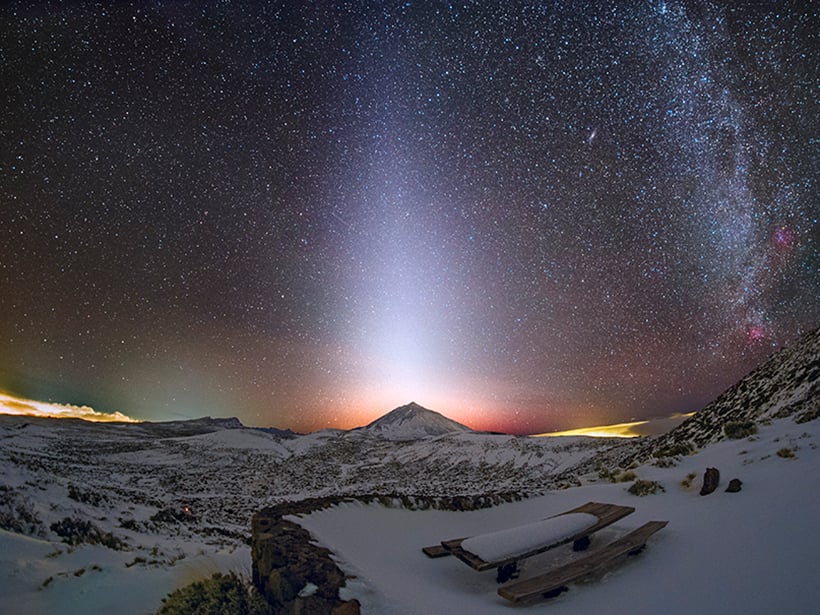
Most known exoplanetary systems contain a dust plane analogous to the zodiacal dust found within our own solar system. This pervasive dust has the potential to interfere with the methods astronomers use to detect signs of life on other worlds. Specifically, the dust absorbs a portion of the starlight that is crucial for analyzing exoplanet atmospheres. By dimming or altering this light, the dust can obscure or mimic the very biosignatures scientists are searching for. This phenomenon could significantly increase the difficulty of identifying extraterrestrial life. The presence of such dust planes presents a considerable challenge to current and future exoplanet research aimed at finding life beyond Earth. Astronomers must now account for this dust's impact when interpreting atmospheric data from distant planets. This discovery highlights the complex environmental factors that can affect the search for life in the universe.
The presence of zodiacal dust in exoplanetary systems introduces a significant systemic challenge to the search for extraterrestrial life. This dust acts as a natural attenuator and potential contaminant of light signals, directly impacting the efficacy of biosignature detection methods. Future research and technological development will need to focus on advanced techniques to differentiate true biosignatures from dust-induced spectral artifacts. This necessitates a more sophisticated understanding of exoplanetary system architectures and dust composition to refine observational strategies and data analysis pipelines. The long-term implication is a potential slowdown in definitive life detection, requiring increased investment in observational precision and theoretical modeling to overcome this astrophysical hurdle.
AI-generated to prompt reflection — not editorial opinion, not advice, not a statement of fact. How this works.
