Exoplanets May Host Vaporized Rock Clouds Above Magma Oceans
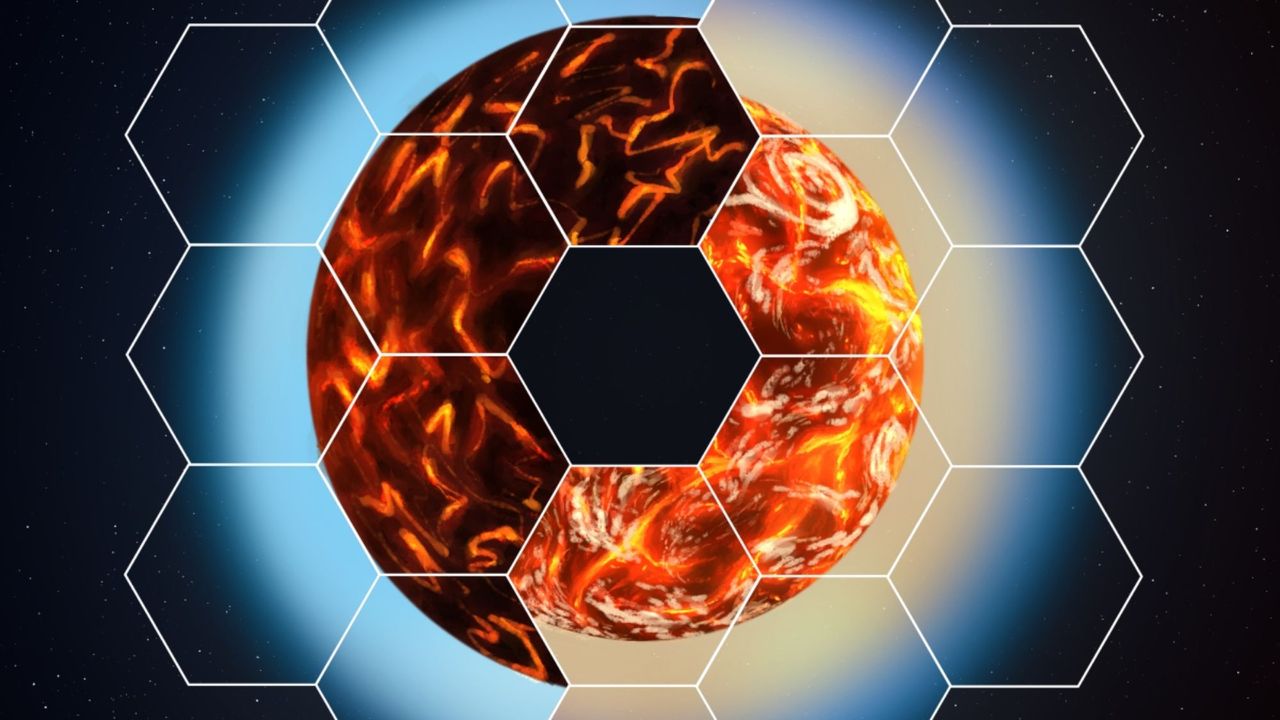
Scientists are exploring the possibility that sub-Neptune exoplanets could possess extremely dense atmospheres. These crushing atmospheric conditions might lead to the vaporization of rock, forming clouds that subsequently trap heat on the planet's surface. This phenomenon could explain the intense surface temperatures observed on some of these distant worlds. The concept suggests a unique atmospheric composition where silicate or other rock-forming minerals are present in gaseous form due to extreme heat and pressure. These vaporized rock clouds could play a significant role in the planet's energy balance, preventing heat from escaping into space. Consequently, the surface could be covered by oceans of molten magma, maintained by the heat-trapping clouds above. This theoretical model offers a potential explanation for the characteristics of sub-Neptune exoplanets, a class of planets larger than Earth but smaller than Neptune, which are common in our galaxy. Further research and observations are needed to confirm the existence and properties of such exotic atmospheric phenomena.
The hypothesis of vaporized rock clouds and magma oceans on sub-Neptune exoplanets presents a fascinating case study in extreme planetary formation and atmospheric dynamics. Understanding these conditions requires scientists to model complex thermodynamic processes under pressures and temperatures far beyond Earth's experience. The existence of such atmospheres, if confirmed, would highlight the vast diversity of planetary environments and challenge our current definitions of habitability. Future research may focus on developing observational techniques sensitive enough to detect spectral signatures of vaporized silicates or other exotic compounds in exoplanet atmospheres, pushing the boundaries of astronomical instrumentation and data analysis. This exploration into extreme planetary science could inform our understanding of planet formation across the galaxy and the potential for diverse geological and atmospheric evolution.
AI-generated to prompt reflection — not editorial opinion, not advice, not a statement of fact. How this works.