Expand the Power of Mass Uprising, Urges Economist Anu Muhammad
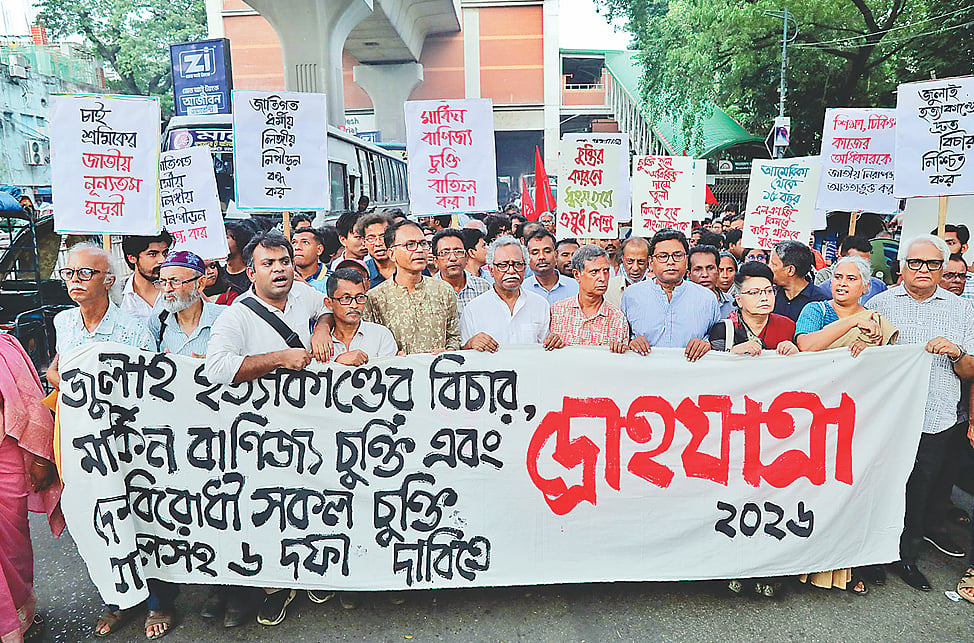
Economist Anu Muhammad, president of 'Drohojatra' (Journey of Rebellion), urged citizens to expand the power of mass uprisings to fulfill the aspirations of the July uprising. Speaking at a rally in Dhaka on Sunday, marking the second anniversary of Drohojatra, he called for unity among all classes and strata, including students, teachers, artists, writers, laborers, and professionals. The Drohojatra movement, which began two years ago, aims to end what he described as authoritarian and fascist rule under Sheikh Hasina. The original protest in 2024 concluded with a demand for Sheikh Hasina's resignation. This year's commemoration presented six demands: swift justice for the July killings, cancellation of all agreements against national interest including a US trade deal, an end to ethnic, religious, and gender-based oppression, ensuring freedom of expression, declaring a national minimum wage for laborers, halting nature-destructive projects in the name of development, and including education, healthcare, and the right to work under national security. Muhammad highlighted that despite the fall of the previous regime, public rights have not been established, and anti-public interest activities have resumed. He emphasized that the unity demonstrated by the powerless against a dominant force proved that fascism cannot withstand collective public strength. He also stressed the need to continue the Drohojatra against national interest agreements, the atmosphere of aggression, and the growing intolerance towards dissenting views. The father of a student martyr, Shahid Farhan Faiyaj, also spoke, urging that the sacrifices of over 1,500 martyrs should not be in vain. The event featured speeches from various leaders, along with musical performances, recitations, and a play.
This event highlights a persistent tension between popular mobilization and established governance structures in Bangladesh. The call to expand 'mass uprising' power suggests a belief that existing democratic channels are insufficient for achieving desired societal reforms. The six demands reflect deep-seated grievances concerning justice, national sovereignty, human rights, economic equity, environmental protection, and social welfare. The analysis of the 'fascist rule' and 'authoritarian' governance, while emotionally charged, points to perceived systemic failures in accountability and representation. Future governance models might need to address how to integrate grassroots demands more effectively into policy-making to mitigate the perceived need for extra-constitutional 'uprisings,' thereby fostering a more stable and responsive political environment. The emphasis on national interest and self-determination in the demands warrants attention in the context of global geopolitical shifts and economic dependencies.
AI-generated to prompt reflection — not editorial opinion, not advice, not a statement of fact. How this works.