Expedition off Fortaleza discovers 31 potentially new marine species
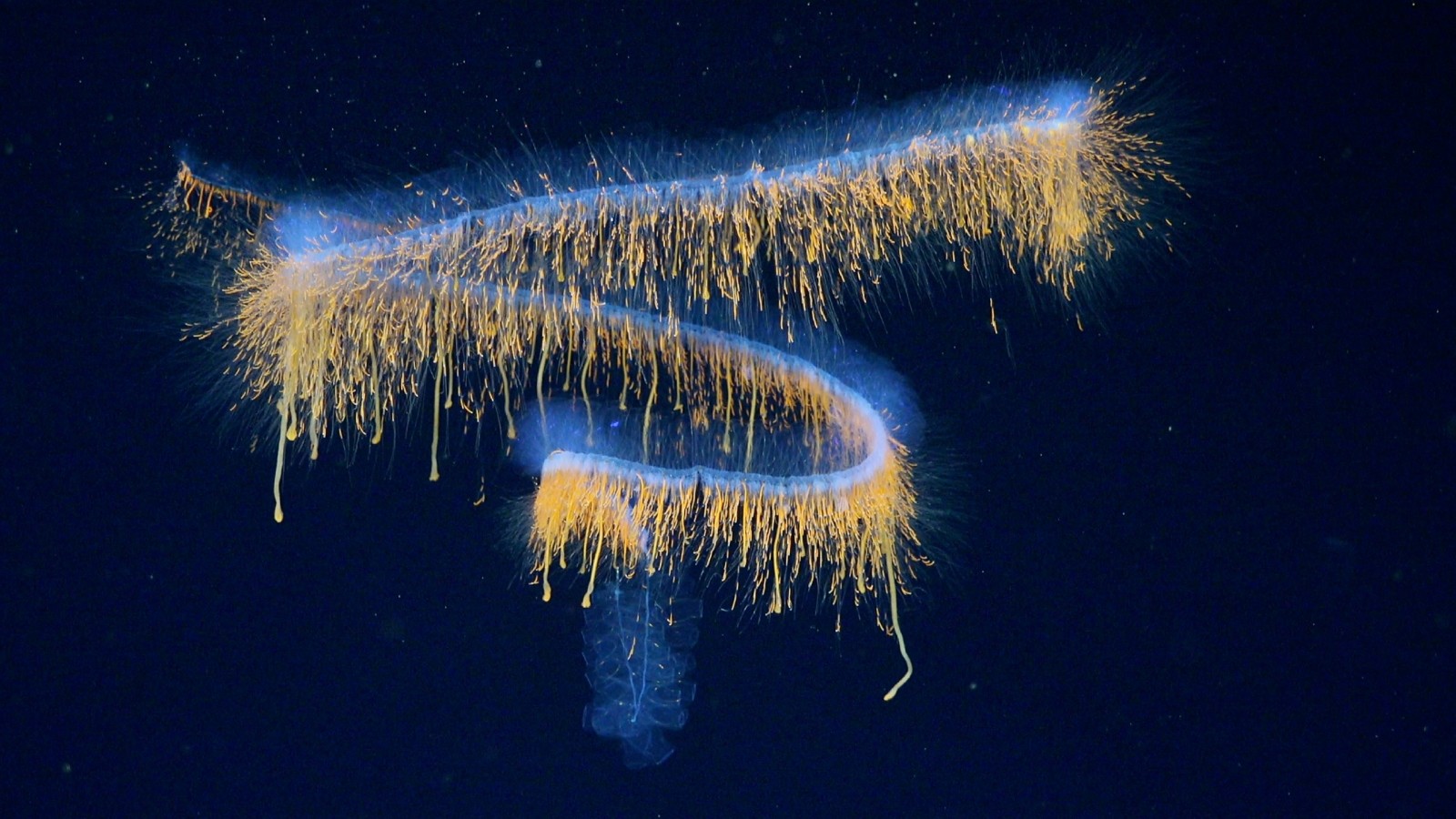
An international team of scientists has concluded a 15-day expedition off the coast of Fortaleza, Brazil, discovering approximately 31 marine species that may be new to science. The researchers explored a challenging, deep-sea region known as the mesopelagic zone, located between 200 and 1,000 meters below the surface, an environment characterized by extreme cold and darkness. The expedition, conducted by the Schmidt Ocean Institute aboard the research vessel Falkor, utilized advanced technologies, including a remotely operated vehicle (ROV) named Subastian, high-definition cameras, 3D scanning, and onboard genetic sequencing capabilities. Among the visually striking discoveries were a glass squid, a marine worm with luminous 'cilia,' and a transparent creature. The findings also include various invertebrates such as amphipods, jellyfish, siphonophores, ctenophores, larvaceans, and giant rhizarians. While subsequent molecular and morphological analyses will be required to definitively confirm if these are indeed new species, experts involved are optimistic about the potential for novel discoveries. The expedition aimed to explore and describe unknown species and understand their ecological functions within the South Atlantic Ocean. This research is part of a broader initiative by the Schmidt Ocean Institute to provide free access to advanced research vessels for scientific exploration.
This discovery highlights the vastness of unexplored biodiversity in Earth's oceans and the critical role of technological advancement in deep-sea research. The expedition's success underscores the value of international collaboration and the strategic deployment of sophisticated equipment, such as ROVs and advanced genetic sequencers, for scientific exploration. As human activity increasingly impacts marine ecosystems, understanding and cataloging these deep-sea environments becomes paramount for conservation efforts and comprehending the full scope of oceanic life. The ability to rapidly analyze genetic material onboard also signals a paradigm shift in the pace of biological discovery, potentially accelerating our understanding of marine life and its evolutionary history over the next decade.
AI-generated to prompt reflection — not editorial opinion, not advice, not a statement of fact. How this works.