Expelled Principal Accused of Forcibly Reclaiming Office at Jonail Degree College
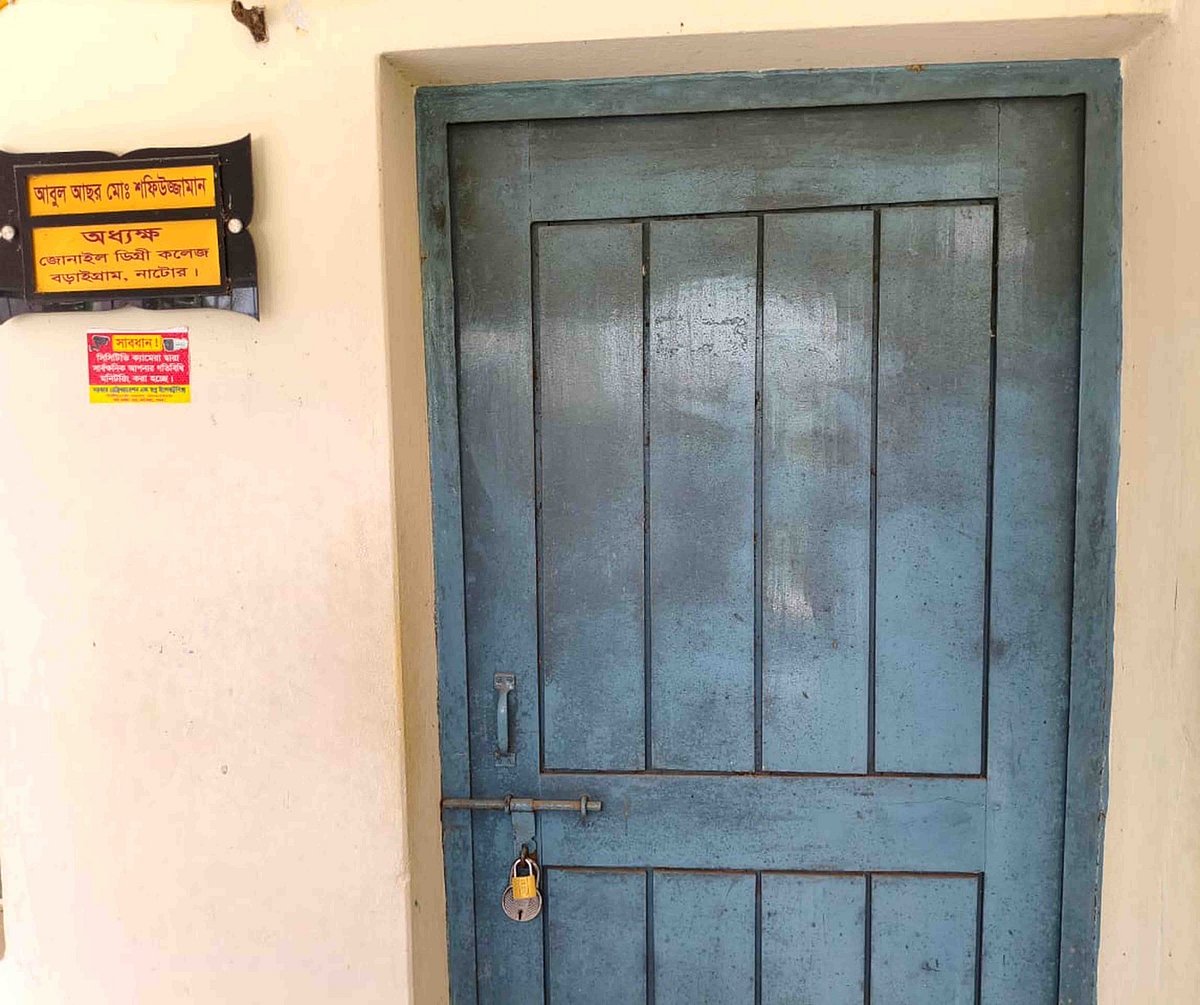
An incident occurred at Jonail Degree College in Baraigram, Natore, where the expelled principal, Abul Achor Md. Shafiuzzaman, is accused of breaking into the principal's office with outsiders. The college authorities stated that Shafiuzzaman was initially suspended on October 10, 2024, by the then-governing body's convener committee, leading to the office being locked. The acting principal, S M Rajibul Karim, has been managing college affairs from his own room since then. Subsequently, on March 24, 2025, the regular governing body permanently expelled the former principal and sent the relevant documents to the National University. Today, around 11 AM, the former principal allegedly arrived with approximately 30 individuals, broke the lock on the principal's office, entered, and occupied the chair for about an hour. Before leaving, he locked the office again. Furthermore, the hard disk of the CCTV camera from the adjacent acting principal's office was removed, and administrative documents were taken. The acting principal, who was outside the campus at the time, reported the incident to the police via 999 and informed the president of the governing body, Channu Mia. Police visited the scene. The acting principal stated that the former principal's actions were illegal, especially as a court order for a status quo was in effect. The expelled principal, however, denied breaking the lock, claiming the door was open, and denied the CCTV hard disk theft. He asserted he had not violated any court order, stating his expulsion during a leave period was unlawful and he was seeking legal remedy. The Officer-in-Charge of Baraigram Police Station confirmed police visited the site and indicated that further action would be taken after considering the ongoing court case.
The confrontation at Jonail Degree College highlights a complex governance dispute involving conflicting claims of authority and legal standing. The former principal's alleged forceful entry, despite a court-mandated status quo, suggests a disregard for established legal processes or a belief in the invalidity of the expulsion. This situation underscores the potential for institutional paralysis when leadership disputes escalate, impacting academic operations and the educational environment. Future governance models in educational institutions may need to incorporate more robust dispute resolution mechanisms and clearer protocols for executive transitions to prevent such disruptions and ensure continuity of education.
AI-generated to prompt reflection — not editorial opinion, not advice, not a statement of fact. How this works.