Experimental Archaeologists Recreate Ancient Mummification Using Historical Techniques
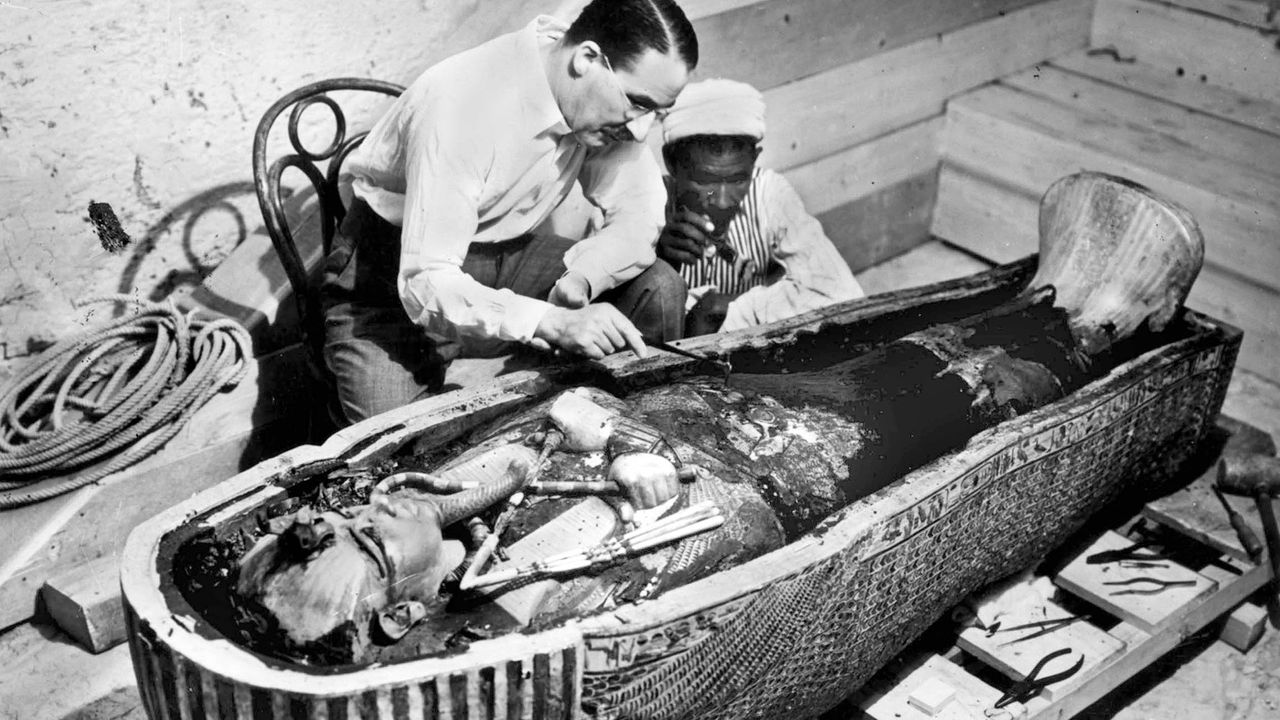
Science writer Sam Kean's new book, "Dinner with King Tut: How Rogue Archaeologists Are Re-creating the Sights, Sounds, Smells, and Tastes of Lost Civilizations," delves into the fascinating field of experimental archaeology. The book highlights how these researchers meticulously recreate ancient practices using historical methods. One striking example discussed is the mummification of a modern individual, employing techniques derived from ancient Egyptian practices. Kean describes the subject as resembling "Ramses the Great" after the process. This approach allows for a tangible understanding of past civilizations by replicating their daily lives, technologies, and rituals. Experimental archaeologists aim to reconstruct the sensory experiences of ancient peoples, including sights, sounds, smells, and even tastes. Their work provides unique insights into the ingenuity and complexity of lost cultures, moving beyond theoretical study to hands-on replication. The book explores various aspects of this interdisciplinary field, bridging the gap between historical texts and practical application.
Experimental archaeology offers a valuable lens for understanding historical practices by attempting to replicate them with period-appropriate tools and methods. This approach can reveal practical challenges and solutions faced by ancient peoples, providing a more grounded perspective than purely textual analysis. By recreating processes like mummification, researchers can test hypotheses about ancient technology and knowledge, potentially uncovering details lost to time. The success of such experiments, particularly when applied to modern subjects, underscores the enduring principles of ancient craftsmanship and scientific understanding. This methodology encourages a deeper appreciation for the ingenuity of past societies and prompts reflection on how their innovations might inform contemporary challenges, particularly in fields like material science and preservation.
AI-generated to prompt reflection — not editorial opinion, not advice, not a statement of fact. How this works.