Experimental Ebola Drugs Tested on Patients in Congo Amid Ongoing Outbreak
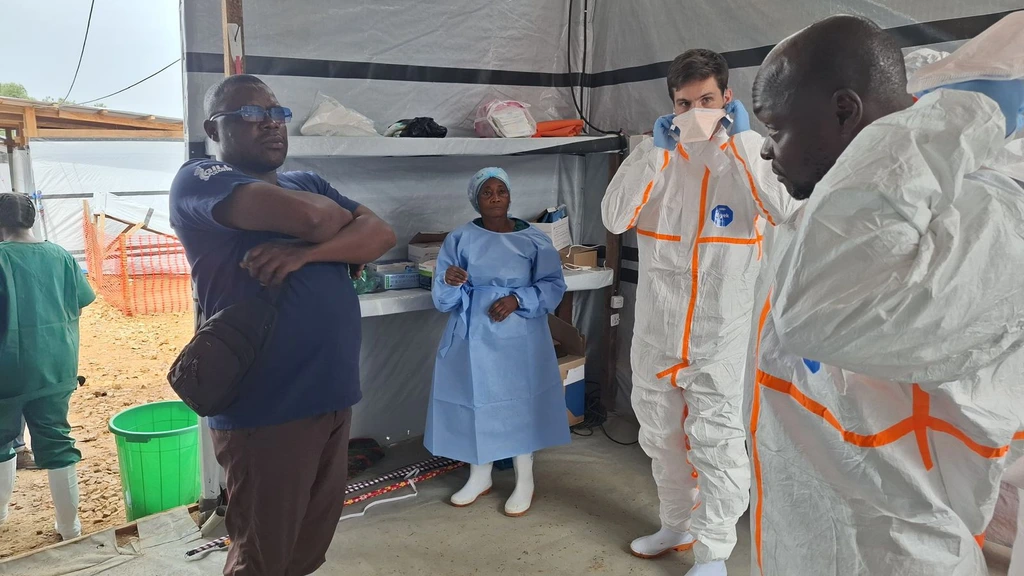
Two experimental drugs, remdesivir and MBP134, are being tested on patients in the Ituri province of the Democratic Republic of Congo to combat the Bundibugyo variant of the Ebola virus. This international effort involves universities, pharmaceutical companies, and the World Health Organization (WHO), with the goal of reducing the mortality rate associated with the disease. Belgian physician Laurens Liesenborghs, working with the Antwerp Institute of Tropical Medicine, the University of Oxford, and the WHO, expressed hope that one or both drugs, potentially working synergistically, could significantly improve patient outcomes. He has been in Congo for seven weeks, and the clinical study, which began about ten days ago, requires testing on 700 to 1000 individuals to demonstrate a clear effect. The results are not expected for several months. The Bundibugyo variant has caused 1,830 confirmed cases and 648 deaths since the epidemic began, according to Africa CDC. While the outbreak is stabilizing in Bunia, it has spread to other areas, potentially reaching the major city of Kisangani, which would be a grave concern. Liesenborghs noted that effective containment, as seen in Uganda, relies on robust contact tracing and patient isolation, resources that are currently lacking in the region, partly due to reduced development aid. He also highlighted the disparity in public attention between outbreaks in Africa and potential cases in Europe, despite the possibility of controlling the epidemic with proper measures. Working in challenging conditions, including wearing protective suits, Liesenborghs and his team are motivated by the severity of the disease, which has a mortality rate of about one in three patients for this variant.
This clinical trial represents a swift, coordinated international response to a significant public health threat, contrasting with the slower pace of research during the 2014 West Africa Ebola outbreak. The initiative highlights the critical role of global health organizations and academic institutions in accelerating medical countermeasures. The challenge of resource allocation and effective public health infrastructure in affected regions, exacerbated by funding cuts, underscores systemic vulnerabilities in global health security. The potential for the virus to spread to densely populated areas like Kisangani emphasizes the interconnectedness of global health and the need for sustained investment in epidemic preparedness and response mechanisms, particularly in regions facing development challenges. The focus on drug efficacy and patient outcomes is paramount, but the long-term sustainability of such interventions will depend on addressing the underlying infrastructural and financial limitations.
AI-generated to prompt reflection — not editorial opinion, not advice, not a statement of fact. How this works.